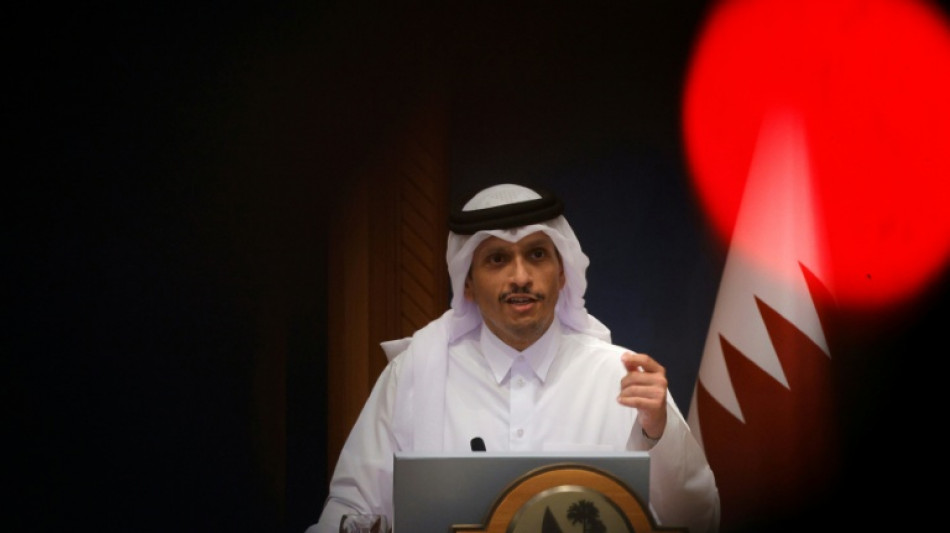
How Iran's 'telegraphed' strikes on Qatari soil paved way to Israel truce / Photo: © AFP
Iran's unprecedented strikes on a US base in Qatar were carefully calculated to provide an exit from hostilities with Washington and set up a truce with Israel, according to analysts and an official.
Monday's missile launches were signalled well in advance, minimising the risk of injury and giving every opportunity to shoot down the projectiles -- resulting in a fireworks display of booms and flashes above Doha.
They followed heavy US strikes on Iranian nuclear facilities at the weekend, a sudden escalation that raised concerns about how Tehran, after more than a week of exchanges with Israel, would respond.
In the event, gas-rich Qatar, 190 kilometres (120 miles) south of Iran across the Gulf, held the answer in the form of Al Udeid, the Middle East's biggest US base and headquarters of its regional command.
Targeting a United States base, rather than inciting fury, triggered a calm reaction from President Donald Trump, who thanked Iran for giving "early notice".
Qatar condemned the strikes -- Iran's first on a Gulf country's territory -- but its prime minister said the response would be diplomatic and legal, rather than military.
Hours after the attack, Trump announced a ceasefire that both Israel and Iran later said they would accept. A source with knowledge of the talks said Doha had spoken to Tehran and "persuaded" it to stop fighting.
- 'Off ramp' -
Chatham House geopolitics specialist Neil Quilliam said the attack was "clearly limited" and "intended to satisfy Iran's population that its leadership responded forcibly to the US air strikes on Saturday".
Iran had promised to inflict "serious, unpredictable consequences" on the US for joining its ally Israel's campaign against the Islamic republic with strikes on three nuclear sites.
The wealthy Gulf states, which host a number of US military sites, had been preparing for days for a possible strike by Iran.
A week before Qatar was targeted, Bahrain, home to the US Navy's Fifth Fleet, tested its civil defence sirens.
Also last week, dozens of US military aircraft disappeared from the tarmac at Al Udeid, according to satellite images published by Planet Labs PBC and analysed by AFP.
In the hours before the attack, the US embassy in Qatar advised Americans there not to go out, with some other Western embassies echoing the warning.
Shortly before the strikes, air traffic was suspended over Qatar "as part of a set of precautionary measures", the country's foreign ministry said.
Ali Vaez, senior advisor at the International Crisis Group said Iran's action against Qatar was "symbolic" and "calibrated and telegraphed in a way that would not result in any American casualties, so that there is an off-ramp for both sides".
- 'Taken this punch' -
According to the source with knowledge of the talks, Qatari Prime Minister Sheikh Mohammed bin Abdulrahman Al-Thani spoke to the Iranians at Washington's request after the strikes.
Trump told Qatar's emir that Israel had agreed to a ceasefire, before US Vice President JD Vance spoke to the prime minister "who persuaded Iran to agree to the proposal in a call with the Iranians", the source said.
Vaez said the "good relationship between Iran and Qatar is the reason that Iran opted to strike... the Al Udeid base in Qatar".
Before the attack, there had been speculation that Iran could target US forces based in Iraq or elsewhere in the region.
"I see this as a continuation of Qatar's mediation between Iran and the United States, that it has taken this punch as a means of trying to prevent further escalation," Vaez added.
Quilliam said: "While Qatar's official responses to the attacks condemned Iran, it also pushed forward a deeper message about ending conflict in the region."
F.Harris--TNT