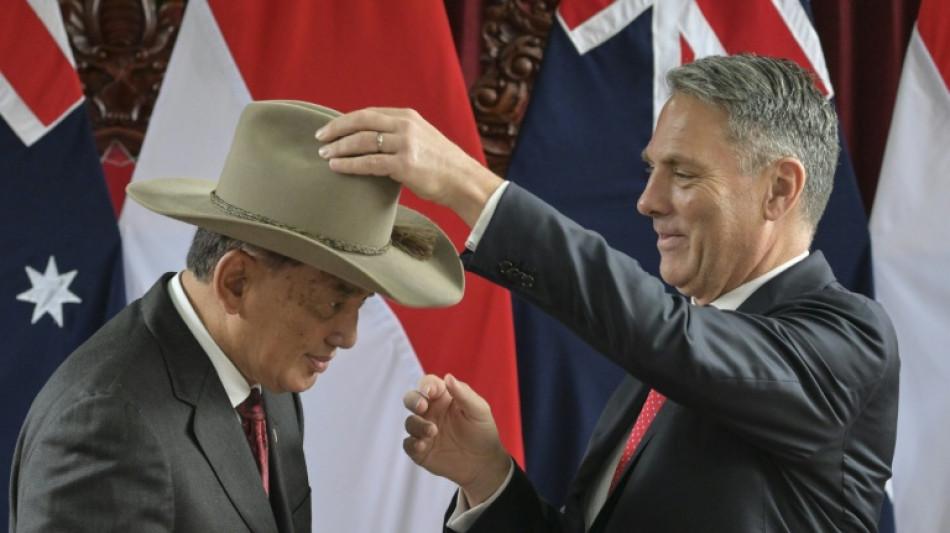
Australia says China anxiety, geography driving closer Indonesia ties / Photo: © AFP
Australian Defence Minister Richard Marles said Thursday that security anxiety over China was partly driving deepening ties with Indonesia in a region riven by rivalry between Beijing and Washington.
His visit to meet counterpart Sjafrie Sjamsoeddin in Jakarta came weeks after Australian Prime Minister Anthony Albanese made Indonesia his first foreign trip following his landslide election win.
Marles said the alliance with Indonesia stood on its own terms, but concerns about China's military build-up in the region influenced Australia's foreign policy thinking.
"We've made no secret of the fact that we have a security anxiety in relation to China. We've made that clear to China itself," Marles, who also serves as deputy prime minister, told journalists in the Indonesian capital.
"It does shape how we think about the strategic landscape that we face."
He said geography was also a key part of closer relations with President Prabowo Subianto's government, with whom they signed a defence pact last year.
"You just need to look at the map to understand how strategically important Indonesia is to Australia. Its geography is profoundly important," he said.
"That's actually what's driving the increase in the activity between Australia and Indonesia."
Marles and Sjafrie discussed greater cooperation "in relation to maritime domain awareness", which would see their militaries share more information about the waters they share, the Australian minister said.
"The relationship between Australia and Indonesia has never been in better shape," he said.
The bilateral defence pact pledged closer cooperation in the contested Asia-Pacific region and included provisions for each military operating in the other country.
Months after the accord was signed, thousands of Indonesian and Australian troops held joint drills in eastern Java in November.
Canberra has drawn ever nearer to longtime ally Washington, bolstering its military in an attempt to deter the might of a rising China.
Jakarta has meanwhile walked a more neutral path, wary of drawing too close to Washington and far less willing to needle Beijing.
T.Hancock--TNT