What comes next in Trump's legal battle over tariffs? / Photo: © AFP/File
A US federal appeals court has temporarily halted a ruling that found many of President Donald Trump's tariffs illegal, but the chance it could ultimately back the original decision looms over the White House.
What is in the US Court of International Trade's original ruling -- which the Trump administration is appealing -- and what options does the administration have?
- Which tariffs were affected? -
The three-judge trade court ruled Wednesday that Trump overstepped his authority in imposing blanket tariffs by invoking emergency economic powers.
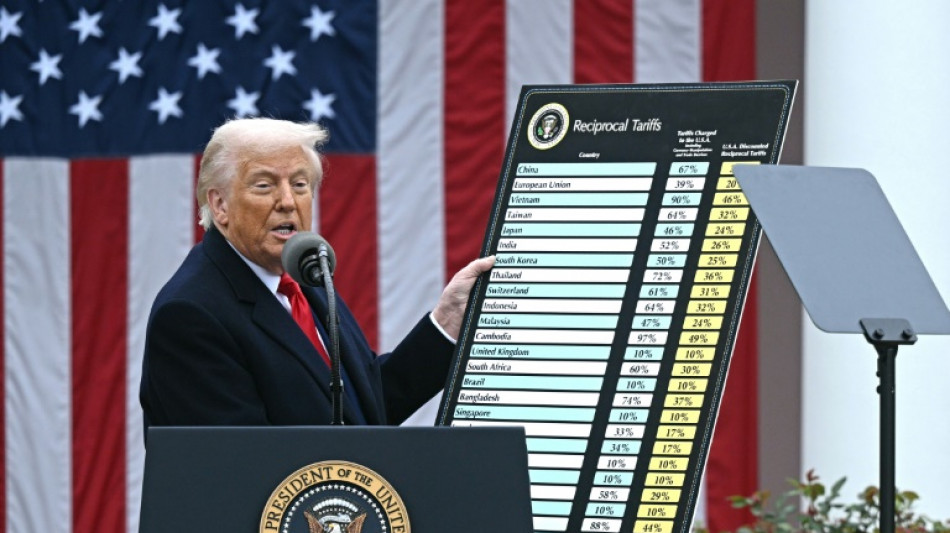
The judgment -- although temporarily halted -- affected levies unveiled on April 2, which involve a 10-percent tariff on most trading partners and higher rates on dozens of economies including China and the European Union. These higher levels are currently suspended while negotiations take place.
The ruling also applies to tariffs imposed on Canada, Mexico and China over their alleged roles in allowing an influx of drugs into the United States.
But it left intact sector-specific levies like those on steel, aluminum and auto imports.
- Why a pause? -
The ruling by the little-known court, which has nationwide jurisdiction over tariff and trade disputes, initially gave the White House 10 days to complete the process of unwinding the levies.
But the US Court of Appeals for the Federal Circuit on Thursday granted a temporary stay "until further notice" while the Trump administration's appeals process plays out.
This means the tariffs can remain in effect for now, while a longer-term outcome is yet to be determined.
National Economic Council director Kevin Hassett told Fox News the administration is "very pleased with the ruling," dubbing it a victory.
- What are Trump's alternatives? -
The appeals court could eventually uphold the trade court's original decision to block Trump's sweeping tariffs.
The president, however, has other means to reinstate his tariff agenda, said Thibault Denamiel, a fellow at the Center for Strategic and International Studies.
These include Section 122 of the Trade Act of 1974, "which is intended to deal with a balance of payments emergency but does not require a formal investigation," Denamiel told AFP.
The authority restricts tariffs to 15 percent and they can only last 150 days.
But it is among the policy levers that Trump could pull as he seeks a "bridge" towards more lasting actions, said KPMG chief economist Diane Swonk.
Another option is Section 338 of the Trade Act of 1930, allowing the administration to impose tariffs of up to 50 percent on countries that discriminate against the United States, Denamiel said.
- Does this affect trade talks? -
The US trade court's ruling did not remove the threat of US tariffs for Europe or end the need for negotiations, said Andrew Kenningham, chief Europe economist at Capital Economics.
This is because the threat of reciprocal tariffs remains if the White House wins its appeal, he said.
Trump could also turn to sector-specific means as he did in his first term or seek congressional approval for tariffs, though this is less likely, Kenningham said.
It is not clear if negotiations will lose steam, Swonk added, given that the administration wants to leverage the threat of tariffs "very aggressively."
Even if the original ruling is eventually upheld, US officials could still buy time to exert pressure on other economies including the European Union and China.
- What about the broader economy? -
The court process "introduces greater ambiguity around the future direction of US trade policy," especially because the appeal is ongoing, said EY chief economist Gregory Daco.
"This legal development amplifies longer-lasting uncertainty for businesses navigating cross-border supply chains," he added in a note.
US stocks closed higher Thursday, but economic fallout has already occurred in recent months with Trump's see-sawing approach to unveiling tariffs and pausing them selectively.
Financial markets have been roiled by policy shifts, and shipping halts due to high tariffs bring disruptions that cannot be cleared overnight, analysts said.
"The fate of the economy remains precarious even if we avert a recession," Swonk said on social media.
M.Davis--TNT