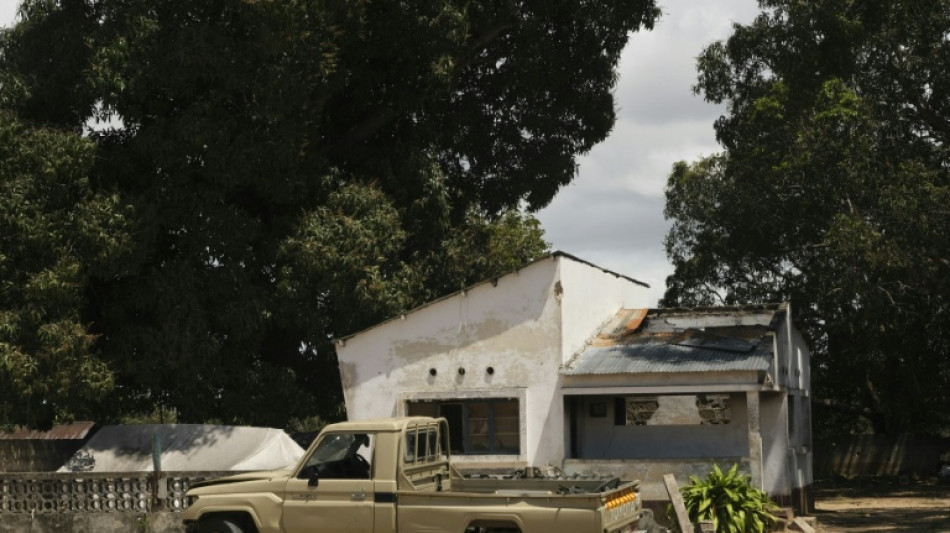
Jihadist attacks hit Mozambique as Total readies to resume gas project / Photo: © AFP/File
A series of attacks in northern Mozambique this month point to a resurgence of violence by Islamic State-linked militants as energy giant TotalEnergies prepares to resume a major gas project, analysts say.
The group terrorised northern Mozambique for years before brazenly vowing in 2020 to turn the northern gas-rich Cabo Delgado province into a caliphate.
TotalEnergies paused a multi-billion-dollar liquefied natural gas project there in 2021 following a wave of bloody raids that forced more than a million people to flee.
The insurgency was pushed to the background by a months-long unrest that followed elections in October.
But there has been a new wave of violence. In May, the Islamists attacked two military installations, claiming to kill 11 soldiers in the first and 10 in the second.
A security expert confirmed the first attack and put the toll at 17. There was no comment from the Mozambican security forces.
- Dramatic strikes -
There were two dramatic strikes earlier -- a raid on a wildlife reserve in the neighbouring Niassa province late April killed at least two rangers, while an ambush in Cabo Delgado claimed the lives of three Rwandan soldiers.
Also unusual was a thwarted attack on a Russian oceanographic vessel in early May that the crew said in a distress message was launched by "pirates", according to local media.
"Clearly there is a cause and effect because some actions correspond exactly to important announcements in the gas area," said Fernando Lima, a researcher with the Cabo Ligado conflict observatory which monitors violence in Mozambique, referring to the $4.7 billion funding approved in mid-March by the US Export-Import Bank for the long-delayed gas project.
"The insurgents are seeing more vehicles passing by with white project managers," said Jean-Marc Balencie of the French-based political and security risk group Attika Analysis.
"There's more visible activity in the region and that's an incentive for attacks".
- 'Propaganda effect' -
Conflict tracker ACLED recorded at least 80 attacks in the first four months of the year.
The uptick was partly due to the end of the rainy season which meant roads were once again passable, it said.
TotalEnergies chief executive Patrick Pouyanne said last Friday that the security situation had "greatly improved" although there were "sporadic incidents".
The attack that stalled the TotalEnergies project in 2021 occurred in the port town of Palma and lasted several days, sending thousands fleeing into the forest.
ACLED estimated that more than 800 civilians and combatants were killed while independent journalist Alex Perry reported after an investigation that more than 1,400 were dead or missing.
Rwandan forces deployed alongside the Mozambique military soon afterwards, their number increasing to around 5,000, based on Rwandan military statements.
The concentration of forces in Cabo Delgado "allows insurgents to easily conduct operations in Niassa province," said a Mozambican military officer on condition of anonymity.
The raid on the tourist wildlife lodge straddling Cabo Delgado and Niassa provinces was for "propaganda effect", said Lima, as it grabbed more international media attention than hits on local villages that claim the lives of locals.
Strikes on civilians, with several cases of decapitation reported, often fall under the radar because of the remoteness of the impoverished region and official silence.
"More than 25,000 people have been displaced in Mozambique within a few weeks," the United Nations High Commissioner for Refugees (UNHCR) said last week.
This was in addition to the 1.3 million the UN said in November had been displaced since the conflict began in 2017.
"The renewed intensity of the conflict affects regions previously considered rather stable," said UNHCR's Mozambique representative Xavier Creach.
In Niassa, for example, about 2,085 people fled on foot after an attack on Mbamba village late April where women reported witnessing beheadings.
More than 6,000 people have died in the conflict since it erupted, according to Acled.
strs-clv/ho-br/ach
C.Blake--TNT