What is in the new US-UK trade deal? / Photo: © AFP
The "breakthrough" US-UK trade deal announced Thursday by President Donald Trump is the first agreement to be unveiled since he slapped steep tariffs on allies and adversaries alike on April 2.
Here is what we know about the new trade deal for goods:
- 'Increased market access' -
The 10 percent "baseline" tariff imposed on most US trading partners in early April remains in effect for most goods, with the largest reductions in trade barriers coming on items recently subjected to new sector-specific tariffs of 25 percent.
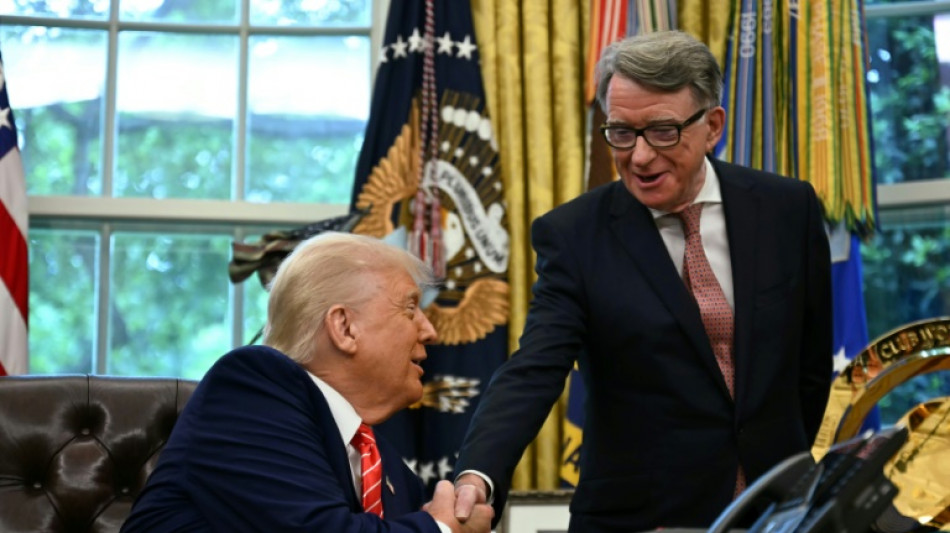
The new deal includes "billions of dollars of increased market access for American exports," Trump said during the Oval Office announcement, which was attended by Peter Mandelson, the British ambassador to the United States.
The agreement will bring in an additional $6 billion to the Treasury Department's coffers from new tariff revenue, the White House said in a statement.
The deal is sure to be closely scrutinized ahead of the Trump administration's self-imposed July deadline for talks, with some nations facing a far higher rate of tariffs if no deal is struck.
"This was the lowest hanging fruit available to the administration," Josh Lipsky, chair of international economics at the Atlantic Council, told AFP.
"It sends the message that negotiations are going to be complicated going forward," he added. "Because the UK situation is unique in many ways and will be hard to replicate for other countries."
- Boost for British auto sector -
The British automotive industry is a clear winner.
The sector, which employs a quarter of a million people in the United Kingdom, was facing 27.5-percent tariffs before this announcement, according to a statement from Prime Minister Keir Starmer's office.
Under the deal announced Thursday, car export tariffs will be slashed to 10 percent on the first 100,000 cars shipped from Britain to the United States.
This is "almost the total" the UK exported to the United States last year, the British prime minister's office said.
Any UK-produced cars imported to the United States above the 100,000 figure will face a 25 percent tariff instead, the White House said.
- Steel and aluminum -
Another key development in the deal is the agreement from the United States to eliminate its recently-imposed levies of 25 percent on UK-made steel and aluminum, according to the British government.
The new agreement "furthers shared national security interests, creating a new union for steel and aluminum," the US Commerce Department said, without confirming the zero percent tariff rate.
The White House did not immediately respond to a request for comment on the elimination of all steel and aluminum tariffs.
- Agriculture -
Trump said the new agreement would create a new $5 billion "opportunity" for US farmers, ranchers and producers, including $700 million in ethanol exports, and $250 million in other agricultural exports, including beef.
Agricultural exports from the United States have long been a key sticking point in trade negotiations, with British farmers -- and consumers -- voicing concerns about chlorine-washed chicken, and hormone treated beef from the United States.
The two countries have agreed to "new reciprocal market access for beef -- with UK farmers given a tariff free quote for 13,000 metric tonnes," according to the British prime minister's office.
The agreement will "exponentially increase our beef exports," US Agriculture Secretary Brooke Rollins told reporters.
Despite the new and expanded US access to British markets, "there will be no weakening of UK food standards," Downing Street said.
- What is excluded? -
Trump's threats to impose pharmaceutical tariffs have not been covered by this arrangement, other than a commitment from the White House to create "a secure supply chain for pharmaceutical products."
"I think that it tells people that in terms of negotiation, what's on the table is what is actually implemented, not what's being threatened," said Lipsky from the Atlantic Council.
Another key area not covered by the agreement is digital services, with the White House keen to tackle a recent digital services tax imposed by Britain on US tech giants like Google and Meta.
"Instead the two nations have agreed to work on a digital trade deal that will strip back paperwork for British firms trying to export to the US -- opening the UK up to a huge market that will put rocket boosters on the UK economy," Downing Street said.
V.Bennett--TNT