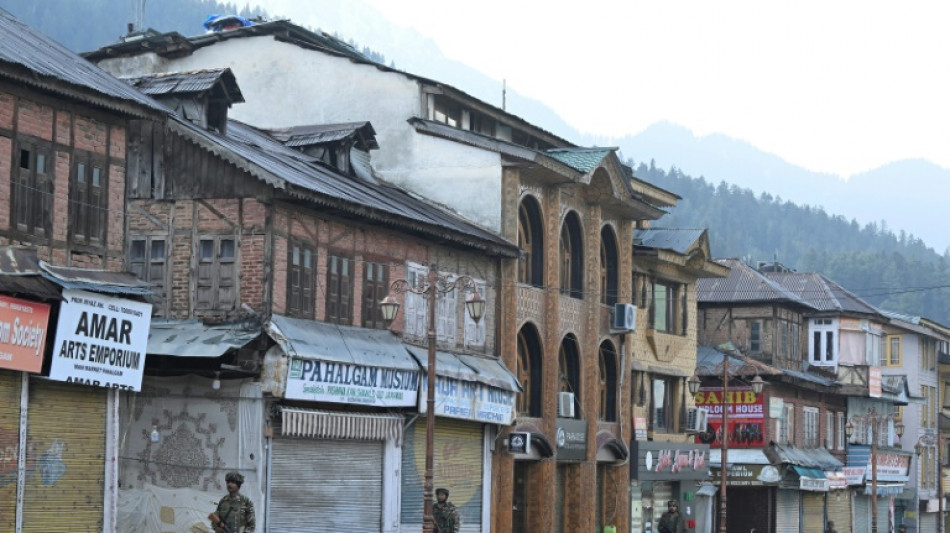
Cameras and automatic rifles: how the Kashmir attack took place / Photo: © AFP
Survivors of the deadliest attack on civilians in Indian-administered Kashmir for years described how gunmen burst out of the forest to rake holidaymakers with automatic weapons.
The attack killing 26 men has enraged India, with New Delhi accusing neighbouring Pakistan of supporting "cross-border terrorism".
Pakistan denies responsibility.
Eyewitness accounts and Indian media reports suggest it was a well-planned and targeted attack designed to send a brutal message to New Delhi.
Holidaymakers escaping the sweltering heat of India's lowland plains were enjoying the tranquil meadows of the Baisaran Valley on Tuesday.
The popular site lies beneath snowcapped mountains near the town of Pahalgam.
Gunmen stormed out of the pine forests, firing automatic weapons.
Indian media reported that the gunmen wore body cameras to record their attack.
The shooters -- who Indian police identified as two Pakistani citizens and one Indian -- separated men from women and children.
A witness told AFP that they "very clearly spared women and kept shooting at men".
- 'Go tell Modi' -
One woman said she had told the gunmen to kill her too, after they executed her husband in front of her.
The woman, Pallavi, said that the men told her they left her alive to send a message to Indian Prime Minister Narendra Modi.
"Go tell Modi," the gunmen said, Pallavi told the Economic Times.
Some survivors said the attackers asked people's religion, and demanded they recite the Islamic declaration of faith.
The cousin of one of the men killed said he was asked by the attackers if he was Muslim before they shot him in the head, but spared his wife.
"They pointed the gun...and said 'tell your government what we have done," Shubham Dwivedi's cousin told India Today.
Other survivors told broadcaster NDTV that if the emergency response had been quicker the lives of some of those shot but not killed outright might have been saved.
Shital Kalathiya, whose husband was killed, said what happened "broke" her.
"What shocked us the most was that there was not a single security person present," she told the Hindustan Times newspaper.
"If they knew that such risks were present at that place, they shouldn't have let anyone go up there."
B.Cooper--TNT