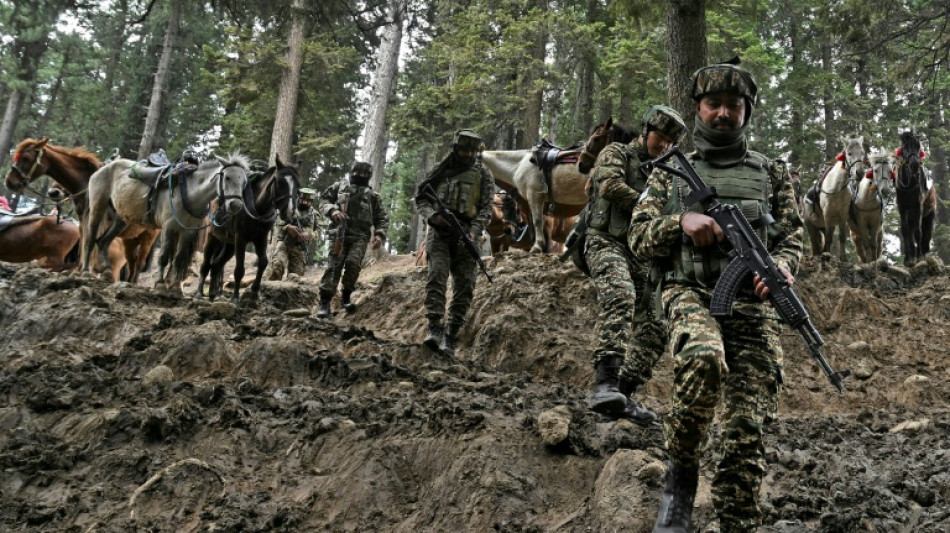
India targets Pakistan with diplomatic moves after Kashmir attack / Photo: © AFP
India took a raft of punitive diplomatic measures against Pakistan on Wednesday, accusing Islamabad of supporting cross-border terrorism after a deadly attack on civilians in Kashmir.
The attack plunged relations between the nuclear-armed neighbours to their worst level in years, and some fear New Delhi's diplomatic salvo may be only the first in multiple steps -- with the potential risk still of military action.
India's measures, including the suspension of a key water-sharing treaty and closure of the main land border crossing in Kashmir, come a day after gunmen killed tourists in the Indian-administered part of the disputed territory.
Pakistan will make "a tit-for-tat response" to the Indian measures, Pakistani Deputy Prime Minister Ishaq Dar said.
The gunmen killed 26 men -- all Indian except one Nepali -- in the deadliest attack on civilians in the Himalayan region for a quarter century.
The killings have shocked New Delhi, as they marked a dramatic shift towards targeting civilians and the area's vital tourism industry, rather than smaller-scale attacks against Indian security forces, which are more common.
Indian Prime Minister Narendra Modi has pledged that those responsible for the "heinous act" will be brought to justice.
"Their evil agenda will never succeed," Modi said shortly after the attack.
- 'Serious risk' -
Tuesday's assault occurred as tourists enjoyed tranquil mountain views at the popular site at Pahalgam, when gunmen burst out of forests and raked crowds with automatic weapons.
No group has claimed responsibility for the attack in the Muslim-majority region where rebels have waged an insurgency since 1989 -- seeking independence or a merger with Pakistan.
India appears to be pointing the finger at its neighbor.
Foreign Secretary Vikram Misri on Wednesday read out a series of actions against Pakistan.
They included the suspension of the Indus Waters Treaty of 1960 to share critical water from Himalayan tributaries "until Pakistan credibly and irrevocably abjures (rejects) its support for cross-border terrorism", Misri told reporters in New Delhi.
It also includes the shutting of the main land border crossing and diplomatic staff reductions, including withdrawing several Indian personnel from Islamabad and ordering Pakistanis home.
Analyst Michael Kugelman said the attack posed a "very serious risk of a new crisis between India and Pakistan, and probably the most serious risk of a crisis since the brief military conflict that happened in 2019".
- 'Heinous' -
India and Pakistan have long accused each other of backing forces to destabilise one another, and New Delhi says Islamabad backs the gunmen behind the insurgency.
Islamabad denies the allegation, saying it only supports Kashmir's struggle for self-determination.
Pakistan's foreign ministry on Wednesday offered its "condolences to the near ones of the deceased".
After India's diplomatic measures, Pakistan said it would convene its National Security Committee, composed of senior civil and military officials and summoned only in exceptional circumstances.
"The National Security Committee will discuss all the measures and a comprehensive response will be given," Defence Minister Khawaja Asif told local media.
India has been seeking an exit from the water accord for years and now wants to "use this incident, which we deplore, as an excuse to come out of this treaty," Asif said.
On Wednesday, smears of blood could still be seen on the grass where the killings took place as forensic investigators gathered evidence.
India has an estimated 500,000 soldiers permanently deployed in the territory but fighting has eased since Modi's government revoked Kashmir's limited autonomy in 2019, a move accompanied by a crackdown on dissent.
The deadliest previous attack on civilians was in 2000 when 36 Indians were killed on the eve of a visit by then-US president Bill Clinton.
The worst attack in recent years was in Pulwama in 2019 when insurgents rammed a car packed with explosives into a police convoy, killing 40 and wounding 35.
C.Blake--TNT