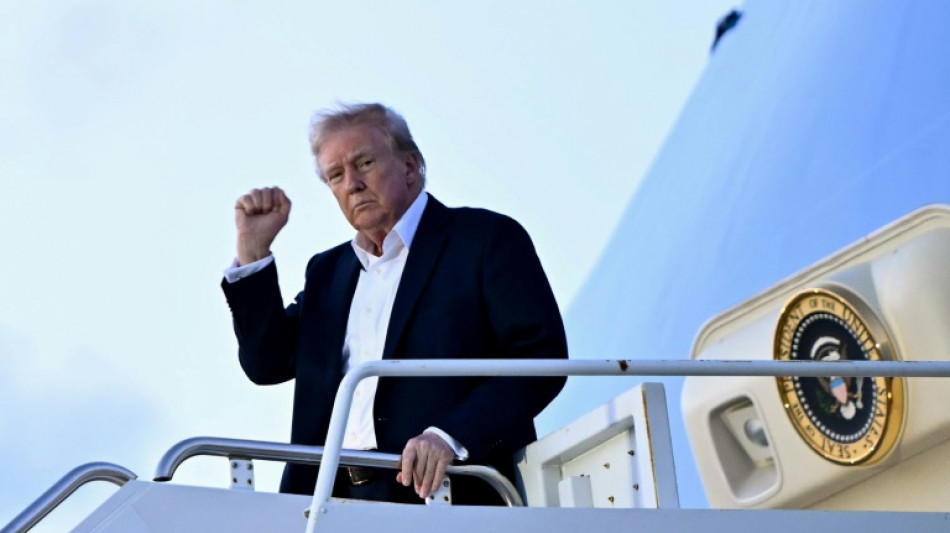
US exempts tech imports in tariff step back / Photo: © AFP/File
The Trump administration has announced a series of major exemptions to its punishing global tariffs -- an apparent step back in an escalating trade war with China.
A notice late Friday by the US Customs and Border Protection office said smartphones, computers and other electronics would be excluded from the import levies President Donald Trump rolled out a week ago.
The move came as retaliatory Chinese import tariffs of 125 percent on US goods took effect Saturday, with Beijing standing defiant against its primary trade competitor.
The exemptions will benefit US tech giants like Apple that make iPhones and other premium products in China, and will generally narrow the impact of the staggering 145 percent tariffs Trump has imposed this year on Chinese goods entering the United States.
Washington and Beijing's escalating tariff battle has raised fears of an enduring trade war between the world's two largest economies and sent global markets into a tailspin.
The fallout has sent particular shockwaves through the US economy, with investors dumping government bonds and the dollar tumbling.
Nevertheless, Trump insisted Friday on his Truth Social platform that "we are doing really well on our tariff policy," even after Beijing announced its latest hike.
Daniel Ives, senior equity analyst at Wedbush Securities, called the US exemptions "the best news possible for tech investors."
"US tariff exclusions will apply to computers, smartphones, and chip-making equipment which takes (away) a huge black cloud overhang for now over the tech sector," he added in a note.
Without these exemptions, he said, "the US Tech industry would be taken back a decade and the AI Revolution thesis would have been slowed significantly."
- Trump 'optimistic' -
Many of the exempted products, including hard drives and computer processors, generally are not made in America.
While Trump has referred to tariffs as a way to bring manufacturing back to the United States, analysts say it will likely take years to ramp up domestic production.
Trump has specifically targeted China with his "reciprocal" tariffs meant to address practices Washington deems unfair.
And even with Washington and Beijing going toe-to-toe, the White House insists Trump remains "optimistic" about a deal with China.
- Xi 'not afraid' -
His Chinese counterpart Xi Jinping gave his first major comments on the tensions Friday, with state media quoting him as saying his country was "not afraid."
Economists warn that the disruption in trade between the tightly integrated US and Chinese economies will increase prices for consumers and could spark a global recession.
China's Commerce Minister Wang Wentao told the head of the World Trade Organization (WTO) that US tariffs will "inflict serious harm" on poor nations, according to a ministry statement released Saturday.
"The United States has continuously introduced tariff measures, bringing enormous uncertainty and instability to the world, causing chaos both internationally and domestically within the US," Wang told WTO chief Ngozi Okonjo-Iweala in a call, the statement said.
Beijing also indicated Friday that it would ignore any further levies by Trump because it said it no longer makes economic sense for importers to buy from America.
China also said it would file a lawsuit with the WTO over the latest round of levies.
Meanwhile, Taiwan's government on Saturday said it held first tariff discussions with the United States and expected more talks to build "strong and stable" trade ties.
Taiwan's President Lai Ching-te on Friday said the island was on "the first negotiating list of the US government" as he looks to shield its exporters from a 32-percent tariff.
P.Sinclair--TNT