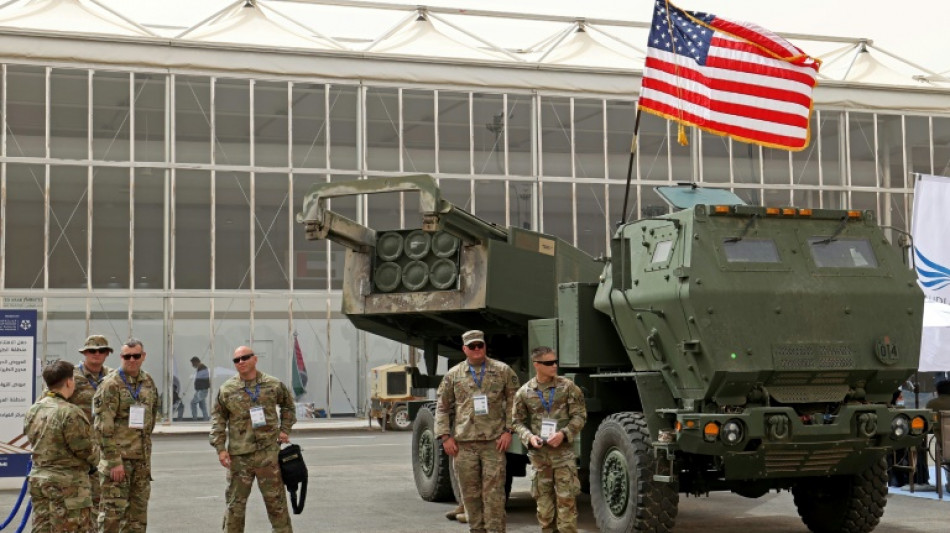
Ukraine forces need deliberate training on new rocket system: US / Photo: © AFP/File
Ukraine wants new Himars artillery from the United States on the battlefield now, but the Pentagon is stressing the need for comprehensive training to make sure the long-range precision rocket systems are used effectively against Russian forces.
Joint Chiefs Chairman General Mark Milley said Wednesday that while four of the Himars systems were being prepared for Ukraine, training was focused on building one platoon at a time to operate them, a process that could slow their delivery.
Himars is a "very sophisticated long-range system," Milley told reporters. "We have to certify these guys to make sure that they know how to use the system properly."
He said the Pentagon is coordinating closely with the Ukrainian military on preparing the teams to operate Himars -- an agile, wheels-based unit that can fire 227 mm precision-guided munitions up to 80 kilometers (50 miles).
That is around double the distance by the more conventional artillery that both sides have on the ground now.
Ukraine pushed for months to obtain the weapons, and the administration of President Joe Biden announced the decision to provide them on May 31.
But at the time, the Pentagon said it would take some three weeks to train teams to operate them, and another two weeks for maintenance.
"What we decided to do, in coordination with the Ukrainians, was to build one platoon at a time," Milley said, noting that they will have a battery in a few weeks, and that the program will build up from there.
"We have got to start this thing with a program that is rational and deliberate," Milley said.
"It would do no good just to throw these weapon systems into the battle. You've got to be trained on it in order to get the maximum use of the weapons."
Ukraine and Western allies hope Himars -- and the similar track-based M270 Multiple Launch Rocket System being provided by Britain and another unnamed country -- will give Ukraine a battlefield edge over invading Russian forces.
The current fight along the frontlines in eastern and southern Ukraine heavily depends on dueling artillery, much of it without precision-guided fire capability.
"If they use it properly, effectively, they'll have a very, very good effect on the battlefield," Milley said of Himars.
F.Jackson--TNT