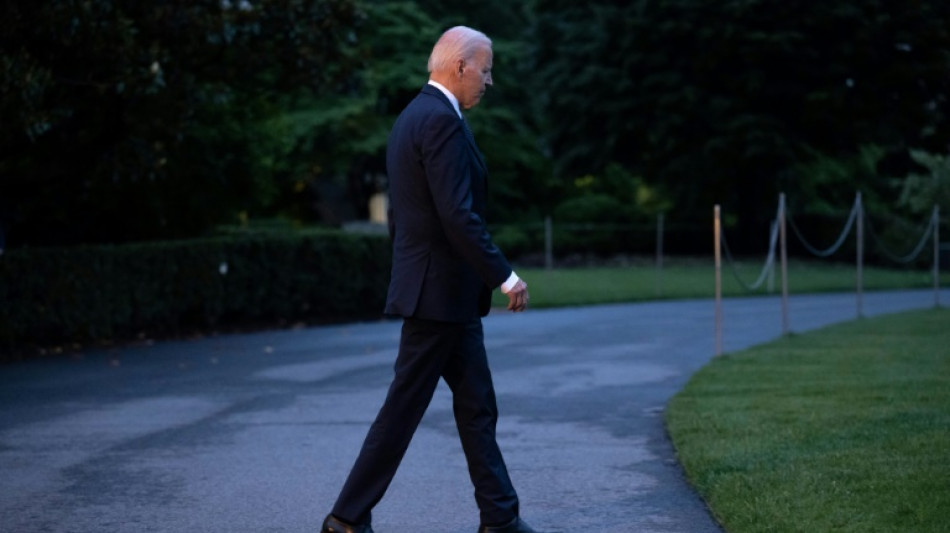
In Biden's America, even the babies are upset / Photo: © AFP
If kissing babies has long been the politician's dream photo-op, then Joe Biden’s clumsy response to a national baby food shortage is quickly turning into a political nightmare -- and the symbol of a presidency struggling to stem discontent.
With his old school Washington ways, decades of political and diplomatic experience, and obvious decency, Biden won election in 2020 on a promise to "heal" the nation after four years of Donald Trump.
But this week made clear again that the healing is not happening and that Biden -- fairly or not -- is being blamed.
Courtroom exhibit A is the ramshackle response to a hole in supplies of baby formula, with supermarket shelves emptying and parents worrying about how to feed their newborns.
The Biden administration had already been battered by anger over inflation and supply chain breakdowns for things like cars and building materials.
There's also grumbling over the unusually last-minute organization of what's meant to be a major regional forum in Los Angeles next week, the Summit of the Americas. It's not even clear which heads of state are coming.
And now, the nation's babies, or at least their parents, are joining the ranks of the upset.
- Competency? -
The baby formula problem didn't begin with Biden.
It began in February when Abbott, which controls about 40 percent of the US market, shut a plant and issued a product recall.
As supply shocks rippled through retailers, parents were presented with the seemingly unlikely scenario in the world's wealthiest nation of not being sure how to feed their infants.
To reassure Americans, the White House organized a slickly produced baby formula summit Wednesday featuring the president, top officials and executives from major producers.
The discussion was meant to highlight the administration's scramble to procure more formula, including by easing importation rules and providing military transport for shipping.
But the glossy messaging fell apart right in front of the television cameras when Biden tried to get the executives to agree that no one could have foreseen Abbott's recall leading swiftly to a nationwide crisis.
They contradicted him, saying they could.
"From the very beginning," as one said.
- Messaging muddle -
The White House's ability to get out from under piles of bad news has been complicated by a reshuffle in the communications department.
Gone is the widely admired press secretary Jen Psaki. Her successor and previous deputy, Karine Jean-Pierre, is having a baptism of fire -- while simultaneously bringing in replacements for a slew of departing assistants.
And this week's daily press briefings brought intense questioning.
Why didn't the president understand the severity of the baby formula issue earlier?
Does the president admit he was wrong to say inflation would be temporary?
Why, in the wake of the Texas school mass shooting and other slaughters, isn't he personally pushing senators to enact gun ownership reforms?
Jean-Pierre found herself on the defensive.
Pressed over the 11th hour lack of a guest list for the Summit of the Americas, less than a week before the event, Jean-Pierre responded Wednesday with a frank admission.
"If you've been following this administration for the past year and a half, one week is not the eleventh hour when it comes to ... how things move," she said. "That is a lifetime away for us."
- Beach time -
Biden's approval ratings have been below 50 percent since last year, and his Democrats are forecast to lose their slender control of Congress to the Republicans in the November midterm elections.
Things are so bad that even a six-point spike in his latest rating, a Reuters/Ipsos poll released this week, still only brought him to a measly 42 percent.
The cause of many of the president's woes would be familiar to previous Oval Office occupants: without a workable majority in Congress, he simply doesn't have as much power as people think.
In a speech about gun reforms -- hastily scheduled with a few hours' notice on Thursday -- Biden made an emotional appeal for Congress to outlaw assault rifles. But analysts said there is little chance of him changing the minds of his Republican opponents.
Biden left for a weekend at the beach as soon as he finished his address.
On Friday, far from the Washington storm, he could celebrate his wife Jill's 71st birthday at their vacation home in Delaware.
Washington -- and that Americas summit -- wait for him next week.
R.Campbell--TNT