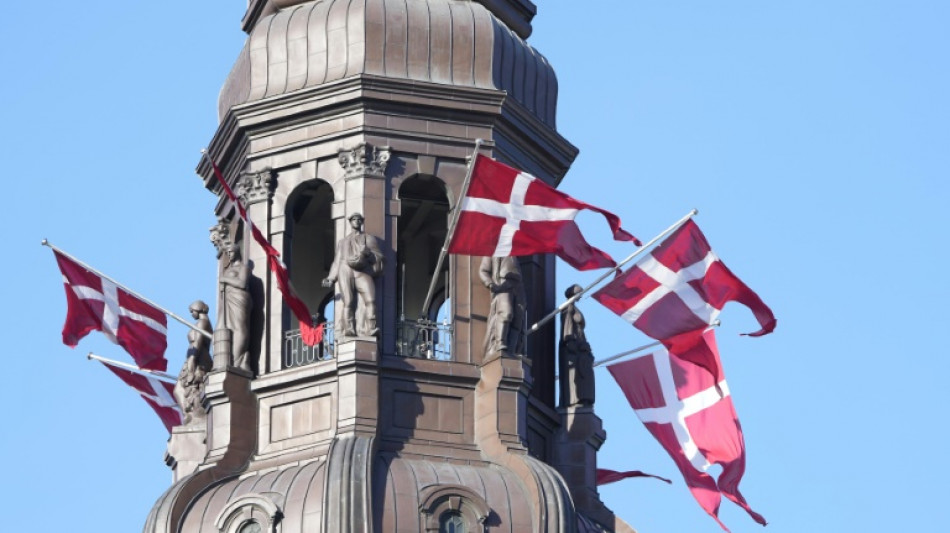
Denmark votes on joining EU's common defence policy / Photo: © Ritzau Scanpix/AFP/File
Traditionally eurosceptic Denmark votes Wednesday in a referendum on whether to overturn its opt-out on the EU's common defence policy after Russia's invasion of Ukraine.
The vote comes on the heels of neighbouring Finland's and Sweden's historic applications for NATO membership, as the Ukraine war forces countries in Europe to rethink their security policies.
More than 65 percent of Denmark's 4.3 million eligible voters are expected to vote in favour of dropping the exemption, an opinion poll published on Sunday suggested.
Analysts' predictions have, however, been cautious, given the low voter turnout expected in a country that has often said "no" to more EU integration, most recently in 2015.
Polls open at 8:00 am (0600 GMT) and close at 8:00 pm. Final results are due around 11:00 pm.
"We must always cast our ballots when there is a vote", Prime Minister Mette Frederiksen urged Danes in the final televised debate of the campaign on Sunday.
"I believe with all my heart that we have to vote 'yes'. At a time when we need to fight for security in Europe, we need to be more united with our neighbours", she said.
Denmark has been an EU member since 1973, but it put the brakes on transferring more power to Brussels in 1992 when 50.7 percent of Danes rejected the Maastricht Treaty, the EU's founding treaty.
It needed to be ratified by all member states to enter into force. In order to persuade Danes to approve the treaty, Copenhagen negotiated a series of exemptions and Danes finally approved it the following year.
Since then, Denmark has remained outside the European single currency, the euro -- which it rejected in a 2000 referendum -- as well as the bloc's common policies on justice and home affairs, and defence.
- 'Ukraine the major reason'-
The defence opt-out means that the Scandinavian country, a founding member of NATO, does not participate in EU foreign policy where defence is concerned and does not contribute troops to EU military missions.
Copenhagen has exercised its opt-out 235 times in 29 years, according to a tally by the Europa think tank.
Danish PM Frederiksen called the referendum just two weeks after Russia's invasion of Ukraine, and after having reached an agreement with a majority of parties in Denmark's parliament, the Folketing.
At the same time, she also announced plans to increase defence spending to two percent of gross domestic product, in line with NATO membership requirements, by 2033.
"It was a big surprise", said the director of the Europa think tank, Lykke Friis.
"For the past many, many years, nobody thought that the government would put the defence opt-out to a national referendum", she said.
"There's no doubt that Ukraine was the major reason for calling the referendum."
Eleven of Denmark's 14 parties have urged voters to say "yes" to dropping the opt-out, representing more than three-quarters of seats in parliament.
Two far-right eurosceptic parties and a far-left party have meanwhile called for Danes to say "no".
They have argued that a joint European defence would come at the expense of NATO, which has been the cornerstone of Denmark's defence since its creation in 1949.
In December 2015, Danes voted "no" to strengthening their cooperation with the European Union on police and security matters for fear of losing their sovereignty over immigration.
F.Morgan--TNT