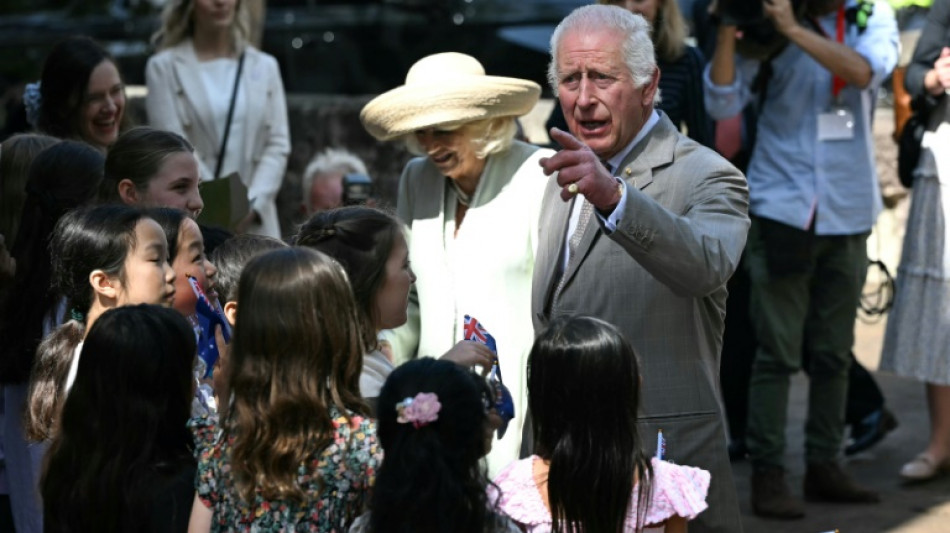
Charles makes first public appearance on Australia tour / Photo: © AFP
King Charles III attended church Sunday as he began an Australian tour in earnest, giving antipodean admirers the first glimpse of their reigning monarch.
The 75-year-old sovereign arrived in Sydney late on Friday evening, but had kept a low profile as he balances cancer recovery with royal duties.
His first official public appearance was a Sunday morning service at St Thomas' Anglican Church in northern Sydney, a stone edifice built as a place of worship for British colonial settlers.
A number of prominent British colonists are buried in the church's graveyard nearby, including Edward Wollstonecraft -- a cousin of "Frankenstein" author Mary Shelley.
Lynton Martin, 22, drove nine hours from Melbourne and donned a union flag print jacket and nine royal lapel pins before trying to catch a glimpse of the royals.
"I wanted to show that we are supportive and welcoming of the king," he told AFP, expecting an "aura" to Sunday's service.
Last year he travelled to London for Charles' coronation, which he described as a "spectacular" event.
Charles will later address the New South Wales state parliament and make a short trip to Admiralty House for a string of closed-door meetings with high-ranking officials.
The harbourside mansion is the Sydney residence of Australia's governor-general, the monarch's representative Down Under.
Royal watchers eager to glimpse the king will have another chance on Monday, when he arrives in the capital Canberra alongside Queen Camilla for the busiest stretch of his slimmed-down schedule.
Charles -- who received the life-changing cancer diagnosis just eight months ago -- is embarking on a nine-day visit to Australia and Samoa, the first major foreign tour since he was crowned.
Visiting British royals have typically carried out weeks-long visits to stoke support, parading through streets packed with thrilled, flag-waving subjects.
But the king's fragile health this time around has seen much of the typical grandeur scaled back.
Intentional or not, the more modest schedule should also help stave off republican concerns about out-of-touch spending and lavish royal banquets.
Aside from a community barbecue in Sydney and an event at the city's famed opera house, there will be few mass public gatherings.
A handful of protesters gathered near the church on Sunday, brandishing demands to "decolonise" Australia.
Australians, while marginally in favour of the monarchy, are far from the enthusiastic loyalists they were in 2011 when thousands flocked to catch a white-gloved wave from Charles' mother Queen Elizabeth II.
F.Morgan--TNT