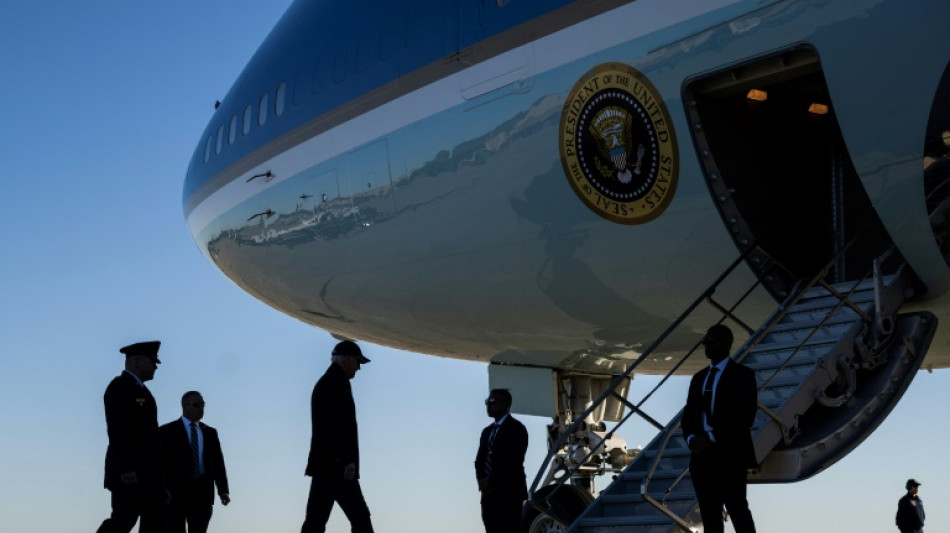
Biden heads to Germany to discuss Ukraine, Middle East / Photo: © AFP
US President Joe Biden took off Thursday on a swift farewell trip to Germany, for talks with allies to shore up Ukraine's increasingly desperate fight against Russia.
Biden was also expected to discuss the escalating crisis in the Middle East, as Israel said it was investigating whether Hamas chief Yahya Sinwar had been killed in a military operation in Gaza.
During a flying 24-hour visit to Berlin, the US leader will meet German Chancellor Olaf Scholz, before they are both joined for talks by French President Emmanuel Macron and British Prime Minister Keir Starmer.
Biden was originally due in Germany last week for a multi-day visit that would have included a meeting with Ukrainian President Volodymyr Zelensky and a major summit of Kyiv's allies, but he postponed it as Hurricane Milton barrelled towards Florida.
The White House said the shorter, rescheduled visit to the key NATO ally would "further strengthen the close bond the United States and Germany share as allies and friends and coordinate on geopolitical priorities, including Ukraine’s defense against Russian aggression and events in the Middle East."
Biden was also keen to make the visit to thank Scholz for facilitating a prisoner exchange deal with Russia earlier this year that freed US reporter Evan Gershkovich, US officials said.
But the focus will be on Ukraine, with Biden, who dropped out of the 2024 White House race in July, keen to consolidate Western military aid for Kyiv in his final three months in office.
Allies are nervously watching the November 5 US presidential election to see if it brings a return of Donald Trump, who has opposed the current level of US support for Ukraine.
Trump has also repeatedly pledged to push through a peace deal if elected -- even before taking office -- that Kyiv fears would involve it giving up chunks of land to Moscow.
Zelensky told allies in Brussels on Thursday that Ukraine must be in a position of strength before any peace talks with Russia, as he explained his "victory plan" to EU leaders and NATO defense chiefs.
More than two and a half years into the war, Kyiv is slowly but steadily losing territory in its eastern Donbas region and under mounting pressure to forge an exit strategy -- which it says must start with ramped-up Western support.
Biden announced a fresh $425 million arms package including air defense and armored vehicles for Ukraine in a call with Zelensky on Wednesday.
The United States is by far the biggest supplier of military aid to Ukraine's battle against the 2022 Russian invasion, followed by Germany.
N.Taylor--TNT