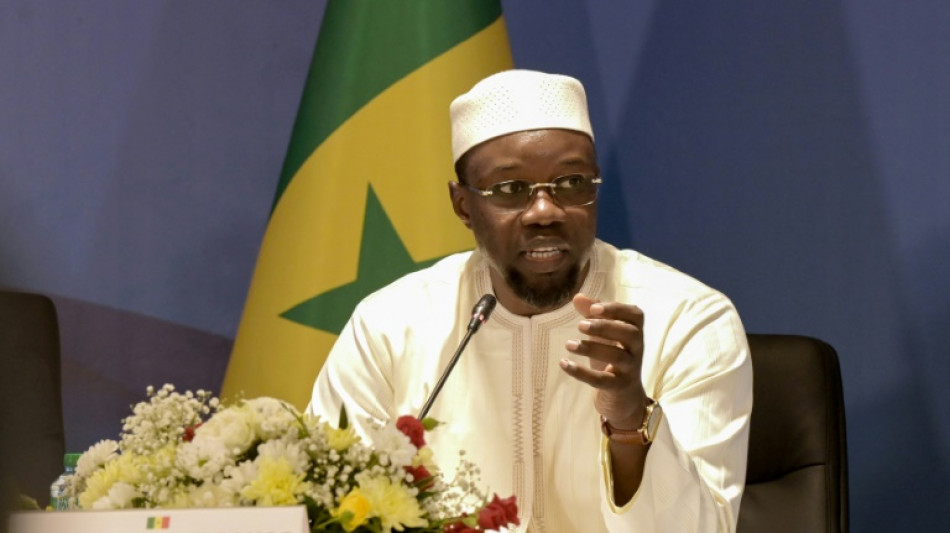
Senegal set to announce breakaway development agenda: PM / Photo: © AFP
Senegal's government will on Monday present plans to break away from foreign dependence and debt in favour of local resources and human capital, said Prime Minister Ousmane Sonko.
The new project is part of the radical break with the past promised by President Bassirou Diomaye Faye took office in April.
"The development models that have been presented to us or applied to us so far will never be able to develop our country," said Sonko on Friday.
"So this is the end of the era of reckless indebtedness used to invest in projects that have nothing to do with building endogenous and sovereign development", he added.
Sonko made his announcement during a visit to a vocational training centre set up in cooperation with Japan. He used the example of Japan as a country that had managed to develop even with few natural resources.
"The Japanese model is ideal for our (African) countries. We prefer to be taught how to fish rather than continue to be offered fish", Sonko said.
Senegal has reserves of natural resources including oil and gas, minerals and fish stocks, but remains one of the least developed countries in the world.
The new development programme is intended to cover the next 25 years, said Sonko.
- November elections -
Sonko has yet to deliver his general policy speech, the government's first six months in power having been marked by confrontations with an opposition-dominated parliament.
President Faye dissolved the national assembly in September, calling snap elections for November 17.
The presidency said the "Senegal 2050" plan aimed to reduce poverty, triple per capita income by 2050 and achieve annual economic growth of six to seven percent.
The proposed development model will be structured around eight development hubs across the country, Sonko said.
Sonko described Senegal's economic situation as "catastrophic" at the end of September following a government review of public finances.
The government said the budget deficit stood at 10.4 percent of GDP instead of 5.5 percent as announced by the previous administration.
It said public debt stood at 76.3 percent of GDP rather than the 65.9 percent previously stated.
Sonko accused the government of former president Macky Sall of having manipulated financial figures and lied to foreign partners, something the previous administration has denied.
A week ago, Moody's downgraded Senegal's credit rating and placed the country under observation.
K.M.Thompson--TNT