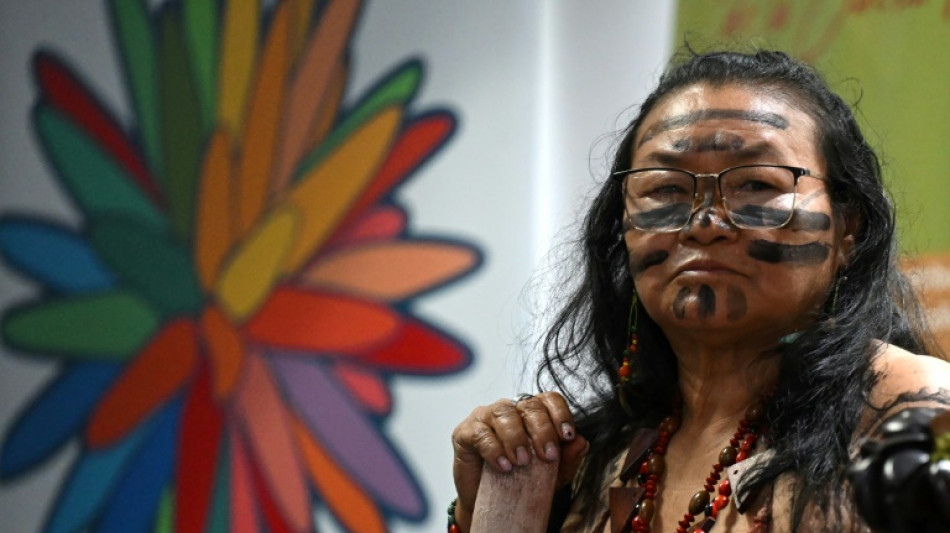
UN biodiversity summit in Colombia aims to turn words into action / Photo: © AFP/File
Two years after a landmark UN-brokered deal to protect nature from a massive wave of destruction, delegates will gather at a new COP in Colombia in late October to assess their progress.
Representatives from some 200 countries are expected at the Oct. 21 to Nov. 1 COP16 biodiversity conference in the Colombian city of Cali.
The last Conference of the Parties or COP dedicated to biodiversity in Montreal in 2022 ended with a breakthrough agreement to protect 30 percent of the planet by 2030 from pollution, degradation and the climate crisis.
COP16 will assess the progress made and examine whether rich countries are making good on their promises to stump up $30 billion a year to help the developing world save its ecosystems.
The Cali conference, which takes place two weeks before the COP29 on climate change in Azerbaijan's capital Baku, will be "an implementation and financing COP," Hugo-Maria Schally, the European Union's lead negotiator at the talks in Cali, said.
Colombia, which is the world's most biodiverse country after Brazil, aims to use the summit to take a leadership role on protecting nature and combatting climate change.
"It's a Latin American moment," Colombian Environment Minister Susana Muhamad said at the United Nations in New York last month.
The summit comes as Brazil and other Latin American countries struggle to emerge from one of the worst wildfire seasons in years, blamed chiefly on rampant deforestation and climate change.
Brazilian President Luiz Inacio Lula da Silva, who will host next year's COP30 on climate change, and Mexico's new left-wing president Claudia Sheinbaum, are among a dozen leaders expected at the talks in Cali.
- Restoring 30 percent of ecosystems -
While hailed for giving Indigenous groups a leading role in protecting natural resources COP host Colombia faces major environmental challenges of its own.
Large areas of forest have been cleared for illicit coca plantations used in cocaine production.
Deforestation surged after an historic 2016 peace deal with the FARC rebel group, as former fighters turned to unregulated farming and ranching.
Those who object put their lives on the line.
Global Witness named Colombia the country with the most murders of land and environmental activists in 2022, with 60 people killed.
"COP16 is not going to be a big decision COP, but it's a particularly important one because it's the first opportunity since that agreement for countries to really signal their commitment," said Dilys Roe, a researcher at the International Institute for Environement and Development in London.
- '30 by 30' -
The agreement reached at the COP15 summit in Montreal in December 2022 -- the biodiversity equivalent of the Paris accord on climate change which seeks to limit long-term global warming to 1.5 degrees Celsius -- was designed to guide global action on nature through 2030.
The headline goal was the "30 by 30" target -- ensuring 30 percent of land and sea areas are effectively conserved and managed by the end of this decade, up from 17 percent of land and around 8 percent of oceans in 2022.
Other targets included restoring 30 percent of degraded ecosystems, cutting environmentally destructive farming subsidies, reducing pesticide use and tackling invasive species.
Time is running out to halt the extinction of species.
According to the United Nations Intergovernmental Science-Policy Platform on Biodiversity and Ecosystem Services (IPBES), 70 percent of global ecosystems are already degraded.
The challenge for Colombia is to try to come up with a "credible" roadmap for reaching the targets set for 2030, Juliette Landry, senior researcher at France's Institute for Sustainable Development and International Relations said.
The hosts have their work cut out for them.
So far only around 20 countries have submitted the updated national biodiversity strategy and action plans (NBSAPs) they committed to provide by COP16.
They have also fallen far short on their promise to increase financial aid to developing countries to $25 billion annually by 2025, rising to $30 billion in 2030.
So far, pledges to a new fund created for the purpose have reached only around $400 million, with only around half of that amount disbursed.
In Cali, developing countries are expected to pressure developed countries to dig deeper for the planet.
They in return are expected to demand that wealthy emerging markets like China also pay their share.
T.F.Russell--TNT