Rising Somalia-Ethiopia tensions threaten Horn of Africa / Photo: © AFP
Growing tensions between Ethiopia and Somalia, heightened by arms shipments, risk destabilising the fragile Horn of Africa and creating opportunities for the Islamist insurgents of Al-Shabaab, experts say.
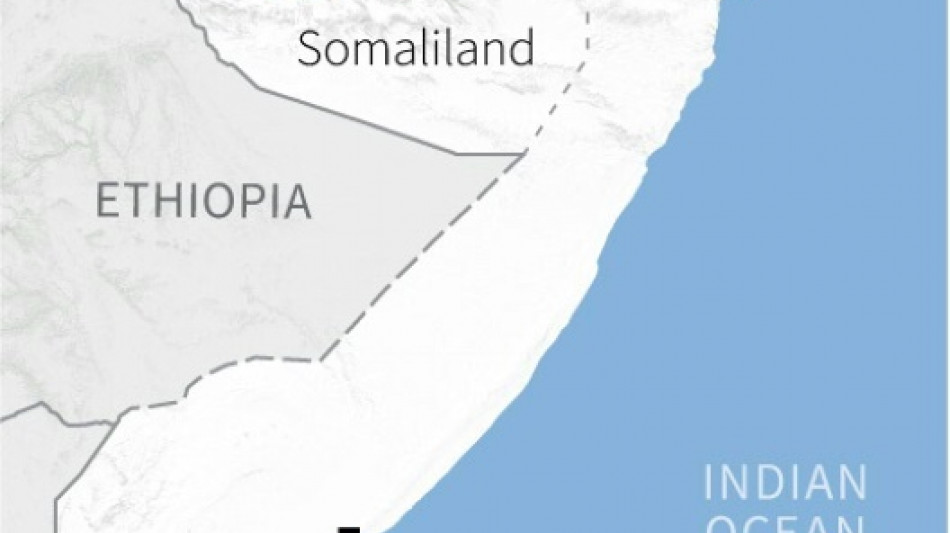
The region has been on alert since January when Ethiopia made the shock announcement that it would lease a stretch of coastline from Somaliland, a breakaway area of Somalia, to build a naval base and commercial port.
Landlocked Ethiopia has long sought its own sea access, but the move enraged Somalia which refuses to recognise Somaliland's claim to independence that it first declared in 1991.
Somalia has reacted by growing closer to Ethiopia's biggest regional rival, Egypt.
Egypt has its own bugbears with Ethiopia, particularly the vast Grand Renaissance Dam it has been building on the Nile which Cairo sees as threatening its water supply.
On August 14, Somali President Hassan Sheikh Mohamoud announced a "historic" military deal with Egypt.
Somalia has since received two arms shipments -- the most recent arriving last weekend.
Analysts say that raises concerns.
"Somalia, a country already awash in arms, is currently seeing a spike in (weapons) imports amid the ongoing tensions. Given pervasive mistrust and weak controls, this is a worrying development," said Omar Mahmood, of the International Crisis Group.
Ethiopia's foreign ministry said Monday it was particularly concerned that weapons would end up in the hands of Al-Shabaab militants.
- 'Fundamental breakdown' -
Somalia has additionally threatened to boot out Ethiopian troops deployed for an African Union mission against Al-Shabaab since 2007.
The mission is due for a makeover at the end of the year and Egypt has offered to take the place of the Ethiopian troops for the first time.
Somalia may also force Ethiopia to remove the estimated 10,000 troops it has stationed along their shared border to prevent incursions by the Islamists.
Samira Gaid, a Mogadishu-based security analyst, said such threats by Somalia were a "wild card", designed to pressure Ethiopia away from becoming the first country to recognise Somaliland.
But the potential loss of experienced Ethiopian troops has already raised fears in southwest Somalia, the area worst-affected by the Al-Shabaab insurgency.
"If Ethiopia and Somalia are not cooperating with each other, if there is a fundamental breakdown in their security relationship, Al-Shabaab is the winner... they can take advantage of the gaps," said Mahmood.
Attempts by outside powers to turn down the temperature have made little progress.
Turkey has hosted two rounds of talks between Ethiopia and Somalia, in July and August.
But a third round expected last week in Ankara did not happen.
"It's hard to see any progress being made because of such rising rhetoric," said Gaid.
Analysts say full-blown armed conflict remains unlikely, but the tripwires are increasing.
Last weekend, Somalia accused Ethiopia of supplying weapons to its northeastern Puntland region, another breakaway province that unilaterally declared independence in 1998.
"This activity constitutes a grave infringement on Somalia's sovereignty and poses serious implications for national and regional security," the Somali foreign ministry wrote on X.
F.Hammond--TNT