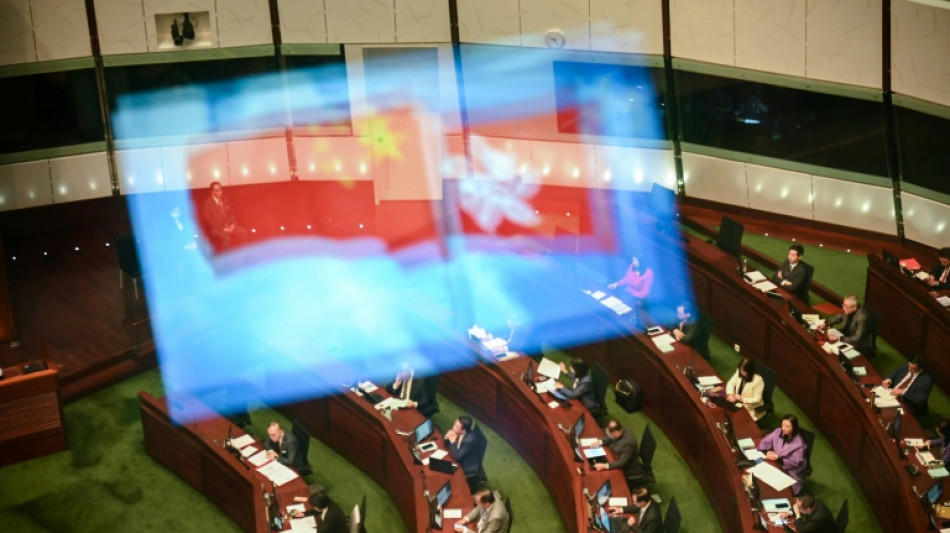
Hong Kong man sentenced 14 months for wearing 'seditious' T-shirt / Photo: © AFP
A Hong Kong man was sentenced to 14 months in jail on Thursday for wearing a T-shirt with protest slogans found to be "seditious" under the city's new national security law.
Chu Kai-pong, 27, had pleaded guilty on Monday to one count of "doing acts with seditious intention", and is the city's first conviction under the new, tougher law, colloquially known as "Article 23".
He was arrested for wearing a T-shirt and a mask bearing protest phrases on June 12 -- a date associated with the city's huge and sometimes violent pro-democracy protests in 2019.
On Thursday, Chief Magistrate Victor So -- a judge handpicked by the government to hear national security cases -- said the court must "fully reflect the legislature's stance on the seriousness of the offence".
"The accused took advantage of a symbolic day with the intention to reignite the ideas behind the unrest," said So, referring to the 2019 protests.
One of the offending slogans, "Liberate Hong Kong, revolution of our times", was previously found to be "capable of inciting secession" -- another national security offence -- in a separate court case.
According to court documents, Chu had told police he believed the slogan called for the return of Hong Kong to British rule.
He was said to have chosen the outfit to remind the public of the 2019 protests, when the phrase was a rallying cry of pro-democracy demonstrators.
Chu had already served a three-month prison term under an older sedition law, also for wearing and possessing clothes and flags with protest slogans.
The sedition offence was created under British colonial rule, which ended in 1997, and was seldom used until Hong Kong authorities revived it in 2020 in the wake of the protests, charging more than 50 people and four companies.
After the protests were quashed, Beijing imposed a national security law on the city in mid-2020 to quell dissent, and a second, tougher law was enacted locally in March.
The revised law beefed up the offence of sedition to include inciting hatred against China's communist leadership, and upped its maximum jail sentence from two years to seven.
The new security law also punishes five other categories of crime: treason, insurrection, sabotage, espionage and external interference.
Critics, including Western nations such as the United States, say Article 23 will further erode freedoms and silence dissent in Hong Kong -- a finance hub once considered one of the freest territories in China.
Authorities have defended the law as necessary to fulfil a "constitutional responsibility", comparing it to a "reliable lock to prevent someone from breaking into (our) home".
As of this month, 303 people have been arrested under the two security laws, with 176 prosecuted and 160 convicted.
V.Bennett--TNT