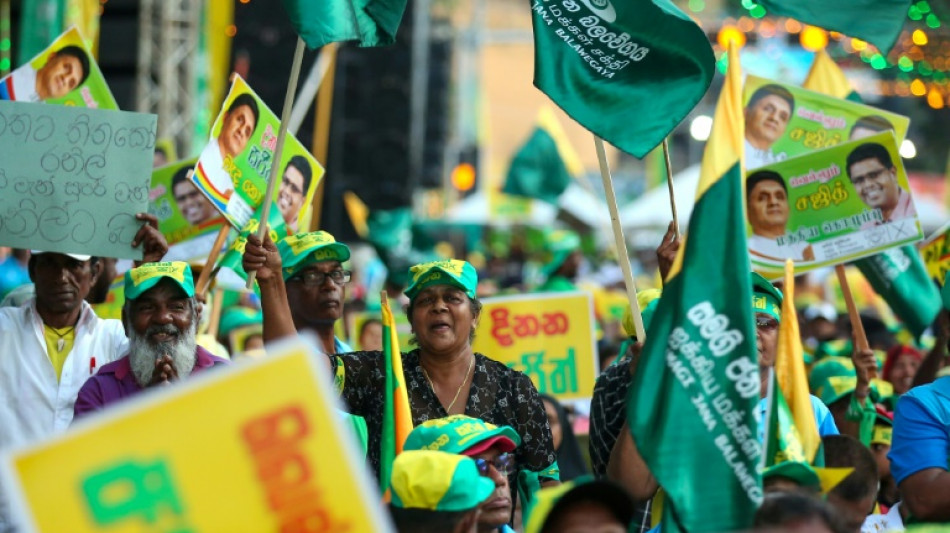
Sri Lanka to vote in first poll since economic collapse / Photo: © AFP
Cash-strapped Sri Lanka will vote for its next president Saturday in an effective referendum on an unpopular International Monetary Fund austerity plan enacted after the island nation's unprecedented financial crisis.
President Ranil Wickremesinghe, 75, is seeking a fresh mandate after claiming credit for stabilising the economy and bringing an end to months of food, fuel and medicine shortages.
He has also restored calm to the streets after civil unrest spurred by the downturn in 2022 saw thousands storm the compound of his predecessor, who promptly fled the country.
"Think of the time when all hope was lost... we didn't have food, gas, medicine, or any hopes," Wickremesinghe said in the closing days of the campaign.
"Now you have a choice. Decide if you want to go back to the period of terror, or progress."
But Wickremesinghe's tax hikes and other belt-tightening measures, imposed per the terms of a $2.9-billion IMF bailout, have left millions struggling to make ends meet.
Experts warn that Sri Lanka's economy is still vulnerable, with payments on the island's $46-billion foreign debt yet to resume since a 2022 government default.
Wickremesinghe says he will press ahead with his austerity programme if elected and warned that any deviation from the IMF's prescription will lead to more trouble.
"The election will largely be a referendum on how Wickremesinghe's government has handled the economic crisis and the ensuing modest recovery," the International Crisis Group said in a report this week.
It added that many citizens were suffering "enormous hardship at the same time as Colombo cuts costs and takes other austerity measures perceived by the public as unfair."
- Rising red star -
Wickremesinghe faces two formidable challengers including Anura Kumara Dissanayaka, the leader of a once-marginal Marxist party tarnished by its violent past.
The party led two failed uprisings in the 1970s and 1980s that left more than 80,000 people dead, and won less than four percent of the vote in the last parliamentary elections.
But Sri Lanka's crisis has proven an opportunity for Dissanayaka, who has seen a surge of support based on his pledge to change the island's "corrupt" political culture.
Analysts say he is likely to benefit from public anger over graft scandals and the chronic economic mismanagement that precipitated the crisis.
"There is a significant number of voters trying to send a strong message... that they are very disappointed with the way this country has been governed," Murtaza Jafferjee of think tank Advocata told AFP.
Fellow opposition leader Sajith Premadasa, once dismissed as the princeling dynast of a former president assassinated in 1993 during the country's decades-long civil war, is also favoured to make a strong showing.
The 57-year-old, a former ally and deputy of Wickremesinghe until he renounced his former leader in 2020, has campaigned on a pledge to secure concessions from the IMF.
"We will revise the unfair burden-sharing structure of the IMF-supported tax code revision that is forcing professionals to seek employment abroad," Premadasa said in his manifesto.
Official data showed that Sri Lanka's poverty rate doubled to 25 percent between 2021 and 2022, adding 2.5 million people to those already living on less than $3.65 a day.
The IMF said reforms were beginning to pay off, with inflation below five percent from a peak of 70 percent at the height of the crisis, and growth slowly returning.
"A lot of progress has been made, but the country is not out of the woods yet," the IMF's Julie Kozack told reporters in Washington last week.
"It is important to safeguard those hard-won gains."
A.M.Owen--TNT