The National Times - Mexico president signs contested judicial reforms into law

Mexico president signs contested judicial reforms into law


Mexico president signs contested judicial reforms into law
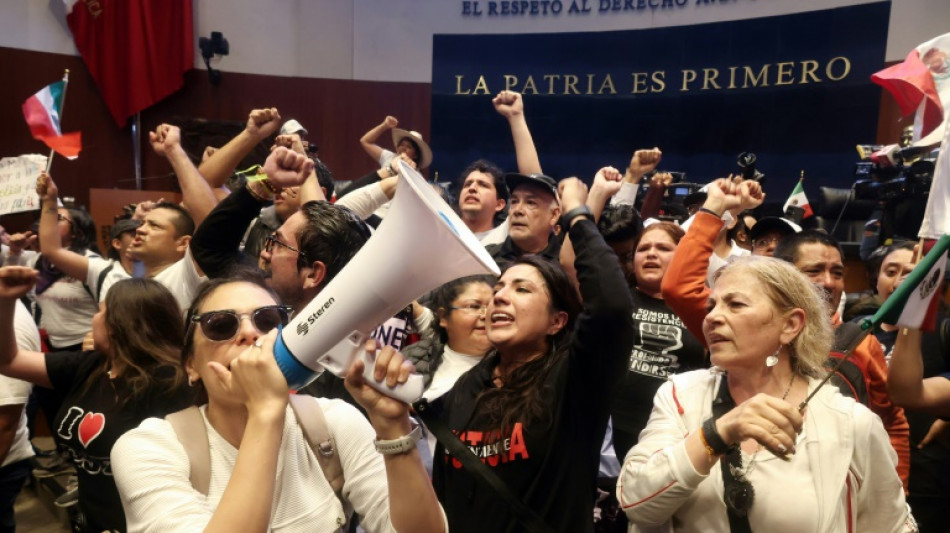
Mexico president signs contested judicial reforms into law / Photo: © AFP/File

President Andres Manuel Lopez Obrador announced Sunday that he had signed into law controversial judicial reforms making Mexico the world's only country to elect all its judges by popular vote.

Change text size:

The outgoing leftist leader signed the decree in a video posted on social media, calling it a "historic day."

He was accompanied by president-elect Claudia Sheinbaum, his close ally, who will replace him on October 1 following her landslide election win in June.

Lopez Obrador had pushed hard for the constitutional changes, criticizing the current judicial system as "rotten," corrupt, and serving the interests of the political and economic elite.

Opponents and legal experts fear that elected judges could be more vulnerable to pressure from criminals in a country where powerful drug cartels regularly use bribery and intimidation to influence officials.

Lopez Obrador has frequently lashed out at the judiciary since taking office in 2018 -- in particular the Supreme Court, which has impeded some of his policies in areas such as energy and security.

Last week, legislators were forced to suspend their debate and move to another location after demonstrators stormed the Senate, chanting "The judiciary will not fall."

Opponents, who accuse Lopez Obrador of overseeing a trend toward democratic backsliding, have held a series of protests against the plan, under which Supreme Court and other high-level judges would be chosen by popular vote.

The United States, Mexico's main trading partner, has warned that the reforms would threaten a relationship that relies on investor confidence in the Mexican legal framework.

W.Baxter--TNT

Featured

ANC’s Renewal Rhetoric Fades as Voters Reject Party in 2026 Local Elections

After nearly twenty years of official pledges to reverse internal decay and restore public trust, the African National Congress (ANC) faces a stark reality check following the 2026 local government elections. The results indicate that South African voters no longer believe in the party's capacity for renewal, marking a significant shift from the era when the ANC maintained overwhelming electoral support despite early warnings of structural crisis.

Cuban Diplomat Warns U.S. Blockade Is Severing People-to-People Ties

Cuban diplomat Gabriela Castillo warns that escalating U.S. sanctions are severing vital human connections between the two nations, particularly affecting academic exchanges and longstanding solidarity with African American communities. She argues that political coercion is inflicting collective punishment on Cuban civilians while erasing opportunities for mutual understanding.

Home Affairs Deploys AI to Clear Asylum Backlog Amid Staffing Crisis

The South African Department of Home Affairs has launched a new digital platform utilizing artificial intelligence and biometric technology to overhaul the country’s asylum process. The initiative aims to resolve a severe operational bottleneck, as only nine officials were managing thousands of outstanding appeals at the start of the current administration. Officials warn that registering an intention to apply does not grant automatic protection against immigration enforcement.

Ian Borg Honoured by Palestinian and Arab League Ambassadors for Palestine Support

Deputy Prime Minister Ian Borg has been presented with a commemorative plaque by the ambassadors of Palestine and the Arab League to Malta. The honour recognizes his support for Arab causes during his tenure as Foreign Minister, particularly regarding Malta’s formal recognition of the State of Palestine.

Change text size: