US finalizes sharp tariff hikes on Chinese EVs, other goods / Photo: © AFP
The United States locked in tariff hikes on billions of dollars worth of Chinese goods Friday, with a 100 percent duty on electric vehicles and 25 percent on EV batteries taking effect in two weeks.
The White House announced the steep tariff increases in May, targeting key sectors including EVs, semiconductors, batteries and solar cells -- drawing a fiery response from Beijing.
It also comes ahead of November's presidential election, where both Democrats and Republicans are seeking to show a tough stance on China as competition between both countries intensifies.
"Today's finalized tariff increases will target the harmful policies and practices of the People's Republic of China that continue to impact American workers and businesses," said US Trade Representative Katherine Tai in a statement.
Apart from tariff increases that take effect later this month including those on solar cells, the US Trade Representative's office confirmed that a 50 percent duty on semiconductors -- a sharp rise from before -- would start in 2025.
A 25 percent tariff on lithium-ion batteries that are non-EV take place January 2026, said the USTR.
The tariff hikes on about $18 billion worth of goods were taken after a review of levies imposed under then-president Donald Trump, which impacted some $300 billion in goods from China.
The moves this year impact both products already targeted by earlier Trump tariffs as well as additional ones.
But the Biden administration's moves go beyond tech for green energy, also impacting goods like cranes and medical products.
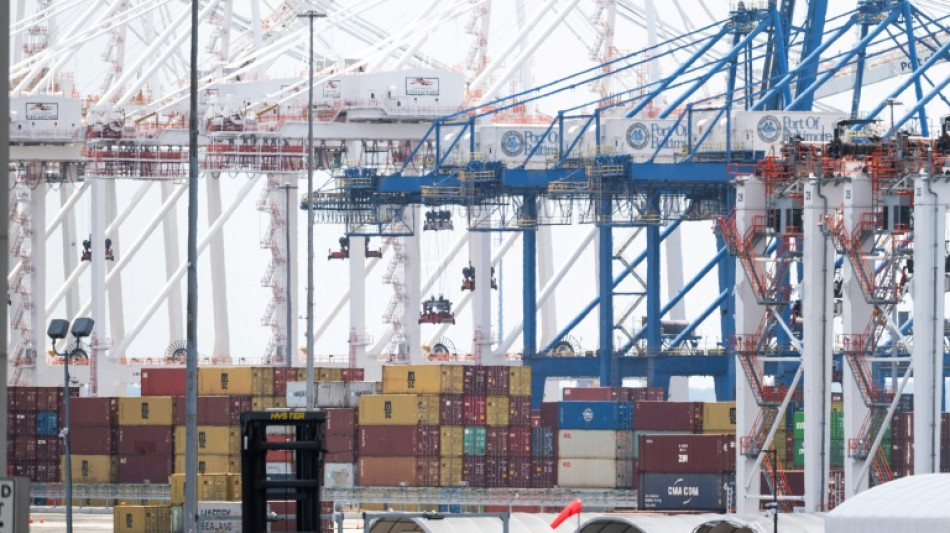
Tariffs on ship-to-shore cranes will rise to 25 percent this year, said the USTR.
But the final decision allows exclusions for Chinese cranes ordered before mid-May, if they are delivered before May 2026.
The move on Friday allows some reprieve to port operators, given that China dominates the industry while the United States works to rebuild its own capacity to produce port cranes.
Among medical products, the USTR said it would lift tariffs on medical face masks to 50 percent -- higher than a proposed level of at least 25 percent.
But it delayed the start of 50 percent tariffs to 2026, to give time for a shift away from Chinese sellers.
Levies would also impact items like medical gloves.
President Joe Biden's administration has pumped massive funding into areas like semiconductor manufacturing and research, alongside efforts to boost green investments, and is concerned about underpriced exports from China.
On Friday, the US government also announced it would move to curb a surge in lower-value shipments entering without being subject to tariffs -- concerned about Chinese products entering with minimal scrutiny.
The trade rule is known as de minimis, and foreign shipments are eligible for exemption if the fair retail value of items imported is $800 or less.
S.Clarke--TNT