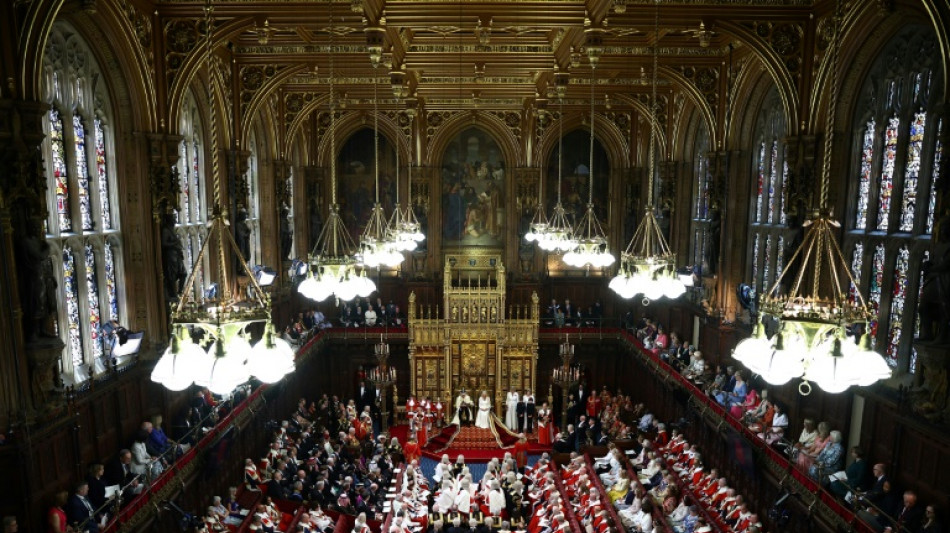
UK govt moves to oust hereditary peers from upper house / Photo: © POOL/AFP
The UK government on Thursday introduces legislation to axe seats in the House of Lords retained for hereditary lawmakers as it moves to reform parliament's unelected upper chamber.
The bill will remove the 92 seats reserved for peers who inherited their position as a member of an aristocratic family.
They hold titles such as duke, earl, viscount and baron. Britain is an anomaly among western governments in having such lawmakers.
The move was a manifesto commitment of Prime Minister Keir Starmer's Labour party ahead of its landslide general election win in July, which returned it to power for the first time in 14 years.
It resurrects reform of the Lords that started under Tony Blair's Labour government in the late 1990s.
"This is a landmark reform to our constitution," constitution minister Nick Thomas-Symonds said in a statement.
"The hereditary principle in law-making has lasted for too long and is out of step with modern Britain.
"The second chamber plays a vital role in our constitution and people should not be voting on our laws in parliament by an accident of birth," he added.
The legislation will easily pass the House of Commons lower chamber due to Labour's massive majority before it will have to be approved by the Lords.
It is not clear when exactly it will become law.
Lesotho in southern Africa is the only other country in the world with a hereditary element in its legislature, according to UK officials.
The scrapping of the hereditary peers has been described by Labour as a "first step in wider reform".
The government says it wants to ultimately replace the Lords with an alternative second chamber that is more representative of the UK.
The Lords comprises around 800 members, most of whom are appointed for life.
They include former MPs, typically appointed by departing prime ministers, along with people nominated after serving in prominent public- or private-sector roles, and senior Church of England clerics, including the Archbishop of Canterbury.
The primary role of the centuries-old chamber is to scrutinise the government.
It cannot override legislation sent from the popularly elected House of Commons, but it can amend and delay bills and initiate new draft laws.
Blair's government had intended to abolish all the seats held by hundreds of hereditary members who sat in the chamber at that time.
But it ended up retaining 92 in what was supposed to be a temporary compromise.
Lords reform has proved a thorny issue for successive administrations, in part because officials have struggled to propose better alternatives.
F.Harris--TNT