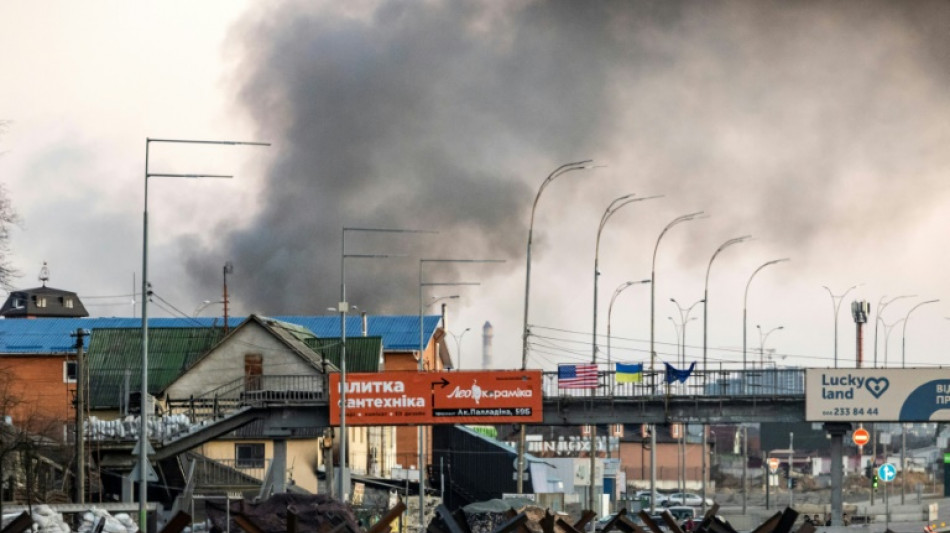
Russia using 'old methods of warfare,' Ukraine intel chief says
The Russian army is riddled with informers and using "old methods of warfare" against Ukrainian forces, the head of Ukraine's defense intelligence agency GUR said in an interview published Friday.
Brigadier General Kyrylo Budanov also told US publication The Nation that a "very large number of people" have been mobilized to engage in guerrilla warfare behind Russian lines.
Budanov said that although Ukrainian forces have held out against the Russian military for a month, the situation remains "very difficult."
"We have large Russian forces on our territory, and they have encircled the cities of Ukraine," he said. "As for the prospects of peace, despite the negotiations, they still remain vague and unpredictable."
Budanov told The Nation that Ukrainian forces have benefitted from "miscalculations" by the Russians.
"Russian command has made miscalculations many times, and we use these miscalculations," Budanov said.
"The Ukrainian army has shown that the Russian army as the second army in the world is a big myth, and it's just a medieval concentration of manpower, old methods of warfare," he said.
He said the Ukrainians have made effective use of informers.
"We have lots of informers within the Russian army, not only in the Russian army, but also in their political circles and their leadership," Budanov said.
"In November, we already knew about the intentions of the Russians, and you can see that everything came through," he said. "As for the date, it changed several times."
He said Ukrainians were tracking Chechen forces fighting for Russia using their cellphones and human intelligence sources.
"We have many informers inside the Chechen ranks," he said. "As soon as they start preparing any operation, we know that from our informants," he said.
Budanov said Russian forces would also have to confront insurgents.
"Our warriors, our servicemen, even our hunters will start hunting the aggressor, the Russian forces, with their rifles in the forests," he said. "I should say that soon the spring will come, our forests will become green, and a real hell will open up for the aggressor."
The Nation said the interview with the 36-year-old Budanov was conducted over an encrypted line with a translator.
S.O'brien--TNT