Putin going to G20 'a step too far': Australia PM
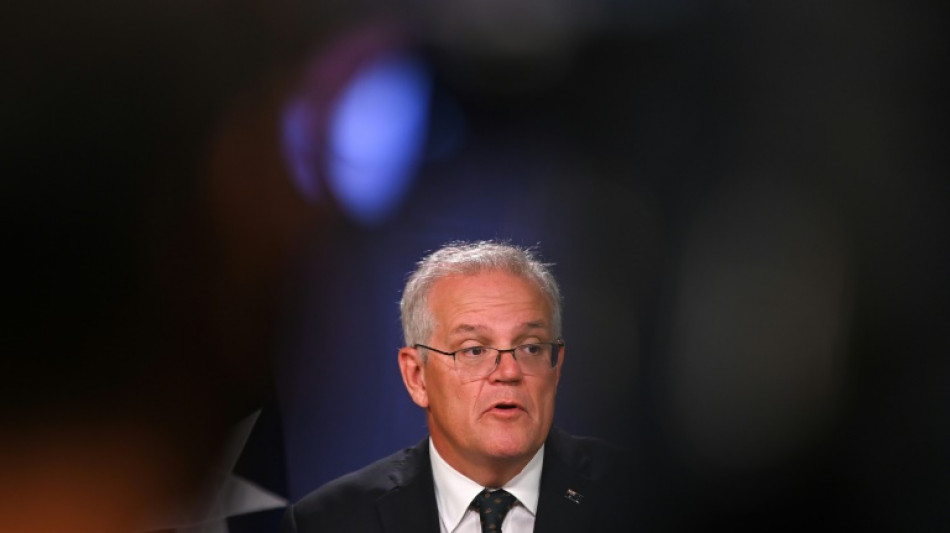
Allowing Russian President Vladimir Putin to sit with other world leaders at this year's G20 summit would be "a step too far", Australia's Prime Minister Scott Morrison said Thursday.
Putin has already been invited to the G20 heads of state summit in November by this year's host Jakarta, and he intends to be there, Russia's ambassador to Indonesia said this week.
But Morrison objected, citing Russia's war in neighbouring Ukraine.
"I think we need to have people in the room that aren't invading other countries," he said.
The prime minister said he had been in "direct contact" with Indonesian President Joko Widodo about Putin's attendance at the Group of 20, which brings together the world's top economies, including the United States, China, Japan and some European nations.
"Russia has invaded Ukraine. This is a violent and aggressive act that shatters the international rule of law," Morrison told a news conference in Melbourne.
"And the idea of sitting around a table with Vladimir Putin... for me, is a step too far."
China this week described Russia as an "important member" of the G20 and said no member had the right to expel another country, after Washington raised the prospect of excluding Moscow.
Morrison noted that Australia and the Netherlands this month have also launched fresh legal proceedings against Russia over the downing of Malaysia Airlines flight MH17, which was shot down over Ukraine on July 17, 2014, killing everyone on board.
International investigators say it was struck by a surface-to-air missile originally brought from a Russian military base.
"So we know Vladimir Putin’s form when it comes to taking the lives of innocent civilians," Morrison said.
"I am not shocked by their barbarity. I am not shocked by their arrogance in what they are seeking to impose on Ukraine. And that’s why Australia has been one of the strongest in taking action in relation to Russia."
Australia announced Sunday a ban on all exports of alumina and bauxite to Russia while pledging more weapons and humanitarian assistance to Ukraine.
The government says Australia has levelled 476 sanctions against Russian individuals and institutions since the invasion began on February 24.
N.Johns--TNT