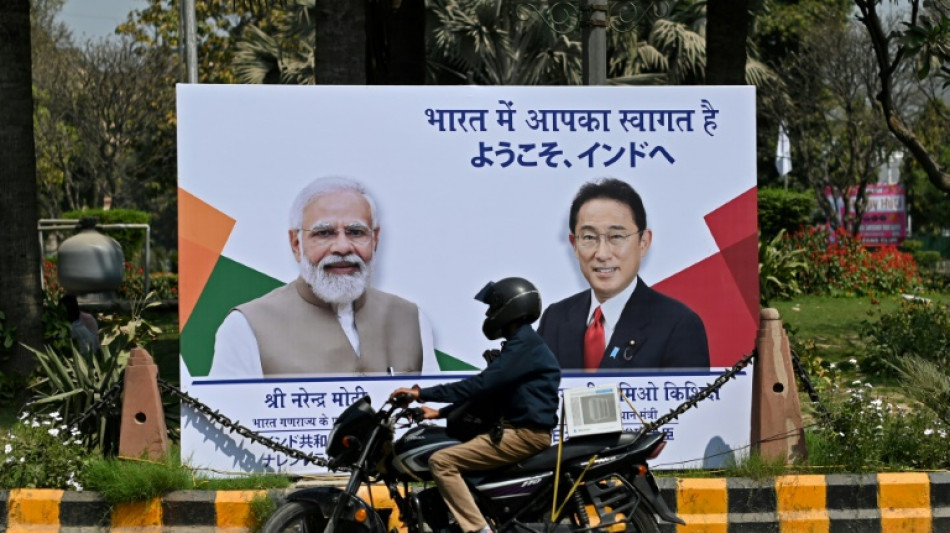
Japan PM visits India for 'candid' talks on Ukraine
Japanese Prime Minister Fumio Kishida was due in India on Saturday with officials in Tokyo predicting "candid discussions" about New Delhi's unwillingness to condemn Russia's invasion of Ukraine.
Unlike fellow members of the Quad alliance Japan, Australia and the United States, India has abstained in three UN votes deploring Moscow's actions, calling only for a halt to the violence.
Earlier this month in a four-way call, Kishida, US President Joe Biden and Australian Prime Minister Scott Morrison failed to convince India's Narendra Modi to take a tougher line.
A joint Quad statement had said they "discussed the ongoing conflict and humanitarian crisis in Ukraine and assessed its broader implications" -- without any condemnation of Moscow.
A separate Indian readout pointedly "underlined that the Quad must remain focused on its core objective of promoting peace, stability and prosperity in the Indo-Pacific region."
Ahead of Kishida's visit, the first by a Japanese prime minister since 2017, a foreign ministry official said Tokyo was "aware" of Delhi's historical ties to Russia and its geographical location.
"But at the same time we share fundamental values and strategic interests so naturally there will be candid discussions about how we view the Ukraine situation, and also expect to hear similar explanation from Prime Minister Modi," the official told reporters without wishing to be named.
India's foreign ministry said only that the talks would "provide an opportunity for both sides to review and strengthen the bilateral cooperation in diverse areas as well as exchange views on regional and global issues of mutual interest so as to advance their partnership for peace, stability and prosperity in the Indo-Pacific region and beyond."
Modi and Morrison are also due to hold a virtual summit on Monday.
Russia is India's main arms supplier but Delhi also needs more support from the Quad and others in the region and beyond in the face of an increasingly assertive China.
Tensions between New Delhi and Beijing have been high since a 2020 clash on their disputed Himalayan border that killed at least 20 Indian and four Chinese soldiers.
Since then, multiple rounds of talks have failed to de-escalate tensions and both sides have sent additional military hardware -- in India's case much of it Russian-made -- and thousands of extra soldiers.
F.Lim--TNT