War and neglect endanger Yemen's historical sites
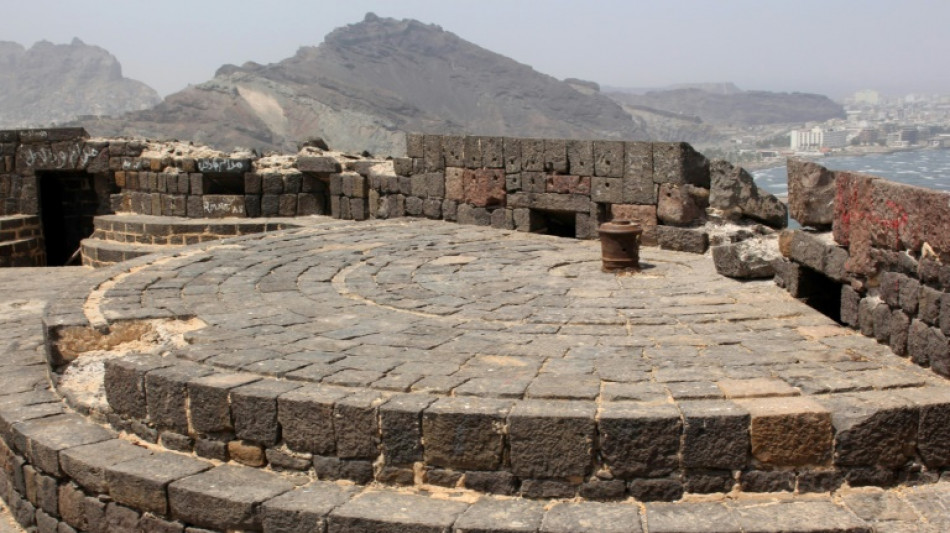
Yemen's Sira Fortress withstood attacks by the Portuguese and the Turks, but years of war have left the 11th century citadel in disrepair, defaced by graffiti and littered with rubbish.
Overlooking the southern port of Aden, Sira sits atop a rocky mountain island in the historic district of Crater, a strategic position that once made it a base for British colonial forces.
Around its ancient walls, cigarette butts litter the ground and a visitor has scrawled the words "I love you" on one of the towers of the redoubtable fortress.
Yemen's brutal war has not just killed hundreds of thousands, but also laid waste to much of its rich architectural heritage, from its iconic mud brick towers to mosques, churches, museums and military bastions.
Many important archaeological sites and tourist landmarks have been damaged and artefacts looted and smuggled abroad.
"Neglect and ignorance have created a level of loss that can no longer be reversed," said Asmahan al-Alas, secretary general of the Yemeni Society for History and Archaeology.
"The absence of an official vision for Yemen to maintain and preserve its cultural heritage and identity... has led to a sharp deterioration," she told AFP.
The cisterns of Aden, millennia-old rainwater tanks carved into the rock to replenish the city wells, have also suffered from neglect.
- 'Depressed and desperate' -
Yemen has since 2014 been embroiled in conflict between the government, supported by a Saudi-led military coalition, and the Iran-backed Huthis, who control large swathes of the north including the capital Sanaa.
Amid what the United Nations labels the world's worst humanitarian crisis, authorities have struggled to secure funds to maintain important sites, many of which have been bombed or vandalised.
The Huthi rebels controlled parts of Aden for several months in 2015 before they were pushed out by pro-government forces.
At the time, the Military Museum -- established in 1918 as a school and turned into a museum in 1971 -- was destroyed in bombing and ultimately looted.
The Saudi-led coalition has acknowledged targeting part of the building in 2015 as a "legitimate military target".
Osman Abdulrahman, deputy director of Aden's Antiquities Office, said the city's key sites still suffer "systematic neglect", in part for a lack of funding.
"Even if we do get a little bit of funding, it's not enough to cover even a small part of what is needed," he told AFP.
With a tiny budget of only about $200 a month, his office can barely afford stationery, he added.
"I feel depressed and desperate," said Abdulrahman. "Sometimes I wish I had never studied archaeology."
S.Clarke--TNT