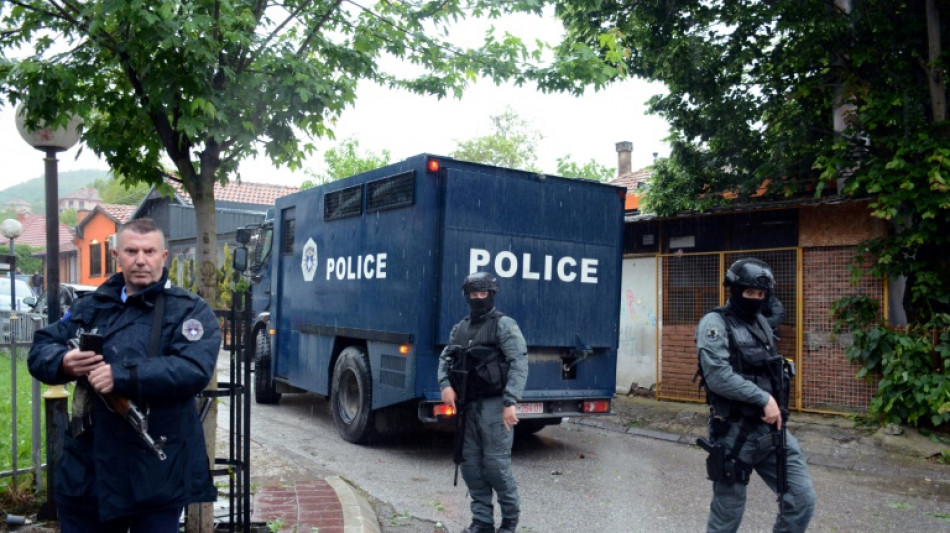
Serb clashes, West condemnation as Kosovo pushes through mayors / Photo: © AFP
Police in northern Kosovo fired tear gas Friday as Serbs protested the installation of ethnic Albanian mayors, a decision that drew sharp condemnation from the United States and European powers.
Serbia, which ruled Kosovo until a NATO intervention in 1999, placed its army on high alert and ordered forces towards the border, a step it has taken repeatedly in recent years.
Kosovo's ethnic Serb minority boycotted elections in the north in April, allowing ethnic Albanians to take control of the local councils despite the vote's tiny turnout of less than 3.5 percent.
Kosovo Prime Minister Albin Kurti since last week has gone ahead and installed mayors, defying calls by the European Union and the United States, which has championed the territory's independence.
Secretary of State Antony Blinken said that the United States "strongly condemns" Kurti's move.
"These actions have sharply and unnecessarily escalated tensions, undermining our efforts to help normalise relations between Kosovo and Serbia, and will have consequences for our bilateral relations with Kosovo," Blinken said in a statement.
The United States also issued a joint statement with Britain, France, Italy and Germany that condemned the decision and urged Kosovo to "immediately step back and de-escalate."
The Western powers said they were also "concerned by Serbia's decision to raise the level of readiness of its armed forces at the border with Kosovo and call on all parties for maximum restraint, avoiding inflammatory rhetoric."
- Injuries in clashes -
In the Serb-majority town of Zvecan, Serb residents clashed with officers before being pushed back, an AFP journalist witnessed.
In videos posted online, gunshots and shock bombs could be heard.
Ambulances arrived at the scene, where around 10 people suffered minor injuries "from shock bombs and tear gas, and also visible facial injuries", Danica Radomirovic, deputy head of the local hospital, told local media.*
Five police officers sustained slight injuries from "heavy objects and shock bombs" that were thrown in their direction, Kosovo police said.
"Material damage was also caused to four official vehicles. One of them was set on fire... Gunshots were also heard nearby," Kosovo police added.
Kosovo police earlier confirmed that the officers were escorting newly elected mayors into their workplaces.
Serbian state-run broadcaster RTS reported that Kosovo police also used tear gas in the Zubin Potok and Leposavic municipalities.
Local ethnic Serbs have begun to erect roadblocks in Leposavic as a sign of protest at the events, RTS reported.
Serbia last put its army on a heightened state of alert in December after Serbs erected barricades to protest at the arrest of an ex-policeman.
There are frequent bouts of unrest in Kosovo's northern districts, home to many ethnic Serbs, who have remained loyal to Belgrade and never accepted Kosovo's unilateral declaration of independence in 2008.
An estimated 120,000 Serbs live in Kosovo, many in the four northern districts.
Belgrade backed the local election boycott in April. It is pushing for an "association of Serb municipalities" -- a form of autonomy for the Serb minority in Kosovo, where the majority of the 1.8 million inhabitants are ethnic Albanian.
The main Serb party from Kosovo threatened a "decisive response" from ethnic Serbs if the "repression" by Kurti does not stop.
In March, Kosovo and Serbia stopped short of signing a potentially landmark deal to normalise their relations, despite months of shuttle diplomacy by European Union mediators.
F.Harris--TNT