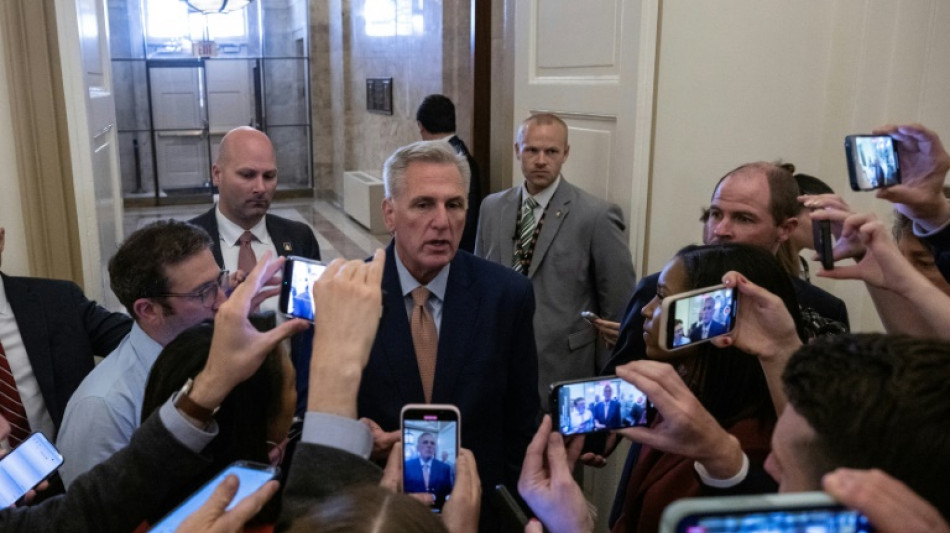
W. House touts 'movement' on debt after latest talks / Photo: © AFP
The White House says some progress was made in the latest round of talks with Republican negotiators to avert a catastrophic US debt default before a June 1 deadline.
"We are seeing movement", White House Press Secretary Karine Jean-Pierre told reporters Tuesday afternoon, adding: "Both sides have to understand that they're not going to get everything that they want."
Negotiations between Biden and Republicans in Congress look set to go to the wire, with negotiators locked in talks since Sunday to try and shape a deal to raise or suspend the borrowing cap, known as the debt ceiling, in order to cover existing US spending commitments.
Republicans in Congress have so far refused to do so without a commitment from Democrats to cut spending next year and start bringing down the country's $31-trillion-plus debt burden.
"With just 9 days left to go, Republicans remain the only ones in Washington who have actually done anything to lift the debt limit and avoid default," House Speaker Kevin McCarthy said in a Tweet on Tuesday.
US Treasury Secretary Janet Yellen says the country could run out of money to pay for existing commitments as early as next week, while the nonpartisan Congressional Budget Office predicts the so-called "X-date" will arrive two weeks later.
- No constitutional solution -
Karine Jean-Pierre also appeared to be ruling out a constitutional solution to the debt crisis, telling reporters such a move "is not going to fix the current problem we have right now."
Some legal scholars had argued that invoking the 14th Amendment to the constitution would allow the US Treasury simply ignore the debt limit and keep borrowing to meet its commitments.
Jean-Pierre also appeared to rule out a short-term extension to the debt ceiling to allow Biden and McCarthy's teams more time to negotiate, telling reporters such a solution is "not on the table."
After three rounds of talks between Biden and McCarthy, the contours of a potential deal include a debt-limit increase with curbed federal spending, reforms to simplify the approval process for energy projects and a clawback of up to $70 billion in unspent pandemic relief.
But cutting spending next year to 2022 levels remains a "red line" that Republicans are insisting on, and something the Democrats have so far refused to commit to.
The Biden administration has proposed freezing current spending limits where they are, but wants the Pentagon to share in any budget cuts, which runs counter to Republican objectives to boost military and border security spending.
Biden also wants any deficit reduction to be achieved in part by raising taxes on corporations and the wealthy, not just through spending cuts, which Republicans have ruled out.
- Time is running out -
Even if the two sides manage to bridge their significant differences, the timing will be tight to get the required legislation through Congress before June 1.
Negotiators will still have to turn any agreement into legislative text, obtain an estimate of the final bottom line from the Congressional Budget Office and allow 72 hours for lawmakers voting on the bill to read it first.
Then it has to be rubber-stamped by the Senate, which would normally add a week to the process, although Senate leaders have made clear they would expect to move faster on this occasion.
As the US moves rapidly towards the X-date, economists, political analysts and -- if US media reports are correct -- the US Treasury, have begun to explore what options policymakers have if the US runs out of money to pay its bills.
Even if Treasury moves to prevent an outright default by temporarily curbing government spending, hitting the debt ceiling would still likely cause financial markets to plummet and interest rates on mortgages to surge, analysts predict.
R.Hawkins--TNT