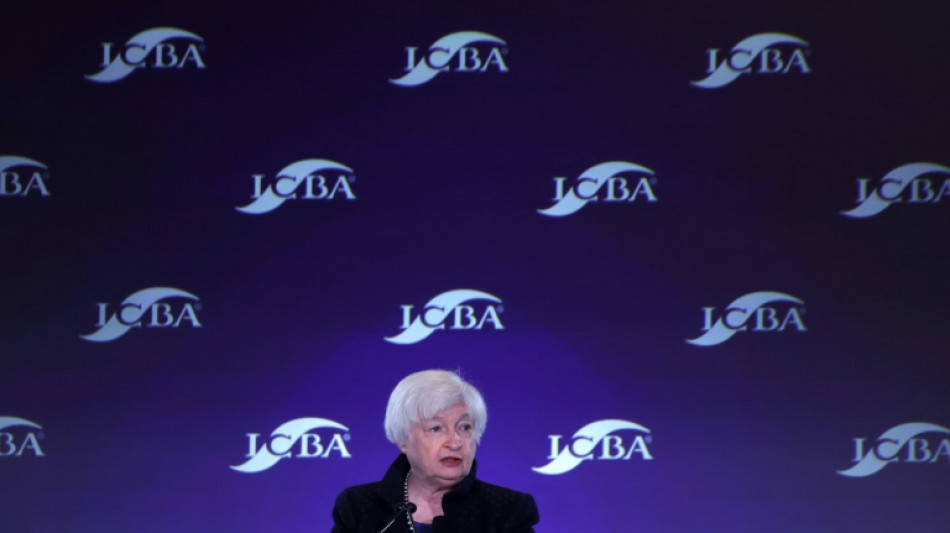
Russian economy pressured as hundreds more added to US blacklist / Photo: © GETTY IMAGES NORTH AMERICA/AFP
The United States added hundreds more companies and individuals to its sanctions blacklist Friday as it broadened efforts to choke of Russia's global supply chains and starve its economy over its war on Ukraine.
The new sanctions took particular aim at the firms and research institutes involved in Moscow's investments into future energy production including plans for exploiting Artic resources.
They also sought to shut down networks for acquiring restricted technologies that operated surreptitiously out of Liechtenstein, India, Finland, Estonia, and the Netherlands, and Russian financial networks operating out of Switzerland and the United Arab Emirates.
And they targeted companies supplying components that Russia needs to produce its Orlan reconnaissance drone, including a Chinese firm.
In all about 300 individuals, companies, institutes, ships and aircraft involved in alleged sanctions-violating activities were added to US Treasury and State Department blacklists.
The announcement came in parallel with the G7 summit in Hiroshima, Japan, where leaders vowed to increase global economic pressure on Moscow to end its unprovoked 15-month-old invasion of Ukraine.
"Today's actions will further tighten the vise on (Russia President Vladimir) Putin's ability to wage his barbaric invasion," said US Treasury Secretary Janet Yellen.
"Our collective efforts have cut Russia off from key inputs it needs to equip its military and is drastically limiting the revenue the Kremlin receives to fund its war machine," she said in a statement.
The new sanctions included dozens of Russian defense industry firms and technology traders, the country's leading gold miner and aides to already-blacklisted senior Russian officials.
They include Russia's top gold producer Polyus, and companies and individuals allegedly involved in stealing grain from Ukraine.
A particular focus was on institutions involved in Russian energy development, including universities that develop and train people in mining and energy processing technologies, oil and coal industry support firms, and institutions financing future developments.
The Treasury said the effort is "taking targeted action to limit Russia's future extractive capabilities," coming after Ukraine's Western allies instituted a price cap on Russian oil exports to limit its potential foreign exchange earnings.
The sanctions aim at locking those named out of global commercial and financial markets by banning US citizens and entities -- including banks with US branches -- from doing business with them and handling transactions involving them.
"Today's actions implement new commitments made at the G7 Leaders' Summit and demonstrate our shared resolve to hold Russia accountable for its mounting atrocities in Ukraine," said Secretary of State Antony Blinken.
pmh/jh
B.Cooper--TNT