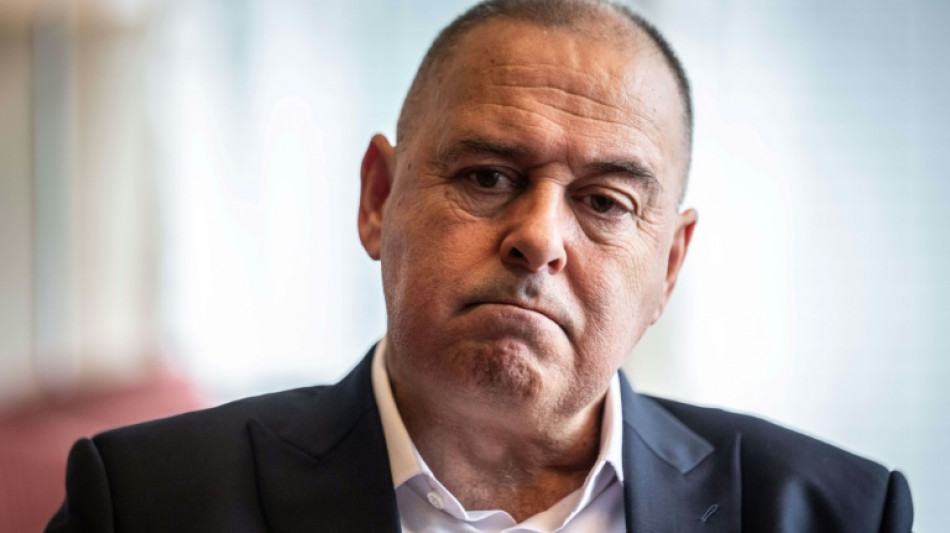
Pacific isles fear becoming theatre for US-China rivalry / Photo: © AFP
A Pacific Islands leader on Friday called on the United States and China to not bring "adversarial competition" to the region, as the rival powers intensify their bids for influence.
Cook Islands Prime Minister Mark Brown -- invited to represent the region at a Group of 7 summit in Hiroshima -- told AFP that increased superpower interest in the Pacific was welcome, but could not come at any cost.
In recent years, China has dramatically ramped up its economic, political and military footprint in the strategic ocean region.
Beijing has snapped up mines and ports across the Pacific and inked a secretive security pact with the Solomon Islands that allows China to deploy troops to the country.
The United States fears that a Chinese military foothold in the South Pacific could outflank its facilities on Guam, and make defence of Taiwan more complicated.
The self-ruled, democratic island lives under constant threat of an invasion by China, which claims Taiwan as part of its territory to be seized one day -- by force if necessary.
US President Joe Biden has said the United States would defend the island in the event of a Chinese invasion.
Washington has opened or reopened a string of Pacific Island embassies and deployed a steady stream of envoys to court island leaders.
"We welcome that engagement into the region," said Brown, who currently chairs the Pacific Island Forum, a region-wide bloc.
He hailed a White House summit between Biden and Pacific Island leaders last year, but added: "What we don't want to see is our region being an area of adversarial competition by our development partners. We want our region to be an area of collaboration."
"I think it's important to understand that what our development partners may see as areas of national security, are not necessarily what we see as national security priorities," he said.
"For us, national security priorities are economic security, they are climate security."
Many Pacific Island nations are debt-burdened, low-lying, vulnerable to rising sea levels and exposed to ever-stronger storms, droughts and floods fuelled by climate change.
Brown said he would call on leaders of G7 wealthy democracies to help combat urgent climate challenges.
"The Pacific Island countries are at the forefront of the impacts of climate change, a large proportion of it caused by the G7 countries."
Brown said a reduction in carbon emissions was a worthy long-term goal, but that there are more pressing needs.
"For us in the Pacific, we're already facing those climate impacts now. So the focus for us is on adaptation measures and financing for adaption."
"We need to find a way to come up with financing solutions that fit the Pacific's needs and priorities," he told AFP.
"We've all got a common enemy that we have to fight and that's climate. For every dollar we put into other areas, we're losing out on an ability to combat the impacts of climate change."
Brown added thatPacific Island leaders were disappointed that Biden cancelled a meeting with them in Papua New Guinea next week, but that it was "understandable" due to a US domestic budget dispute.
R.Campbell--TNT