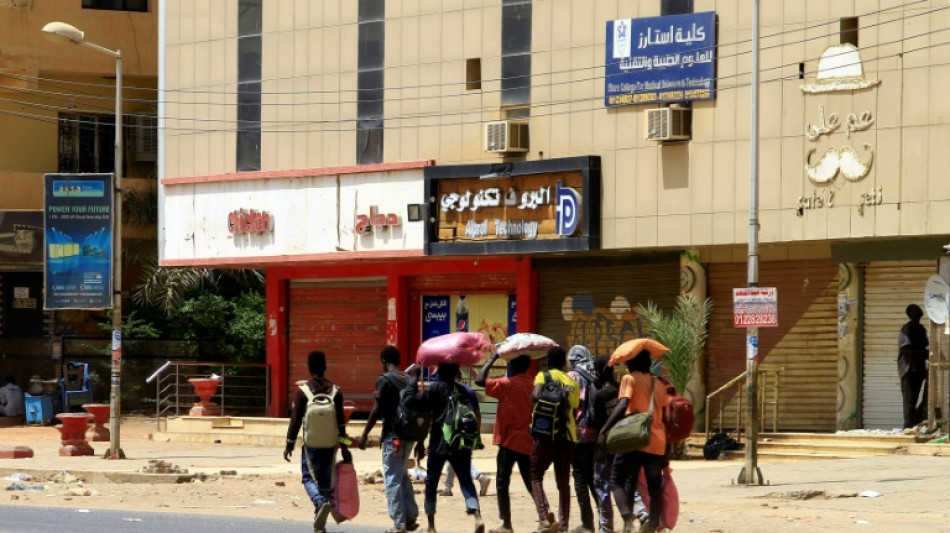
More than 71 mn people internally displaced worldwide in 2022 / Photo: © AFP/File
A "perfect storm" of overlapping crises forced tens of millions to flee within their own country last year, sending the number of internally displaced people to a record high, monitors said on Thursday.
An unprecedented 71.1 million internally displaced people (IDPs) were registered in 2022 -- up 20 percent from a year earlier -- amid mass displacement for Russia's war in Ukraine, as well as by the monsoon floods that drenched Pakistan.
A full 60.9 million new internal displacements were meanwhile reported in 2022, with some people forced to flee multiple times during the year, according to a joint report by the Internal Displacement Monitoring Centre (IDMC) and the Norwegian Refugee Council (NRC).
That marks an all-time high for new internal displacements, and an increase of 60 percent compared to the some 38 million fresh displacements seen in 2021.
That number is "extremely high", IDMC chief Alexandra Bilak told AFP.
"Much of the increase is caused, of course, by the war in Ukraine, but also by floods in Pakistan, by new and ongoing conflicts across the world, and by a number of sudden and slow onset disasters that we've seen from the Americas all the way to the Pacific."
- 'Very volatile' -
Last year, new internal displacements from conflict surged to 28.3 million -- nearly doubling from a year earlier and three times higher than the annual average over the past decade.
Beyond the 17 million displacements inside Ukraine last year, eight million were forced from their homes by Pakistan's monster floods.
Sub-Saharan Africa saw around 16.5 million displacements -- more than half of them due to conflict, especially in the Democratic Republic of Congo and in Ethiopia.
The global internal displacement figures are only expected to grow this year, driven in part by fresh conflicts like the violence ravaging Sudan forcing hundreds of thousands to flee.
More than 700,000 people have already become internally displaced by the fighting that erupted on April 15, while another 150,000 people have fled the country, according to UN numbers.
"Since the start of the... most recent conflict in April, we've already recorded the same number of displacements as we did for the whole year in 2022," Bilak said.
"Clearly, it's a very volatile situation on the ground," she said, pointing out that those being newly displaced by the fighting were joining the ranks of more than three million people already displaced across Sudan.
- 'Food security crisis' -
While internal displacement is a global phenomenon, nearly three quarters of the world's IDPs live in just 10 countries: Syria, Afghanistan, the Democratic Republic of Congo, Ukraine, Colombia, Ethiopia, Yemen, Nigeria, Somalia and Sudan.
Many of them remain displaced due to unresolved conflicts that have dragged on for years and continued to force people to flee their homes last year.
And even as conflict-related displacement surged, natural disasters continued to account for most new internal displacement, spurring 32.6 million such movements in 2022 -- up 40 percent from a year earlier.
NRC chief Jan Egeland described the overlapping crises spurring ever more displacement around the world as a "perfect storm".
"Conflict and disasters combined last year to aggravate people's pre-existing vulnerabilities and inequalities, triggering displacement on a scale never seen before," he said in a statement.
"The war in Ukraine also fuelled a global food security crisis that hit the internally displaced hardest," he said.
"This perfect storm has undermined years of progress made in reducing global hunger and malnutrition."
S.Mitchell--TNT