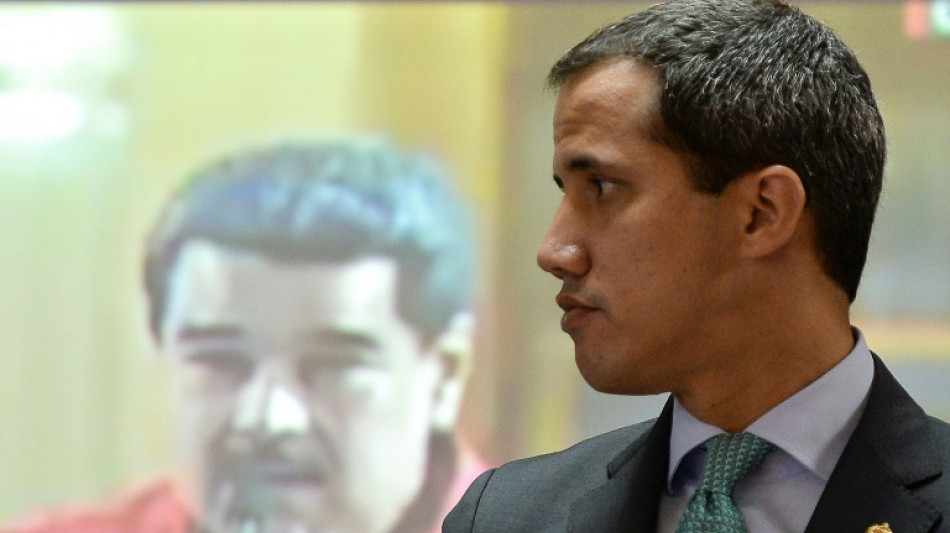
Venezuela's Guaido 'forced' to leave Colombia / Photo: © AFP/File
Colombia forced top Venezuelan opposition figure Juan Guaido to leave its borders on Monday, hours after he arrived in Bogota for a conference on his crisis-torn country, an opposition source told AFP.
"It forced him," the source said, speaking on condition of anonymity, adding Guaido was "going to the United States on a commercial flight," without providing further detail.
The Colombian foreign ministry has not confirmed the move, though Foreign Minister Alvaro Leyva earlier said Guaido's visit could face obstacles because "he entered (the country) in an inappropriate way, and in Colombia, we respect the law".
The opposition source confirmed that Guaido did not go through immigration when he arrived in Colombia.
Guaido announced his arrival earlier Monday, ahead of a conference organised by Colombian President Gustavo Petro aimed at restarting talks to end Venezuela's protracted political impasse.
Petro is acting as a mediator between Venezuela's government and the opposition as he attempts to unfreeze negotiations between the two sides that began in Mexico City in 2021 but reached an impasse in November.
Officials from around 20 countries, including the United States, are expected to attend the conference on Tuesday.
Neither Guaido nor Venezuelan President Nicolas Maduro are officially invited to attend.
"I have just arrived in Colombia, in the same way as millions of Venezuelans before me -- on foot," Guaido said in a statement.
"I hope the summit can guarantee that the Maduro regime will return to the negotiation table in Mexico and that a credible timeline can be agreed upon for free and fair elections to be held as a solution for the conflict."
Guaido had hoped to hold meetings with officials attending the conference.
He had also called for a protest to be held on Bogota's Plaza de Bolivar square, a short walk from the palace where the conference will be held.
Guaido, recognized in 2019 by more than 50 countries as Venezuela's de facto leader, has rejected calls by Colombia's Petro for sanctions against Venezuela to be lifted.
Venezuela's divided opposition voted to disband its symbolic "interim government" in January and replaced Guaido as the head of a parallel congress made up of opposition lawmakers.
Under Petro's predecessor, right-wing president Ivan Duque, Colombia had been Guaido's main regional backer, breaking diplomatic ties with Maduro's government.
The left-wing Petro reversed this decision, taking up instead a leading role in a process aimed at ending Venezuela's crisis through negotiations.
A.Little--TNT