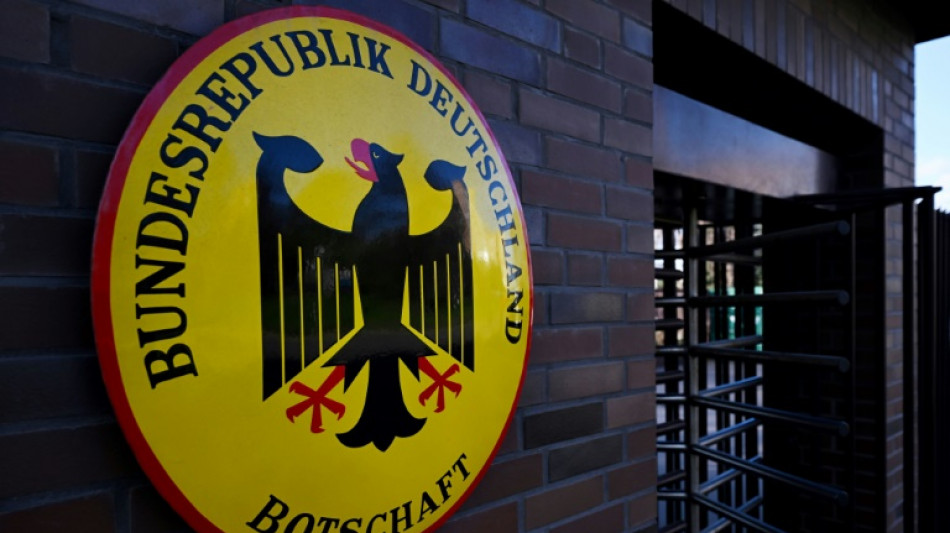
Moscow expels over 20 German diplomats in tit-for-tat move / Photo: © AFP
Russia on Saturday announced the tit-for-tat expulsion of over 20 German diplomats following the "mass" removal of Russian embassy staff from the country and accused Berlin of destroying ties.
Foreign ministry spokeswoman Maria Zakharova told state-run television Zvezda "more than 20" German diplomats would have to leave.
Her statement came shortly after the ministry denounced "another mass expulsion of employees of Russian diplomatic missions in Germany."
The German foreign ministry said it took note of the Russian statements.
"The Federal government and the Russian side have been contact in recent weeks on personnel matters in their respective representations abroad," the German foreign ministry told AFP.
"Today's flight is part of that process," it said, without specifically mentioning any expulsion of Russian diplomats.
Moscow accused Berlin of "continuing to demonstratively destroy the entire range of Russia-Germany relations."
"As a response to Berlin's hostile actions, the Russian side has decided to mirror the decision and expel German diplomats from Russia," the foreign ministry said.
Moscow will also limit the maximum number of employees in German diplomatic missions in the country, and said Germany's ambassador Geza Andreas von Geyr was notified of the measures on April 5.
- Increased espionage -
Germany had for years maintained deep economic ties with Moscow, particularly in the energy sector where it is dependent on Russian gas.
Relations however soured since Russian President Vladimir Putin launched a military operation in Ukraine, and as Berlin increased its financial and military support to Kyiv.
Germany had been criticised for dragging its feet over delivering weapons to Kyiv and its reluctance to allow the despatch of German-made Leopard tanks to Ukraine.
In January it finally agreed to allow the armaments to be sent and pledged to deliver some of the most modern ones from its stocks.
The Kremlin said the Western tanks would "burn".
The German security service also raised the level of alert regarding Russian espionage which it said had reached unprecedented levels after what Russia calls its special military operation in Ukraine.
It said Russia was targeting German companies and strategic infrastructure, especially energy, rail and road.
Early last year, Germany expelled 40 Russian diplomats who it said represented a security threat.
In October, Germany's cybersecurity chief, Arne Schoenbohm, was sacked after allegations that he had ties to Russian intelligence services.
L.A.Adams--TNT