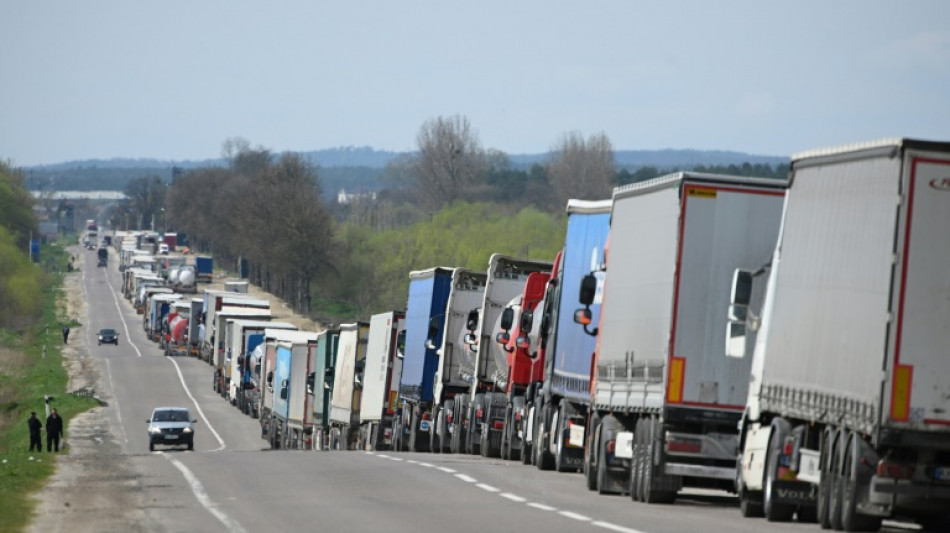
Bulgaria bans Ukraine grain imports, Hungary widens restrictions / Photo: © AFP
Bulgaria's government on Wednesday approved a temporary ban on imports of Ukrainian grain and other food products after Hungary widened the scope of its ban to include more foodstuffs.
In recent days, Poland, Hungary and Slovakia banned the import of grain and other food items from war-hit Ukraine after a slump in prices triggered protests from local farmers.
"The government... passed a decision that temporarily bans... a range of products originating from Ukraine... following the example of three other countries," Bulgarian farming minister Yavor Gechev said after a government meeting.
Sofia said it was "forced to adopt... today's extreme measure" after unilateral bans by other countries were announced, "seriously" increasing the risk for Bulgaria due to the potential diversion of goods.
The ban will enter into force from April 24 and last until the end of June, but will not apply to the transit of goods through Bulgarian territory.
Bulgaria hopes for a common EU decision in the next weeks, it added.
In May 2022, the European Union allowed Kyiv to export its grain stocks through the bloc after the closure of the Black Sea shipping lanes following Russia's invasion sparked a global food crisis.
Member states agreed to import certain products from Ukraine without quantitative restrictions, and without customs and official inspection.
- 'Serious disturbances' -
Earlier Wednesday, Hungary's government widened its temporary ban on the imports of Ukrainian agricultural products to include honey, wine, bread, sugar, and a range of meat and vegetable products.
The list of items to be banned were revealed in a government decree, after Budapest announced on Saturday a measure to halt the import of grain, oilseeds, and several other products.
Budapest complained that a significant proportion of imported Ukrainian products do not leave the EU, and instead have been sold at dumping prices in the member states.
Orban's spokesman Zoltan Kovacs on Wednesday denounced "the sudden influx of cheap products" that has created an "untenable situation" for European farmers.
"In the absence of the obligation to comply with the strict production rules required by EU law, Ukrainian products have a competitive advantage... which causes serious disturbances in the internal market of the member states," the decree stated.
Hungary's decree, published overnight, said that its ban would also apply to flour, cooking oil, and wine imports.
The temporary ban will last from Wednesday until June 30. Yet, it will not apply to the transit of these products through Hungary, the decree specified.
Hungarian authorities will seal shipments of the affected products at the border and monitor them with the help of electronic devices and patrols, it added.
Carriers who break the rules may be fined up to the full value of the shipment.
Poland and Ukraine on Tuesday struck a deal to allow Ukrainian grain to transit through Poland after Warsaw banned imports.
P.Barry--TNT