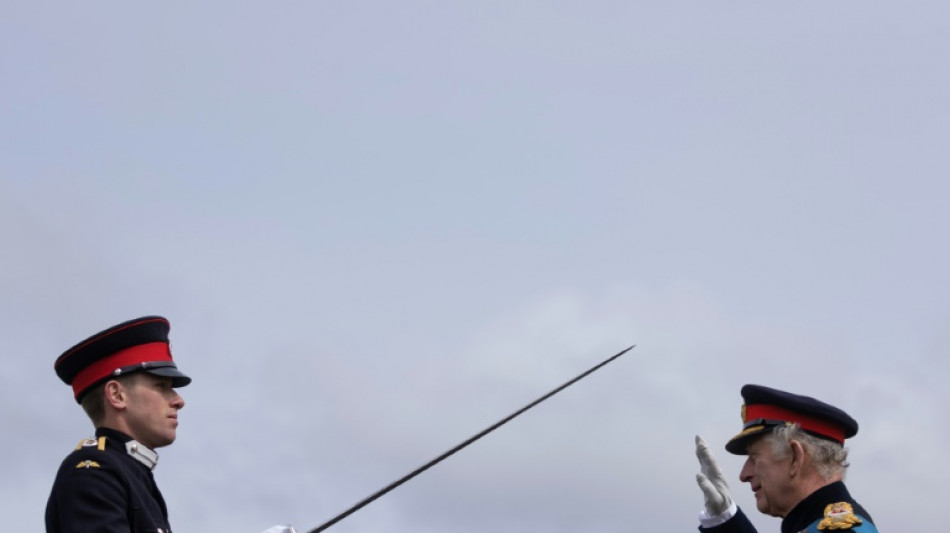
Over half of British do not want to pay for coronation: poll / Photo: © POOL/AFP
More than half of British people do not want the upcoming coronation of King Charles III to be funded by taxpayers, a new poll conducted and published on Tuesday found.
The YouGov poll found 51 percent of respondents believe the May 6 ceremony to crown Charles and Camilla should not be paid for by the government.
Nearly a third, 32 percent, said it should, while around 18 percent did not know.
It comes with the UK in the grip of a cost-of-living crisis and wide-ranging strikes by employees across the public and private sectors, as decades-high inflation eats away at earnings.
The situation is seen as factoring into the muted enthusiasm seen so far for the long weekend of celebrations.
The government is yet to disclose how much it will all cost, with a Westminster Abbey ceremony on Saturday May 6 and Windsor Castle concert on Sunday May 7 among the set-piece events.
Alongside a huge security operation throughout, it is predicted to run into the tens of millions of pounds.
The country will also get an extra bank holiday on Monday May 8, which has an additional economic cost.
The 1953 coronation of Charles' mother, the late Queen Elizabeth II, cost £912,000 in 1953 -- £20.5 million in today's money.
Meanwhile his grandfather George VI was crowned at a cost of £454,000 in 1937, which is worth £24.8 million in 2023.
- 'Scrimping and scraping' -
The poll of 4,246 adults found younger people -- who have often been hardest hit by the cost-of-living crisis -- least in favour of footing the bill for the landmark occasion.
Around 62 percent of those aged 18 to 24 were opposed to the coronation being government-funded, while 15 percent were in favour.
However, among over-65s, 43 percent supported taxpayers funding it, while 44 percent were against.
Government minister Oliver Dowden has previously insisted colleagues and the monarch were "mindful of ensuring that there is value for the taxpayer" and there will not be "lavishness or excess".
"It is a marvellous moment in our history and people would not want a dour scrimping and scraping," Dowden told a parliamentary committee earlier this year.
But Graham Smith, chief executive of campaign group Republic, has called the coronation an "expensive pantomime" and a "slap in the face for millions of people struggling with the cost-of-living crisis".
The total cost and breakdown of funding will likely not be available until after the May 6 event, as occurs with other royal occasions such as jubilees.
P.Jones--TNT