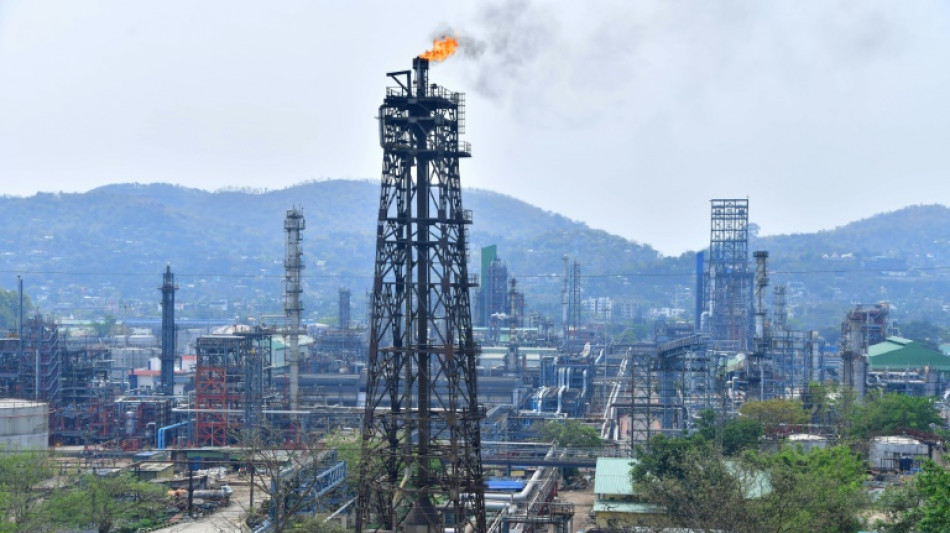
Why is India so thirsty for Russian oil? / Photo: © AFP
India is snapping up discounted crude from Russia, refining it and selling it, becoming a key supplier to Europe as it reshapes global fuel flows more than a year into Moscow's war in Ukraine.
New Delhi has resisted Western pressure to freeze out Moscow, opting instead to strengthen trade ties with its long-standing ally -- with the added benefits of tempering inflation while saving money.
- How much Russian oil is India buying? -
India is the world's third-largest crude consumer after the United States and China, and imports 85 percent of its needs.
Previously its main suppliers were in the Middle East. Now, Russia is number one.
For isolated Moscow, India and China have become its top customers.
In March, India imported from Russia 1.62 million barrels per day (bpd), 40 percent of its total oil imports, according to the International Energy Agency, up from around 70,000 bpd and just one percent of inflows before the war.
On Wednesday, Russian energy giant Rosneft announced a deal to "substantially increase" supplies to the state-owned Indian Oil Company following a visit to India by CEO Igor Sechin.
- Has buying Russian oil helped Indians pay less for fuel? -
India saved $3.6 billion by importing discounted crude oil from Russia, in the 10 months after the outbreak of the war, a member of parliament said in December.
Savings have likely grown more since with energy cargo trackers reporting that India is purchasing Russia's flagship Urals crude well below the $60 per barrel price cap introduced by the G7 in December.
"As the world's third-largest consumer of oil and gas, a consumer where the levels of income are not very high, it is our fundamental obligation to ensure that the Indian consumer has the best possible access on the most advantageous terms to international markets," Indian Foreign Minister S. Jaishankar said in Moscow in November.
- What happens to Russian oil in India? -
India has 23 oil refineries refining 249 million tonnes of oil a year, making it the world's fourth-biggest refiner.
Asia's richest person Mukesh Ambani's Reliance Industries runs the world's largest refinery in Gujarat, where he has ramped up purchases of Russian oil.
Together with India's second-largest refiner Nayara -- of which Russia's Rosneft owns 49 percent -- Reliance imports 45 percent of Russian crude that comes into India, data from cargo tracking firm Vortexa shows.
- And then it goes back to the West? -
Much of the refined product goes to Indian consumers.
But thanks to a surplus India has emerged as a major supplier of petrol and diesel -- some of it refined from Russian crude -- to Europe and elsewhere.
India's petroleum product exports to the European Union rose 20.4 percent year on year between April and January to 11.6 million tonnes, the Indian Express daily reported, citing official data, adding that Indian refiners were enjoying "robust margins".
- How is this allowed? -
Despite sanctions on Moscow, this does not fall foul of European Union rules because the refined products are not deemed to have come from Russia.
It also helps the bloc avoid supply problems, which would push up prices for consumers already reeling from galloping inflation.
"The world will have a very hard time to live without Russian oil," Vortexa chief economist David Wech told AFP, saying cutting Moscow out completely would cause a "deep recession".
According to a Bloomberg report published in February, India's role will "only become more central to a global oil map that's been redrawn by Vladimir Putin's year-long war in Ukraine" as Europe ramps up its sanctions.
Despite India's purchases, Russia is still earning less than it did prior to the invasion from its oil exports -- in part because of the additional cost and difficulties such as obtaining insurance to ship its crude halfway around the world.
"There is a certain beauty to it, if I can call it that," Wech said.
T.Bailey--TNT