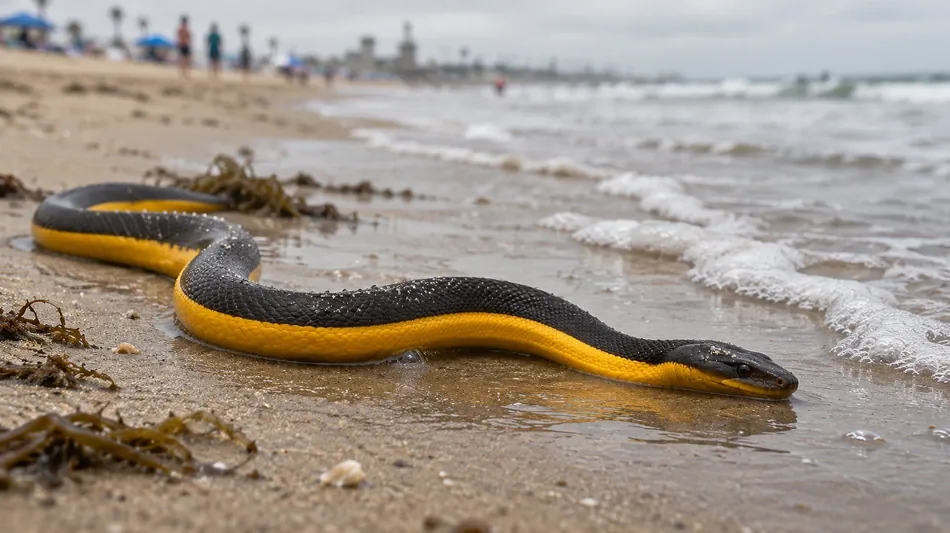
Rare yellow-bellied sea snake found on Southern California beach
California park staff found a live yellow-bellied sea snake at Bolsa Chica State Beach, only the eighth recorded sighting of the species on the state’s coast.
California park staff found a live yellow-bellied sea snake at Bolsa Chica State Beach, only the eighth recorded sighting of the species on the state’s coast.
A rare and venomous sea snake was washed ashore on a Southern California beach, leading officials to warn beachgoers to keep their distance from the predator. The striking yellow-and-black reptile was discovered Sunday by California State Parks staff at Bolsa Chica State Beach in Orange County and was later identified as a yellow-bellied sea snake.
The reptile is an exceptionally rare sight along the California coast, where just eight yellow-bellied sea snakes have been recorded, as reported by the California State Parks Orange Coast District. Seven of those discoveries coincided with El Niño conditions.
As ocean waters warm during the current El Niño event, officials say other unusual species could make appearances along the Golden State’s shores. Although the snake was discovered alive, it showed little energy and was not expected to make it, State Parks officials reported.
The reptiles are generally in deteriorating health by the time they reach land and typically die within a day of being spotted on a beach. Anyone who stumbles upon one of the venomous creatures should steer clear of it, State Parks authorities suggest, regardless of whether it appears to be alive or dead.
Beach visitors are advised to alert park employees and provide specific details about where the snake was spotted, including the number of the nearest lifeguard tower. The reptile was retrieved by the San Diego Natural History Museum’s Department of Herpetology, where researchers are investigating the circumstances behind such rare coastal encounters.
The discovery presents a valuable opportunity for scientists studying how warming ocean waters associated with El Niño are impacting California’s marine life. Officials are also enlisting the public’s help in tracking unusual wildlife appearances through iNaturalist. It’s an app that allows users to record sightings of species that may be venturing farther north as ocean temperatures climb.
A.Wood--TNT