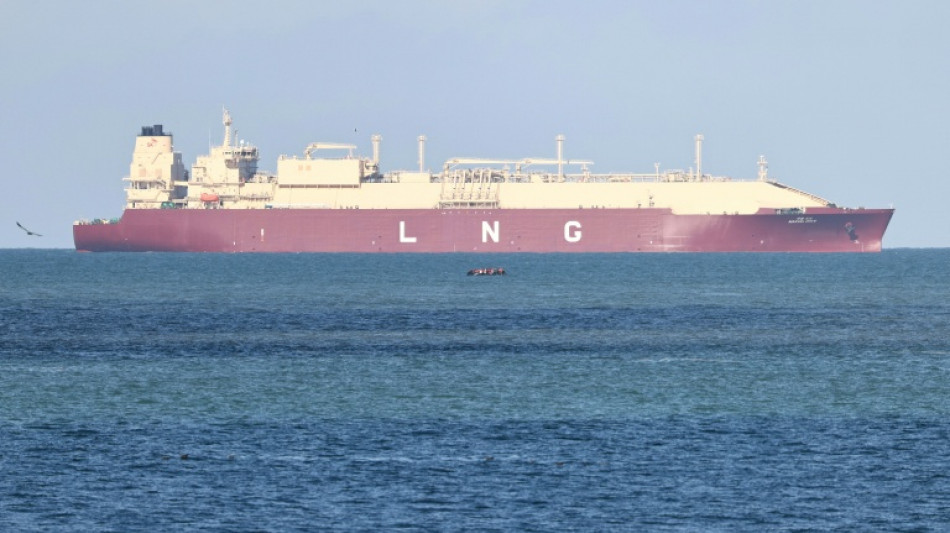
EU okay for winter despite 'historically low' gas stocks: operators / Photo: © AFP/File
The European Union is capable of meeting demand for gas this winter but its reserves are at "historically low" levels and will need to be monitored, the ENTSOG operators' association said Thursday.
"Europe is entering the winter with historically low storage levels while observing higher and more volatile global gas prices" as the Middle East war disrupts energy supplies, the association said in its winter outlook.
"EU underground gas storage facilities were 72 percent filled as of 1 October" after a "challenging" season, it said. The bloc normally targets having gas stocks 90 percent full by the start of winter, but it has granted flexibility as the energy crisis bites.
Storage levels varied significantly across the bloc, ranging from around 85 percent of capacity in France to just 59 percent in Germany.
ENTSOG called for continued injections into storage facilities and close monitoring of reserve levels.
Despite the lower stocks, "European gas infrastructure remains sufficiently flexible to meet demand," the organisation said.
Europe's capacity to import liquefied natural gas (LNG) "can partially compensate for lower storage levels... and support meeting winter demand", according to the report, calling for high LNG deliveries to be maintained throughout winter.
"If LNG availability remains limited, storage levels could fall well below 30 percent by the end of the winter, increasing impact in the event of potential cold spells later in the season," ENTSOG warned.
The organisation also highlighted regional disparities, particularly for landlocked countries in central and eastern Europe and for southeastern Europe, which could face greater difficulties accessing sufficient LNG volumes.
Since Russia's invasion of Ukraine in 2022, Europe has worked to reduce its longstanding dependence on Russian pipeline gas.
The bloc has increasingly turned to LNG shipped by sea, unloaded at ports, regasified and fed into the European network.
After the United States, which supplies about 60 percent of the EU's LNG imports, Russia remains the bloc's second-largest LNG supplier, accounting for around 17 percent of imports in 2026, despite the stated EU goal of weaning itself off Russian energy.
The European Union plans to ban all Russian gas imports by autumn 2027 in a bid to deprive Moscow of revenues used to finance its war in Ukraine.
adc-ec/rl
F.Harris--TNT