The National Times - Look! A polar bear meanders way down south in Canada

Look! A polar bear meanders way down south in Canada


Look! A polar bear meanders way down south in Canada
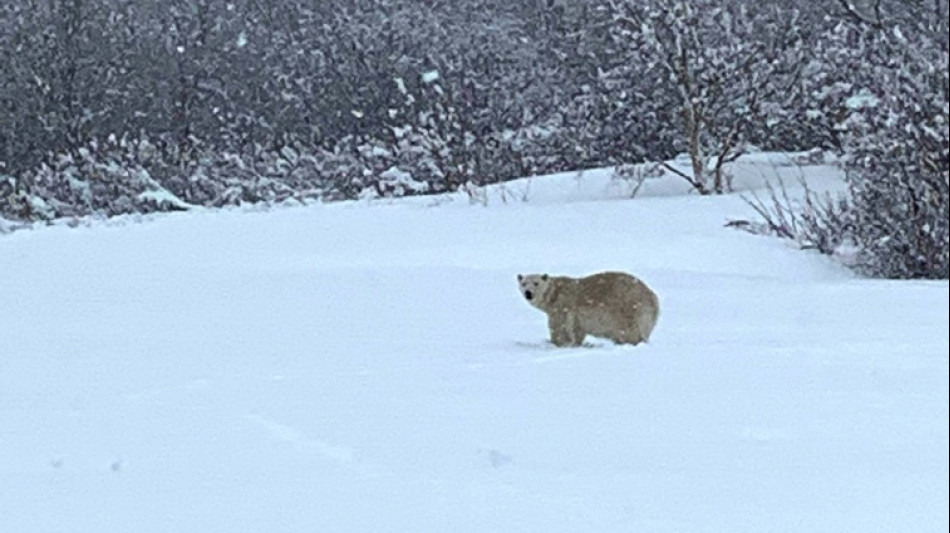
Look! A polar bear meanders way down south in Canada / Photo: © AFP

A polar bear was spotted Saturday in the Quebec region of Canada, prompting wildlife officials to warn residents of a small town stunned by this very rare appearance.

Change text size:

The bear -- whose species has become a symbol of the dangers of global warming -- was seen in the morning hours in Madeleine-Centre in the Gaspesia region, a peninsula along the south bank of the Saint Lawrence River, witnesses said.

As of Saturday afternoon, officials were still trying to find the animal.

"The dog was barking and I heard my partner yell, 'There's a bear, there's a bear!'" said Sophie Bonneville, who lives in the town of 2,000 people located 800 kilometers (500 miles) east of Montreal.

Quebec provincial police put out a tweet warning people about the bear sighting and urging them to stay indoors.

Bonneville said nobody in town had ever seen a polar bear so far south, not even wildlife officials.

"People thought it was a joke," she told AFP.

"How could a bear cross the ice pack, swim and make it here? Even people on the north bank have not seen such a thing," she said.

Police patrolled the region, where hiking is popular.

"We went door to door to tell people to stay indoors," Quebec provincial police spokesman Stephane Tremblay told AFP. He said he had never seen a polar bear in this area, either.

"With climate change, anything is possible," said Bonneville, who managed to snap a couple of photos of the bear before it wandered off into a wooded area.

"What is worrisome is, why did it come here? Was it global warming? Or was it just a mistake of nature?" she mused.

In Canada, polar bears -- the planet's largest land carnivores -- are listed as a "vulnerable" species.

A 2020 study published in Nature Climate Change said climate change could lead to their extinction as global warming causes the gradual melting of the Arctic ice pack.

N.Taylor--TNT

Featured

Miao and Dong Traditional Knowledge Offers Climate Resilience Lessons at COP31

Traditional ecological practices from the Miao and Dong communities in Southwest China are being presented as vital models for climate resilience at the ongoing COP31 conference. A new report unveiled at the China Pavilion details how these time-honored methods offer sustainable alternatives to modern industrial agriculture and resource management.

Fiona the Hippo Dies After Ingesting Knit Hat; Veterinary Experts Explain Mechanism

Fiona, the nine-year-old hippo who gained global fame for surviving premature birth, has died at the Cincinnati Zoo following medical complications from ingesting a knit hat. Veterinary specialists attribute her death to an intestinal blockage that triggered toxic shock and organ failure, explaining why surgical intervention was deemed too risky for the massive animal.

Whale Watching Tour Near the Farallon Islands Reveals Harsh Ocean Conditions

A journey to the Farallon Islands aboard the vessel Salty Lady revealed the stark contrast between the rugged, bird-covered rocks and the open Pacific. The tour offered close encounters with harbor seals and whales amidst heavy fog and rough seas, underscoring the remote nature of this critical wildlife habitat.

India Ranks 10th in Climate Risk Index 2027 Amid 78,000 Deaths Since 1996

India has been ranked among the ten countries most vulnerable to extreme weather events since 1996, according to the Climate Risk Index 2027. Released by Germanwatch at COP31, the report highlights that floods, cyclones, and heatwaves have caused over 78,000 fatalities and $170 billion in economic losses across the nation.

Change text size: