The National Times - Indigenous lands block Brazil deforestation: study

Indigenous lands block Brazil deforestation: study


Indigenous lands block Brazil deforestation: study
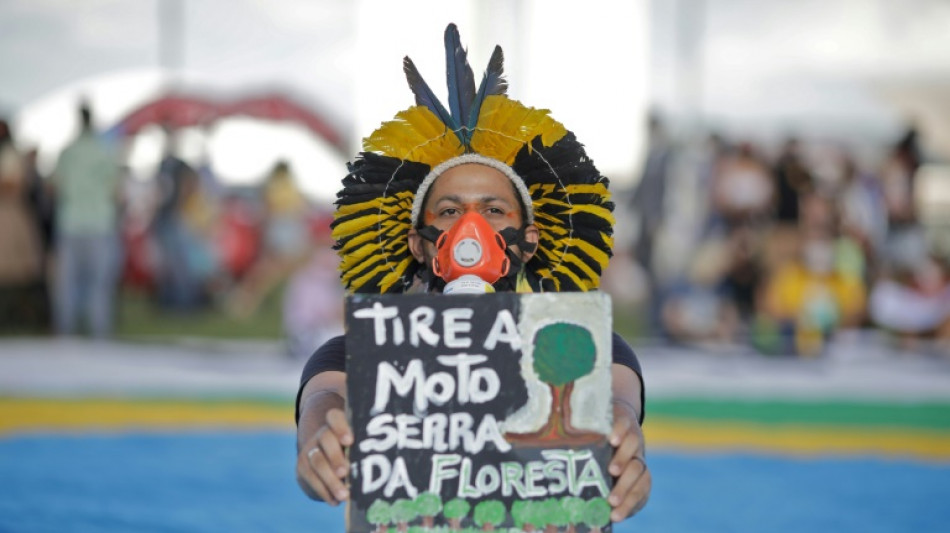
Indigenous lands block Brazil deforestation: study / Photo: © AFP

Brazil's indigenous reservations have acted as a barrier against deforestation over the past three decades, although destruction of the Amazon rainforest has accelerated recently under President Jair Bolsonaro, according to a study published Tuesday.

Change text size:

Of the 69 million hectares (266,000 square miles) of native vegetation Brazil has lost in the past 30 years, just 1.6 percent was on indigenous lands, said the report from MapBiomas, a joint project among various environmental groups, universities and startups.

Around 70 percent of the deforested area was on private land, it found.

"The satellite images leave no doubt that indigenous peoples are slowing the destruction of the Amazon," said Tasso Azevedo, the coordinator of the project.

"Without indigenous reservations, the forest would certainly be much closer to the 'tipping point' at which it stops providing the ecological services our agriculture, industries and cities depend upon."

It is the latest of numerous studies to show that protecting indigenous lands is one of the best ways to slow the destruction of native forests, which are vital resources in the race to curb climate change.

Indigenous reservations account for 13.9 percent of Brazil's territory, covering 109.7 million hectares of native vegetation -- nearly one-fourth of the country's total.

But they face increasing pressure under Bolsonaro, an agribusiness ally who won election vowing not to allow "a single centimeter more" of indigenous reservations to be created.

Since the far-right president took office in 2019, average annual deforestation in the Brazilian Amazon has increased by more than 75 percent from the previous decade, according to official figures.

A.Little--TNT

Featured

Miao and Dong Traditional Knowledge Offers Climate Resilience Lessons at COP31

Traditional ecological practices from the Miao and Dong communities in Southwest China are being presented as vital models for climate resilience at the ongoing COP31 conference. A new report unveiled at the China Pavilion details how these time-honored methods offer sustainable alternatives to modern industrial agriculture and resource management.

Fiona the Hippo Dies After Ingesting Knit Hat; Veterinary Experts Explain Mechanism

Fiona, the nine-year-old hippo who gained global fame for surviving premature birth, has died at the Cincinnati Zoo following medical complications from ingesting a knit hat. Veterinary specialists attribute her death to an intestinal blockage that triggered toxic shock and organ failure, explaining why surgical intervention was deemed too risky for the massive animal.

Whale Watching Tour Near the Farallon Islands Reveals Harsh Ocean Conditions

A journey to the Farallon Islands aboard the vessel Salty Lady revealed the stark contrast between the rugged, bird-covered rocks and the open Pacific. The tour offered close encounters with harbor seals and whales amidst heavy fog and rough seas, underscoring the remote nature of this critical wildlife habitat.

India Ranks 10th in Climate Risk Index 2027 Amid 78,000 Deaths Since 1996

India has been ranked among the ten countries most vulnerable to extreme weather events since 1996, according to the Climate Risk Index 2027. Released by Germanwatch at COP31, the report highlights that floods, cyclones, and heatwaves have caused over 78,000 fatalities and $170 billion in economic losses across the nation.

Change text size: