German economists slash 2022 growth outlook on Ukraine, energy
The German government's economic advisers slashed their growth forecast for 2022 on Wednesday, warning that the war in Ukraine and soaring energy prices would take a toll on Europe's biggest economy.
The German Council of Economic Experts said it now expected gross domestic product (GDP) to expand by just 1.8 percent year-on-year, down from an earlier forecast of 4.6 percent.
"Russia's war of aggression against Ukraine and energy prices are drastically worsening the economic outlook," they said in their latest report.
The experts, whose forecasts are closely watched by Chancellor Olaf Scholz's government, said they saw inflation reaching a decades-high peak of 6.1 percent in 2022, as energy costs and supply chain disruptions continue to push up prices around the world.
For 2023, the panel sees inflation falling back to 3.4 percent, while economic output should rebound by 3.6 percent.
Germany is due to unveil its March inflation data later on Wednesday.
- Energy appeal -
The Ukraine conflict has derailed Germany's hopes of finally shaking off the coronavirus pandemic and roaring back to growth.
With its export-oriented industries, Germany has been particularly vulnerable to the supply chain bottlenecks and raw material shortages caused by the pandemic, and its recovery has lagged that of other major European economies like France and Italy.
"The war is putting additional strain on supply chains already strained by the coronavirus pandemic," said panel member Achim Truger.
"At the same time, the prices for natural gas and oil, which have risen sharply once again, are weighing on companies and private consumption."
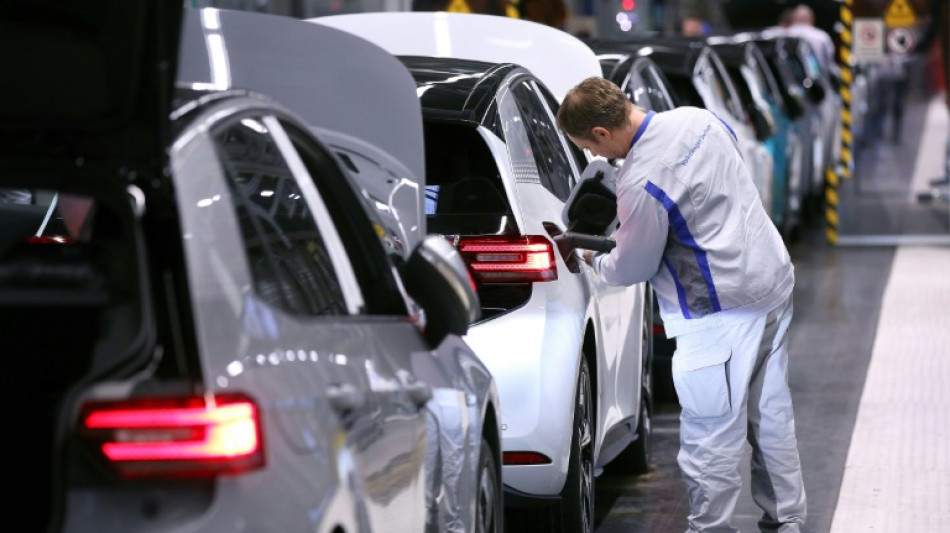
German car giants Volkswagen and Mercedes-Benz have already been forced to curtail production at some plants because of a lack of key components from Ukrainian factories, while exports to Russia have been halted.
Germany also relies more heavily than other European countries on Russian oil, gas and coal to keep its industries running and homes heated.
The country imports 55 percent of natural gas from Russia, half its coal and about 35 percent of its oil.
Berlin has vowed to wean itself off Russian energy in the near future, by turning to suppliers in other countries and accelerating a shift towards renewables.
But Germany has resisted calls at home and abroad to boycott Russian energy, fearing it would have a devastating impact on the economy.
Energy Minister Robert Habeck earlier on Wednesday activated the first level of Germany's gas emergency plan, as concerns grow that Russia could close the energy taps in response to Western sanctions over the war.
Habeck also appealed to citizens and businesses to reduce their energy use.
"We are in a situation where every kilowatt-hour saved helps," he said.
C.Stevenson--TNT