Higher wages draw migrant workers to Kashmir despite attacks
Higher earnings continue to attract an estimated half a million migrant workers to Indian Kashmir each year, despite militant attacks and continuing security risks in the disputed Himalayan region.
Higher earnings continue to attract an estimated half a million migrant workers to Indian Kashmir each year, despite militant attacks and continuing security risks in the disputed Himalayan region.
The workers, many from poorer Indian states, supply labour for construction, agriculture and domestic work. Businesses say Kashmir’s economy is increasingly dependent on them, even while the Muslim-majority region faces some of India’s highest unemployment rates.
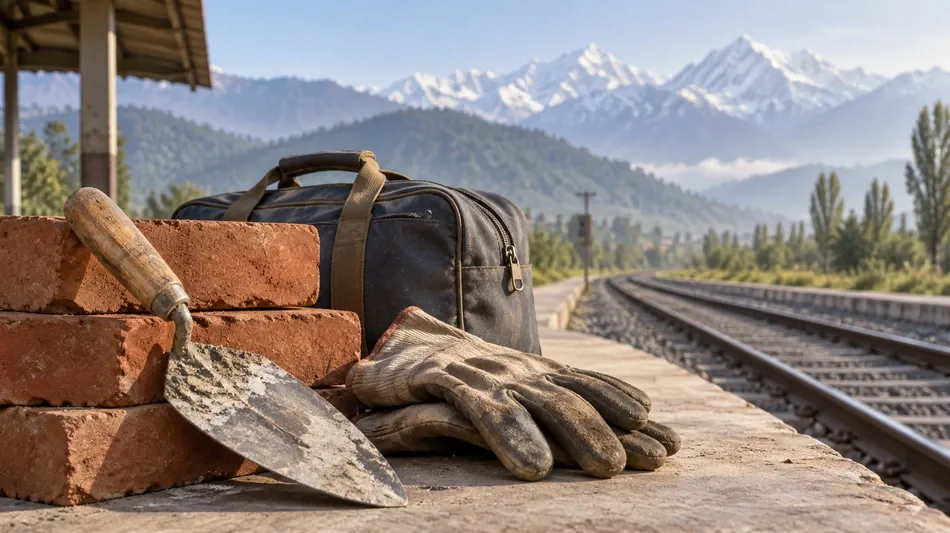
Mohammad Ghulam Sarwar, a 25-year-old mason from Bihar, travels to Kashmir by train each spring. He told AFP he earns 1,200 rupees, or about $12, daily, compared with roughly 700 rupees for comparable work in Bihar, where employment is not always available.
Some workers compare the earnings favourably with jobs in the Gulf, without the expense and practical difficulties of moving overseas. Sarwar said he intended to keep returning to Kashmir while he remained able to work.
Local media reports say at least 24 migrant workers have been killed in militant attacks since 2019. The South Asia Terrorism Portal records more than 1,500 deaths in the territory over the same period, including 219 civilians. In the latest attack, in August, gunmen killed two brick kiln workers from Chhattisgarh.
Mohammad Ashraf Mir of the Kashmir Chamber of Commerce and Industry said the region lacked sufficient skilled local labour outside handicrafts. He described the growing reliance on migrant workers as approaching complete dependence. Employers report difficulty recruiting local people for many of the available jobs.
Labourers gather each morning at prominent squares in Srinagar to seek daily work. Many spend about eight months in Kashmir, leaving before winter slows building activity and reduces farm work. Sporadic violence continues despite a broader weakening of the insurgency in recent years.
Sarwar said he had witnessed a barber from Bihar being shot dead by suspected rebels several years earlier. The killing saddened him but did not stop his annual journeys. He said fear would leave him without an income.
He lives in a Srinagar building shared by about 200 labourers. Rooms hold seven to 10 people, who cook and sleep in the same space while paying slightly more than $5 each per month.
Paramilitary personnel, armoured vehicles and police special operations units patrol the streets, while CCTV monitors the compound continuously. A senior security official, speaking anonymously, said protection had become stronger over time because migrant workers had previously been vulnerable targets. Police encourage clustered accommodation and advise workers against going out after dark.
Rebel groups say attacks on migrants avenge police harassment of their families. Many labourers avoid discussing security publicly. Mohammad Iqbal, a 53-year-old painter from Uttar Pradesh who has worked in Kashmir since before the insurgency and now travels with his son, said he had experienced no problems.
Shahid Sofi, a 24-year-old Bihar mason who previously worked in Delhi and Mumbai, acknowledged being afraid of militants. He nevertheless said he preferred Kashmir’s working conditions, weather and open spaces.
P.Jones--TNT