Pennsylvania Coal-Waste Power Subsidies Rise as Solar Remains a Smaller Source
Pennsylvania continues to direct substantial public support to power plants that burn waste coal, a practice credited with removing polluting mine piles but criticized for high subsidies, greenhouse-gas emissions and a state energy mix in which waste coal still generates more electricity than solar.
WINDBER, Pa. — Pennsylvania's effort to address the environmental legacy of old coal mines has created a costly and controversial energy system in which companies receive public support to remove and burn waste coal while renewable sources such as solar remain comparatively limited.
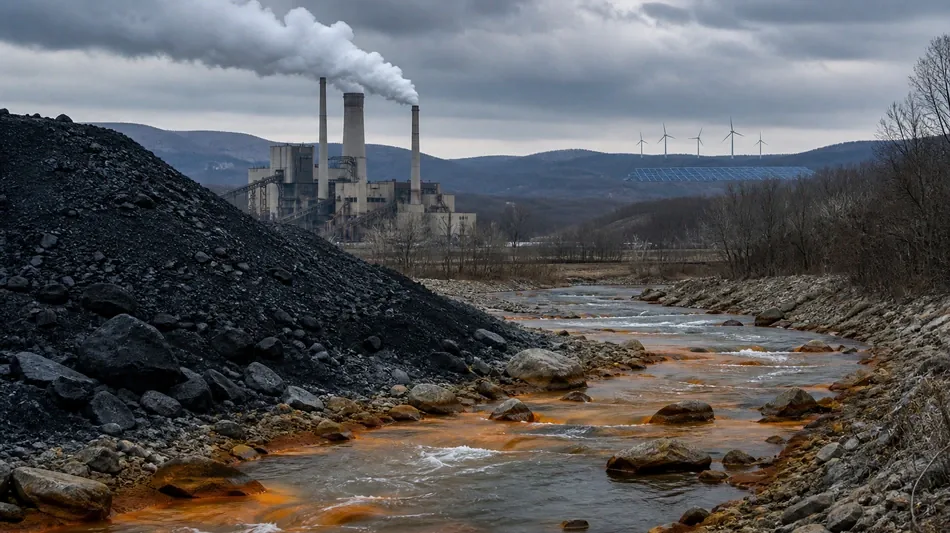
At Windber Mine 37 in western Pennsylvania, a large pile of discarded coal sits above Paint Creek. The material was left behind because it contained too little usable carbon and too many other constituents to be economical during earlier mining operations. Such piles can generate acidic drainage and release metals into nearby waterways.
Robindale Energy is among the companies that transport waste coal to specialized power plants. Jim Panaro, an executive vice president at the company and a longtime resident of the region, says removing the piles can improve streams that were heavily polluted by mining waste.
The plants, however, depend heavily on government-created financial support. Waste coal is included in Pennsylvania's Alternative Energy Portfolio Standards, or AEPS, adopted in 2004. The system requires electric utilities to obtain specified portions of their power from qualifying sources and effectively creates subsidies paid through electricity rates.
The industry also benefits from state tax support introduced in 2016. Those tax breaks now total about $50 million annually.
Environmental groups argue that the cleanup benefit must be weighed against the emissions created when the material is burned. A September 2025 study by University of Nevada researchers found that waste-coal plants produced between 7 percent and 118 percent more greenhouse-gas emissions per kilowatt-hour than conventional coal plants.
Waste-coal plants generally emit less conventional air pollution than many traditional coal plants, but their emissions remain much higher than wind or solar generation. Combustion also concentrates metals including mercury and manganese in ash that must subsequently be managed and disposed of.
The cost of Pennsylvania's program has increased sharply. Lawmakers changed the rules in 2020 to require qualifying waste coal to originate within Pennsylvania. Robert Routh, Pennsylvania policy director for the Natural Resources Defense Council, said the unit cost of Tier II resources under the AEPS rose about thirteenfold between 2020 and 2025.
Waste-coal subsidies accounted for roughly $180 million in 2025, about half of the total cost for the Tier II category, according to Routh. Those expenses ultimately appear in utility costs borne by ratepayers.
The debate reflects competing environmental priorities. Removing historic mine waste can reduce contamination from abandoned piles and restore damaged land and streams. Burning that material, however, produces carbon dioxide and other pollution while requiring continuing financial support.
More than two decades after Pennsylvania adopted its alternative-energy law, waste coal still supplies more electricity in the state than solar power. Critics say that outcome shows the policy is not driving the diversified cleaner energy system originally envisioned, while the industry maintains that its plants provide both electricity and a practical way to remediate difficult mining sites.
E.Cox--TNT