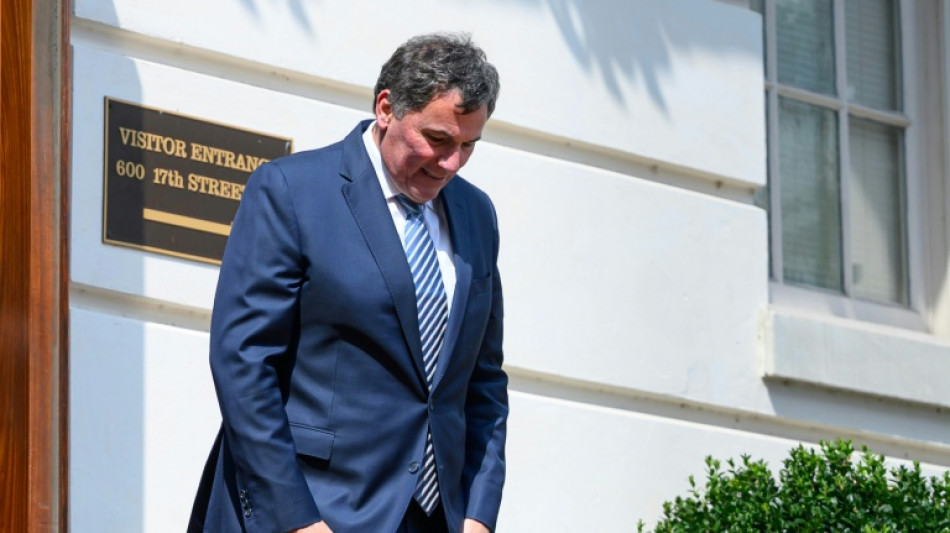
US, Canada work to wrap up trade deal ahead of looming deadline / Photo: © AFP
The United States and Canada were back at the negotiating table Friday, with the clock ticking down to a midnight deadline when punishing new US tariffs kick in.
In the latest salvo amid months of trade hostility, US President Donald Trump threatened to impose new 50-percent duties on a range of Canadian products by Wednesday. But he has issued a last-minute delay, citing major progress in trade talks.
Canadian negotiators have been camped out in Washington this week trying to finalize a deal that reportedly aims to address a range of flash points.
Both sides have said a pact is nearly done, but talks were continuing Friday morning, with top Canadian negotiator Dominic LeBlanc meeting US Trade Representative Jamieson Greer.
LeBlanc and his team entered Greer's office shortly past midday, declining to answer reporters' questions.
After meeting Greer on Thursday, LeBlanc told reporters "we're very close," promising to persist until a deal is done.
Canada wants relief from Trump's tariffs on autos, steel and aluminum, which have battered Canada's economy, forced job losses, and strained what was once an iron-clad trade relationship.
Details of the proposed agreement emerged this week after Prime Minister Mark Carney briefed the leaders of Canada's provinces and territories.
US tariffs will likely be reduced in certain areas but not removed entirely, with Saskatchewan's conservative Premier Scott Moe telling reporters there's no going back to the pre-Trump "status quo."
Ryan Majerus, a trade lawyer at King & Spalding, told AFP that Washington's apparent willingness to reduce the sector-specific tariffs "dramatically increases the potential of a deal."
"I think both sides want an off-ramp here," Majerus said.
- Booze ban -
Canada's regional leaders said the United States has been particularly irritated by one retaliatory measure: the removal of US alcohol and wine from liquor stores.
Carney on Wednesday asked the provinces to restock US booze.
Some agreed, like the leader of the Atlantic province of Nova Scotia, Tim Houston. Others remained unconvinced.
Quebec Premier Christine Frechette said she wanted to study the deal before agreeing to anything, while Manitoba's left-wing Premier Wab Kinew told reporters the United States appeared "weak" and that Canada should "fight."
Ontario Premier Doug Ford, one of Trump's most prominent critics during the trade war, has so far stayed quiet.
Ford controls the Liquor Control Board of Ontario, one of the largest individual purchasers of US alcohol products.
Carney has repeatedly told Canadians that relations with the United States have been forever changed, regardless of what happens with an individual trade deal.
He says the country needs to diversify and reduce its reliance on the United States.
But that will take time, and the United States remains Canada's largest trading partner by far, accounting for roughly 70 percent of Canadian exports.
Beyond the ongoing negotiations, the United States and Canada still have to agree on revisions to the North American free trade agreement, USMCA, which Trump declined to renew last month.
A.Little--TNT