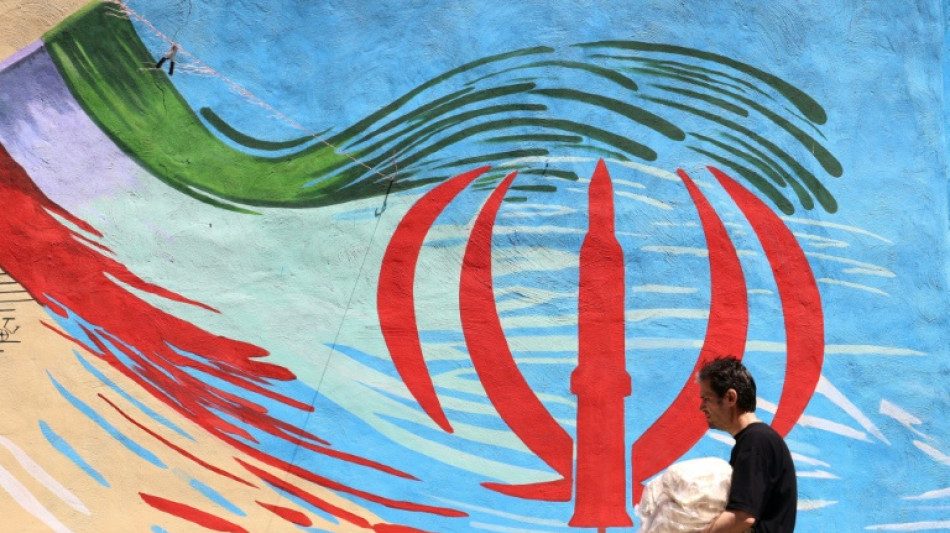
Asia stocks, oil prices mixed on US-Iran deal uncertainty / Photo: © AFP
Asian stocks and oil futures were mixed on Tuesday after fresh US strikes on Iran threatened fragile negotiations to reopen the Hormuz strait.
The United States and Iran have been trying to broker a deal to end the Middle East war and reopen the crucial waterway since a fragile ceasefire came into force on April 8.
Stocks had rallied on Monday and crude futures contracts dropped below $100 after reports suggesting a deal was on the cusp of being reached.
But these hopes were dampened on Monday when US forces attacked missile sites in southern Iran and boats trying to lay mines.
"US forces conducted self-defense strikes in southern Iran today to protect our troops from threats posed by Iranian forces," Tim Hawkins, a US Central Command spokesman, said in a statement.
Both sides have played down chances of a quick deal to end the war that has driven up energy prices and fuelled global inflation.
US President Donald Trump offered little certainty, saying on Monday that a deal with Tehran would either be "great and meaningful" or there would be "no deal" at all.
Iran's foreign ministry spokesman Esmaeil Baqaei confirmed progress had been made, but added a deal was not yet within reach.
Top US diplomat Marco Rubio insisted on Tuesday that the blockaded strait would reopen "one way or the other".
Asian stocks showed a mixed picture in early trade, with Tokyo and Shanghai down around 0.5 percent.
Kuala Lumpur, Singapore, Sydney and Manila were also down.
Seoul, however, was up more than three percent, opening at a new record high over 8,000, as chipmakers, carmakers and shipbuilders continued their strong gains.
Hong Kong, Jakarta, Bangkok, Wellington and Taipei also climbed.
Oil prices fluctuated on the geopolitical uncertainty, with US benchmark West Texas Intermediate down over five percent, and international benchmark North Sea Brent slightly up.
"The market's reaction remains almost mechanical at this point," said Stephen Innes, an analyst at SPI Asset Management.
"Every incremental diplomatic headline involving Iran gets treated like another liquidity injection directly into risk appetite.
"Yet beneath the surface, the actual negotiations still resemble two traders standing on opposite sides of the pit pretending the spread has narrowed while the hardest legs of the trade remain unresolved."
Investors will be keeping an eye this week on how the US Federal Reserve reacts to key consumer inflation data and its potential effect on interest rates.
Higher prices triggered by the US-Israeli war against Iran will limit the likelihood of interest rate cuts by the Fed to boost US growth, many economists have warned.
"Traders have already fully priced in another Federal Reserve rate hike by year's end, despite the arrival of Kevin Warsh as the new Fed chairman," Innes said.
Russia's war against Ukraine has also injected more uncertainty, with Moscow saying on Monday it planned to launch more strikes on Kyiv following a major recent assault.
- Key figures at around 0230 GMT -
Brent North Sea Crude: UP 2.0 percent at $98.11 a barrel
West Texas Intermediate: DOWN 5.1 percent at $91.71 a barrel
Tokyo - Nikkei 225: DOWN 0.4 percent at 64,915.67 points
Shanghai - Composite: UP 0.4 percent at 4136.32
Hong Kong - Hang Seng Index: UP 0.3 percent at 25,679.68
Euro/dollar: DOWN at 1.1634 from 1.1646 on Monday
Pound/dollar: DOWN at 1.3487 from $1.3502
Dollar/yen: UP at 158.94 from 158.90 yen
Euro/pound: UP at 86.26 from 86.25 pence
London - FTSE 100: Closed for a holiday
Paris - CAC 40: UP 1.8 percent at 8,258.26 (close)
Frankfurt - DAX 30: UP 2.0 percent at 25,389.10 (close)
New York - DOW: Closed for a holiday
D.S.Robertson--TNT