The National Times - Export ban sparks rush to process lithium in Zimbabwe

Export ban sparks rush to process lithium in Zimbabwe


Export ban sparks rush to process lithium in Zimbabwe
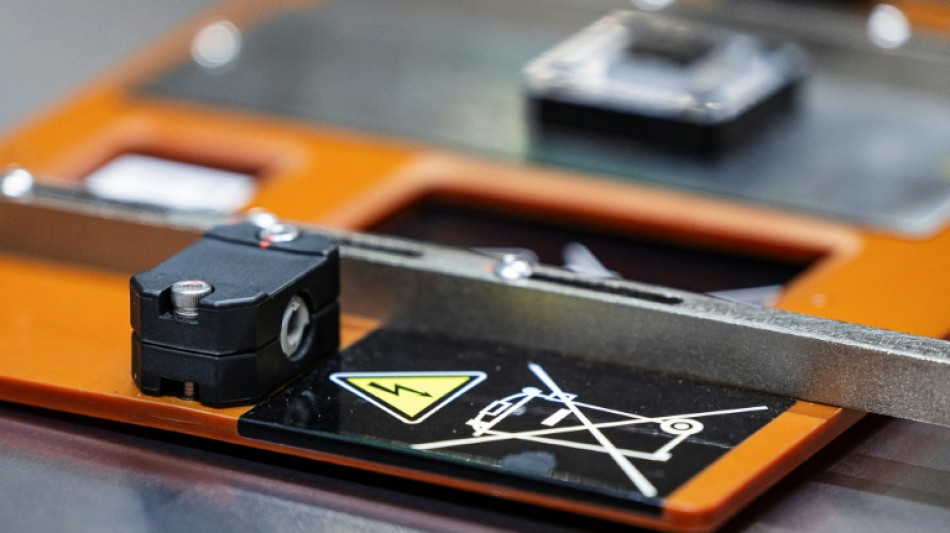
Export ban sparks rush to process lithium in Zimbabwe / Photo: © AFP/File

Zimbabwe's ban on raw lithium exports is forcing Chinese miners to rethink their strategy, speeding up plans to process the metal locally instead of shipping it to China's vast rechargeable battery industry.

Change text size:

The country is Africa's largest lithium producer and has one of the world's largest reserves, according to the US Geological Survey (USGS).

Zimbabwe already banned the export of lithium ore in 2022 and in 2025 announced it would halt exports of lithium concentrates from January 2027.

But on Wednesday it imposed the ban with immediate effect, leaving unclear what the lithium mining sector will do in the short term as Zimbabwe currently has no facilities to process lithium concentrates.

The move, which also included a blanket ban on export of all raw minerals, aims to capture the added value of refining and processing, thus creating jobs and additional government tax revenue.

But critics say the push to refine should have come sooner, with Zimbabwe already having lost out on several years of revenues for the hard-pressed local economy.

Prospect Lithium Zimbabwe, owned by Zhejiang Huayou Cobalt, has spent $400 million on a processing plant that should be operational in the coming weeks, its representative Patience Chizodza told state broadcaster ZBC.

It will reportedly be the first factory in Africa to refine lithium concentrate into lithium sulfate -- a powdered form that is one step closer to the product used in batteries.

The facility should be capable of handling 400,000 tonnes a year of concentrate.

The Zimbabwe state-owned Mutapa Energy Minerals is set to start work in the coming months on a similar plant, chief executive officer Innocent Rukweza told reporters earlier this month.

"We expect that by mid-year -- around June at the latest -- construction of a concentrate-processing plant will be under way," Rukweza said.

The $270-million facility funded by Chinese firms would be able to process 600,000 tonnes annually, he said.

- 'Too little, too late' -

Bikita Minerals, Zimbabwe's largest lithium mine and owned by Sinomine Resources Group, is working on feasibility studies for the construction of a lithium sulphate plant in December, spokesperson Tinomuda Chakanyuka said.

"The project, which will be developed in phases, represents an estimated investment of approximately $500 million from shareholders," Chakanyuka told AFP.

He said the facility will increase local capacity to separate minerals and "contribute to Zimbabwe's broader industrialisation and export diversification objectives."

Global demand for the soft, white metal was up 20 percent last year from 2024, with a key factor being EV sales growth in China and Europe and increased demand for batteries, the USGS said.

Zimbabwe's exports of lithium concentrate rose to 1.5 million metric tonnes last year, generating government revenue of $571.6 million, the Minerals Marketing Authority of Zimbabwe (MMCZ) announced in early February.

The Zimbabwean government's moves to ban exports of raw minerals didn't impress its critics.

"Government is doing too little, too late," said Farai Maguwu, executive director of Zimbabwe's Centre for Natural Resource Governance (CNRG).

With the new rush for critical minerals around the world, "people are asking serious questions about the benefits to the producer country," he said.

"A country like Zimbabwe is exporting raw lithium and, in the process, enriching China at its own expense," Maguwu said.

Instead it should be building its own "mine-to-market ecosystem" that manufactures and markets lithium products, he added.

Economist Godfrey Kanyenze accused the government of a "deficit in policy implementation" when it effectively gave a five-year grace period on the 2022 lithium ore ban by allowing exports of raw concentrates.

Kanyenze said state oversight at Chinese-owned lithium mines was limited, making it difficult to determine how much companies actually produced and earned.

There have also been allegations of environmental damage and exploitation of workers, including by paying low wages.

"Zimbabwe must learn from countries like Norway, Botswana and Kuwait, which safeguard their natural resources through firm, consistent and strategic policy frameworks," he said.

Lewis--TNT

Featured

The "Everlasting Battery" Inside Your Joints:UConn Professor's Self-Powered Healing Material just Got Acquired

A material that turns your own movement into medicine has just landed a corporate home. PetVivo Holdings (OTCQX: PETV), a veterinary biotech and biomedical device company focused on treating osteoarthritis in dogs and horses, has acquired PiezoBioMembrane (PBM) — a startup built around a biodegradable implant that generates electricity from the everyday force of a joint in motion, and uses that charge to help regrow cartilage from the inside out. The material is the invention of Thanh Nguyen, a professor of mechanical engineering in UConn's College of Engineering, who founded PBM in 2021 to advance new implementation methods for his work with piezoelectric materials — substances that convert mechanical force into electrical energy. These materials are typically ceramics: hard, brittle, and poorly suited for medical use. But Nguyen's lab developed new forms that are so , flexible, and biodegradable, breaking down naturally within the body over time. wound healing, The materials have already shown strong potential across a range of medical applications, including tissue regeneration, implanted force sensors, and targeted drug delivery in tumor treatment. How It Works biodegradable ultrasound for In the case of arthritis, Nguyen explains, the piezoelectric materials function as an off-the-shelf product that can be implanted or injected directly into the ailing joint — with no drugs, chemicals, or cells required. The everyday force exerted on the joint generates a small electrical charge, which helps regrow healthy cartilage, mimicking the body's natural use of electricity to regenerate tissue. "The body can be electrically stimulated to regrow," Nguyen says. PBM's materials "act like a battery — an everlasting battery that works whenever there is a force applied, and vanishes safely inside the body over time." PetVivo's Vision for the Acquisition PetVivo Holdings CEO John Lai expressed enthusiasm for the merger's potential to improve the lives of companion animals globally. "PBM has developed a compelling functional biomaterials platform with the potential to support the development of multiple medical device and therapeutic product lines across both human and animal health markets," Lai said in a press release. "By combining PBM's scientific innovation with PetVivo's product development capabilities, commercialization experience, regulatory expertise, and public company infrastructure, we believe we can accelerate theadvancement of technologies that may serve as the foundation for numerous future products and strategic opportunities." For Nguyen, the deal is a chance to scale technology that could eventually benefit both animals and people. "PetVivo is an animal health company, but they do have a big passion: pushing the technology towards clinical trials for human use," Nguyen says. "That aligned perfectly with my passion for developing technology that has an impact on human life. That is why I am excited about this merger, which facilitates my passion." A Track Record of Innovation Nguyen's research sits at the intersection of medicine, micro/nanotechnology, and biomaterials. His inventions have earned him publications in prominent scientific journals and media coverage from outlets including NPR. Nguyen founded PBM during the COVID-19 pandemic, a er realizing the material he had developed could be used to create an especially effective, biodegradable face mask — one where the mechanical force of breathing generated an electrical charge that provided an extra layer of protection against viruses. PBM is not Nguyen's only venture in the acquisition pipeline. His other startup, Single-Time Microneedles (STM), is also currently undergoing an acquisition process. STM has pioneered stable, efficient vaccine delivery technology in the form of an adhesive patch. shelfNguyen's focus on biodegradable materials has translated into a remarkably diverse range of medical applications. He has received five R01 grants from the National Institutes of Health (NIH) supporting research in cartilage regeneration, bone regeneration, HIV antibody delivery systems, and biodegradable ultrasound technology to boost the effectiveness of chemotherapy for brain cancer. "Whatever we are working on, we want to show that it works very well in vitro and in vivo," Nguyen says. "Then, when we are at the point of commercialization, we set up a startup or license the technology — or maybe team up with an industry partner." Thanh Nguyen is a professor of mechanical engineering in UConn's College of Engineering. (Courtesy of Thanh Nguyen

Octrado introduces its proprietary trading offering: "Your Skill. Our Capital"

Infrastructure, transparent rules and clear legal boundaries positioned as the core of the funded-account model

Could gas prices return to 2022 highs on US-Iran war?

European gas prices have more than doubled owing to the US-Iran war, just as Europe needs to replenish its reserves ahead of winter.

CapTLX Expands Institutional-Oriented Platform for Access to U.S. Capital Markets

CapTLX, the securities trading and investment platform operated by CHAINLION TECH LTD, today announced the continued expansion of its technology infrastructure for qualified investors and institutional market participants seeking structured access to U.S. equity and private capital markets.

Change text size: