The National Times - Where are Southeast Asia's data centres?

Where are Southeast Asia's data centres?


Where are Southeast Asia's data centres?
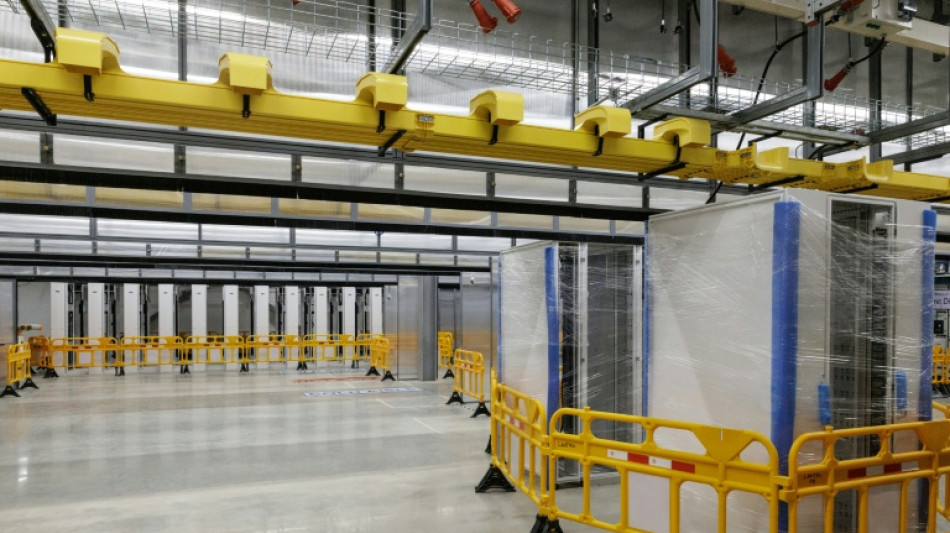
Where are Southeast Asia's data centres? / Photo: © AFP

New data centres are springing up worldwide as demand soars for artificial intelligence and cloud computing, with Asia one of the sector's fastest growing regions.

Change text size:

Land and power shortages in connectivity hub Singapore have driven a tech infrastructure boom in nearby countries where the growing business user base has also attracted US and Chinese investment.

AFP gives a run-down of where these data centres are being built, and why:

- Malaysia -

When resource constraints led Singapore to halt new data centre developments between 2019 and 2022, tech companies began to build across the border in Malaysia, which has fast become a powerhouse for the sector.

Malaysia accounts for over half of under-construction data centre capacity among five countries also including Indonesia, Thailand, the Philippines and Vietnam, market intelligence firm DC Byte says.

Its policies are friendly, said Michael Freeman, regional director for Malaysia, Thailand and Vietnam at construction project management company Turner and Townsend.

The country "moves faster largely because of its streamlined, standardised permitting system and predictable utility allocation, which gives developers clarity on power, water, land use, and approval timelines", Freeman told AFP.

The building boom has been especially rapid in the southern state of Johor, which has imposed tighter requirements on water and power use for new data centres to stop them straining local resources.

- Indonesia -

"In contrast, Thailand, Indonesia, and the Philippines each face structural barriers that slow project timelines, despite strong demand and growing investment interest," Freeman said.

"Indonesia's comparatively slower speed stems primarily from unreliable and coal heavy power, slow renewable energy approvals, and grid access uncertainties," as well as drawn-out permit procedures, he added.

Still, tech giants want to cater to Indonesia's huge, tech-savvy population.

Microsoft, which is investing $1.7 billion in Indonesia for new cloud and AI infrastructure, recently gave AFP a rare look inside an operational data centre near Jakarta, a factory-like facility running non-stop to process AI queries.

The US company has signed a deal with the state-owned electricity provider to raise Indonesia's renewable energy capacity by around 200 megawatts over a decade.

- Thailand, Philippines -

Google launched a new "cloud region" in Bangkok in January, saying their data centres would contribute more than $40 billion in economic value to Thailand over five years.

"Many people are rushing to Thailand," but the country could face constraints, said Singapore-based tech journalist Paul Mah.

"I'm not saying limited power, but getting power to the right places where the operators want the data centre to be," Mah told AFP.

The Philippines, too, is set for a surge in data centre building projects, with companies eyeing its developing digital economy.

"Emerging markets, including Thailand, India, Indonesia and the Philippines are at the nascent stages of building their data centre infrastructure but possess immense potential for growth," says KPMG.

- Vietnam –

"Vietnam has been a hot topic in the data center market for several years" thanks to high demand and power availability there, Freeman said.

Its permitting system remains a challenge, he added, although the government is making efforts to be more investor-friendly, with dedicated tech parks and simplified processes for setting up data centres.

"We fully expect to see an influx of multi-national providers entering the Vietnam market in the coming years," Freeman said.

"Our expectation is that when one or two build successfully and demonstrate the case that the permitting system is working as intended, we will likely see a major surge in interest and developments."

T.Ward--TNT

Featured

The "Everlasting Battery" Inside Your Joints:UConn Professor's Self-Powered Healing Material just Got Acquired

A material that turns your own movement into medicine has just landed a corporate home. PetVivo Holdings (OTCQX: PETV), a veterinary biotech and biomedical device company focused on treating osteoarthritis in dogs and horses, has acquired PiezoBioMembrane (PBM) — a startup built around a biodegradable implant that generates electricity from the everyday force of a joint in motion, and uses that charge to help regrow cartilage from the inside out. The material is the invention of Thanh Nguyen, a professor of mechanical engineering in UConn's College of Engineering, who founded PBM in 2021 to advance new implementation methods for his work with piezoelectric materials — substances that convert mechanical force into electrical energy. These materials are typically ceramics: hard, brittle, and poorly suited for medical use. But Nguyen's lab developed new forms that are so , flexible, and biodegradable, breaking down naturally within the body over time. wound healing, The materials have already shown strong potential across a range of medical applications, including tissue regeneration, implanted force sensors, and targeted drug delivery in tumor treatment. How It Works biodegradable ultrasound for In the case of arthritis, Nguyen explains, the piezoelectric materials function as an off-the-shelf product that can be implanted or injected directly into the ailing joint — with no drugs, chemicals, or cells required. The everyday force exerted on the joint generates a small electrical charge, which helps regrow healthy cartilage, mimicking the body's natural use of electricity to regenerate tissue. "The body can be electrically stimulated to regrow," Nguyen says. PBM's materials "act like a battery — an everlasting battery that works whenever there is a force applied, and vanishes safely inside the body over time." PetVivo's Vision for the Acquisition PetVivo Holdings CEO John Lai expressed enthusiasm for the merger's potential to improve the lives of companion animals globally. "PBM has developed a compelling functional biomaterials platform with the potential to support the development of multiple medical device and therapeutic product lines across both human and animal health markets," Lai said in a press release. "By combining PBM's scientific innovation with PetVivo's product development capabilities, commercialization experience, regulatory expertise, and public company infrastructure, we believe we can accelerate theadvancement of technologies that may serve as the foundation for numerous future products and strategic opportunities." For Nguyen, the deal is a chance to scale technology that could eventually benefit both animals and people. "PetVivo is an animal health company, but they do have a big passion: pushing the technology towards clinical trials for human use," Nguyen says. "That aligned perfectly with my passion for developing technology that has an impact on human life. That is why I am excited about this merger, which facilitates my passion." A Track Record of Innovation Nguyen's research sits at the intersection of medicine, micro/nanotechnology, and biomaterials. His inventions have earned him publications in prominent scientific journals and media coverage from outlets including NPR. Nguyen founded PBM during the COVID-19 pandemic, a er realizing the material he had developed could be used to create an especially effective, biodegradable face mask — one where the mechanical force of breathing generated an electrical charge that provided an extra layer of protection against viruses. PBM is not Nguyen's only venture in the acquisition pipeline. His other startup, Single-Time Microneedles (STM), is also currently undergoing an acquisition process. STM has pioneered stable, efficient vaccine delivery technology in the form of an adhesive patch. shelfNguyen's focus on biodegradable materials has translated into a remarkably diverse range of medical applications. He has received five R01 grants from the National Institutes of Health (NIH) supporting research in cartilage regeneration, bone regeneration, HIV antibody delivery systems, and biodegradable ultrasound technology to boost the effectiveness of chemotherapy for brain cancer. "Whatever we are working on, we want to show that it works very well in vitro and in vivo," Nguyen says. "Then, when we are at the point of commercialization, we set up a startup or license the technology — or maybe team up with an industry partner." Thanh Nguyen is a professor of mechanical engineering in UConn's College of Engineering. (Courtesy of Thanh Nguyen

Octrado introduces its proprietary trading offering: "Your Skill. Our Capital"

Infrastructure, transparent rules and clear legal boundaries positioned as the core of the funded-account model

Could gas prices return to 2022 highs on US-Iran war?

European gas prices have more than doubled owing to the US-Iran war, just as Europe needs to replenish its reserves ahead of winter.

CapTLX Expands Institutional-Oriented Platform for Access to U.S. Capital Markets

CapTLX, the securities trading and investment platform operated by CHAINLION TECH LTD, today announced the continued expansion of its technology infrastructure for qualified investors and institutional market participants seeking structured access to U.S. equity and private capital markets.

Change text size: