The National Times - Deal or no deal: What's the state of Trump's tariffs?

Deal or no deal: What's the state of Trump's tariffs?


Deal or no deal: What's the state of Trump's tariffs?
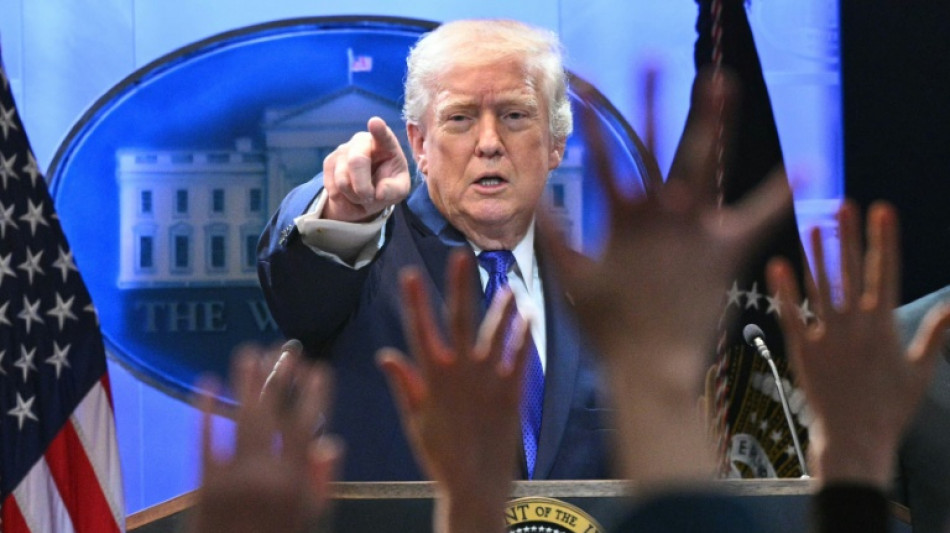
Deal or no deal: What's the state of Trump's tariffs? / Photo: © AFP/File

US President Donald Trump's push to reimpose tariffs after his Supreme Court setback has raised questions about his trade deals and future plans, while fueling a rush for refunds.

Change text size:

Here is the state of play as Trump moves to rebuild his trade agenda:

- Where do his tariffs stand? -

Trump's new 10-percent tariff on imports took effect Tuesday and will last for 150 days. It is widely viewed as a bridge towards more lasting action.

This does not apply to sectors targeted by separate investigations such as steel, aluminum and autos, nor does it hit the swath of goods entering the United States under the US-Mexico-Canada Agreement.

Trump has pledged to raise this tariff to 15 percent.

But US trade envoy Jamieson Greer maintained Wednesday on Fox Business that Washington seeks continuity in its trade policy.

"We have the 10-percent tariff. It'll go up to 15 for some, and then it may go higher for others," he said. "I think it will be in line with the types of tariffs we've been seeing."

A uniform tariff hike to 15 percent will strike partners like Britain, who faced a lower level previously.

- Why are countries not retaliating? -

US trading partners who have struck deals with Washington have so far been seeking clarity but avoided clashes over the new tariffs.

"A lot of the issue is the sector-specific exemptions that they got," said former US trade official Ryan Majerus, now a partner at King & Spalding.

The European Union, Japan and South Korea all struck deals that lowered US tariffs on their car exports, from 25 percent to 15 percent.

As sectoral tariffs were not affected by the high court ruling, Majerus told AFP that countries would be wary of giving up their gains.

If they violate their trade pacts, Washington could also further penalize them under well-established laws.

- What are Trump's plans? -

The Trump administration has signaled plans to reimpose more lasting tariffs -- citing national security concerns or unfair trading practices as a justification.

These are areas where Washington can have "very durable tariffs where necessary," Greer told Fox Business. "They've stood up to legal scrutiny in the past, and they will again."

Trump's existing sector-specific tariffs for example were imposed under Section 232 of the Trade Expansion Act, which allows the president to roll out levies over national security risks.

Another authority, Section 301 of the Trade Act, allows Washington to address unfair foreign trade practices. It was Trump's main instrument to target China in his first presidency.

Trump's future tariffs could cover industries like large-scale batteries, cast iron and iron fittings, plastic piping, industrial chemicals and power grid and telecom equipment, The Wall Street Journal reported. These would be issued under Section 232.

Besides these, trade lawyer Dave Townsend of Dorsey & Whitney expects to see "exceedingly broad" investigations under Section 301 that would allow Trump "to impose tariffs on many, if not most, countries."

"By the end of the year, we would be back pretty close to where we were last week," he said.

- Who gets refunds? -

Separately, US importers are battling for tariff refunds, an issue the Supreme Court ruling did not cover.

Greer maintained that "those claims are proceeding," adding that lower courts will deal with that.

"They'll tell us the time, place and manner of any type of refund," he said.

But there could be further complications.

"Firms are unlikely to pass on the benefit of these refunds to consumers," said Bernard Yaros of Oxford Economics. "Most of the tariff cost has already fed through to core consumer goods prices."

The mechanics and timing of returns are also unclear.

The refunds process to importers may not be messy. But purchasers of goods, if they are not importers themselves, could have to litigate further to get their money back, Townsend told AFP.

F.Harris--TNT

Featured

The "Everlasting Battery" Inside Your Joints:UConn Professor's Self-Powered Healing Material just Got Acquired

A material that turns your own movement into medicine has just landed a corporate home. PetVivo Holdings (OTCQX: PETV), a veterinary biotech and biomedical device company focused on treating osteoarthritis in dogs and horses, has acquired PiezoBioMembrane (PBM) — a startup built around a biodegradable implant that generates electricity from the everyday force of a joint in motion, and uses that charge to help regrow cartilage from the inside out. The material is the invention of Thanh Nguyen, a professor of mechanical engineering in UConn's College of Engineering, who founded PBM in 2021 to advance new implementation methods for his work with piezoelectric materials — substances that convert mechanical force into electrical energy. These materials are typically ceramics: hard, brittle, and poorly suited for medical use. But Nguyen's lab developed new forms that are so , flexible, and biodegradable, breaking down naturally within the body over time. wound healing, The materials have already shown strong potential across a range of medical applications, including tissue regeneration, implanted force sensors, and targeted drug delivery in tumor treatment. How It Works biodegradable ultrasound for In the case of arthritis, Nguyen explains, the piezoelectric materials function as an off-the-shelf product that can be implanted or injected directly into the ailing joint — with no drugs, chemicals, or cells required. The everyday force exerted on the joint generates a small electrical charge, which helps regrow healthy cartilage, mimicking the body's natural use of electricity to regenerate tissue. "The body can be electrically stimulated to regrow," Nguyen says. PBM's materials "act like a battery — an everlasting battery that works whenever there is a force applied, and vanishes safely inside the body over time." PetVivo's Vision for the Acquisition PetVivo Holdings CEO John Lai expressed enthusiasm for the merger's potential to improve the lives of companion animals globally. "PBM has developed a compelling functional biomaterials platform with the potential to support the development of multiple medical device and therapeutic product lines across both human and animal health markets," Lai said in a press release. "By combining PBM's scientific innovation with PetVivo's product development capabilities, commercialization experience, regulatory expertise, and public company infrastructure, we believe we can accelerate theadvancement of technologies that may serve as the foundation for numerous future products and strategic opportunities." For Nguyen, the deal is a chance to scale technology that could eventually benefit both animals and people. "PetVivo is an animal health company, but they do have a big passion: pushing the technology towards clinical trials for human use," Nguyen says. "That aligned perfectly with my passion for developing technology that has an impact on human life. That is why I am excited about this merger, which facilitates my passion." A Track Record of Innovation Nguyen's research sits at the intersection of medicine, micro/nanotechnology, and biomaterials. His inventions have earned him publications in prominent scientific journals and media coverage from outlets including NPR. Nguyen founded PBM during the COVID-19 pandemic, a er realizing the material he had developed could be used to create an especially effective, biodegradable face mask — one where the mechanical force of breathing generated an electrical charge that provided an extra layer of protection against viruses. PBM is not Nguyen's only venture in the acquisition pipeline. His other startup, Single-Time Microneedles (STM), is also currently undergoing an acquisition process. STM has pioneered stable, efficient vaccine delivery technology in the form of an adhesive patch. shelfNguyen's focus on biodegradable materials has translated into a remarkably diverse range of medical applications. He has received five R01 grants from the National Institutes of Health (NIH) supporting research in cartilage regeneration, bone regeneration, HIV antibody delivery systems, and biodegradable ultrasound technology to boost the effectiveness of chemotherapy for brain cancer. "Whatever we are working on, we want to show that it works very well in vitro and in vivo," Nguyen says. "Then, when we are at the point of commercialization, we set up a startup or license the technology — or maybe team up with an industry partner." Thanh Nguyen is a professor of mechanical engineering in UConn's College of Engineering. (Courtesy of Thanh Nguyen

Octrado introduces its proprietary trading offering: "Your Skill. Our Capital"

Infrastructure, transparent rules and clear legal boundaries positioned as the core of the funded-account model

Could gas prices return to 2022 highs on US-Iran war?

European gas prices have more than doubled owing to the US-Iran war, just as Europe needs to replenish its reserves ahead of winter.

CapTLX Expands Institutional-Oriented Platform for Access to U.S. Capital Markets

CapTLX, the securities trading and investment platform operated by CHAINLION TECH LTD, today announced the continued expansion of its technology infrastructure for qualified investors and institutional market participants seeking structured access to U.S. equity and private capital markets.

Change text size: