The National Times - Where do Ukraine and Russia stand after four years of war?

Where do Ukraine and Russia stand after four years of war?


Where do Ukraine and Russia stand after four years of war?
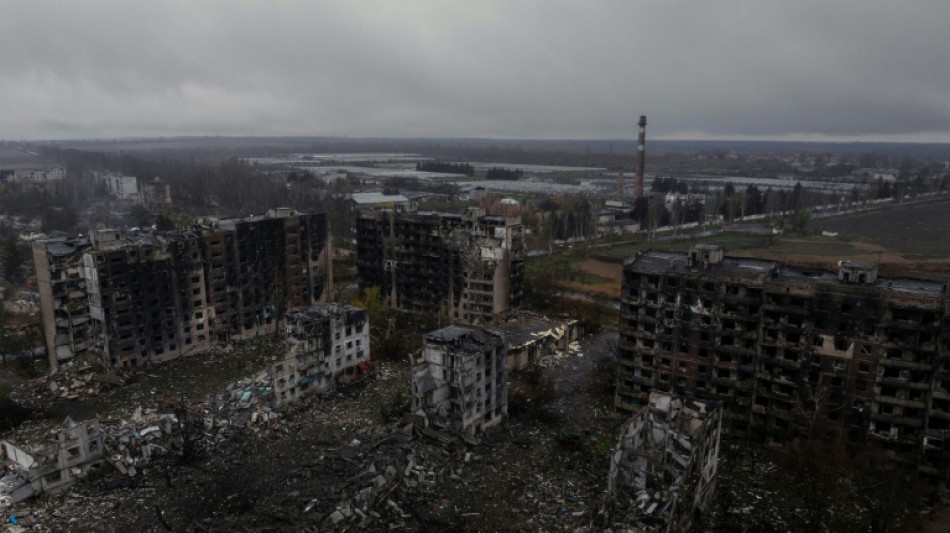
Where do Ukraine and Russia stand after four years of war? / Photo: © 93RD SEPARATE MECHANIZED BRIGADE "KHOLODNYI YAR"/AFP

Russia launched its full-scale invasion of Ukraine on February 24, 2022, unleashing the deadliest war in Europe since World War II.

Change text size:

As the conflict reaches its four-year mark, AFP looks at the state of the conflict and some of the consequences for both countries:

- Destruction -

The war has resulted in widespread destruction in Ukraine.

Entire cities in Ukraine's east and south, among them Bakhmut, Toretsk and Vovchansk, have been reduced to rubble by fighting.

The World Health Organisation has verified more than 2,800 attacks on healthcare facilities since 2022, while Russian attacks on energy infrastructure have cut heating and power to millions.

Around a fifth of Ukraine is contaminated by mines or unexploded ordnance, according to the UN's Mine Action Service.

The total cost of reconstruction in Ukraine is estimated at around $588 billion over the next decade, the World Bank reported Monday.

- Death -

The United Nations has verified over 15,000 civilian deaths in Ukraine since 2022, although it says the actual number is likely considerably higher as it has no access to areas under Russian occupation, like the port city of Mariupol where thousands are reported to have died in a Russian siege.

Ukrainian retaliatory attacks on Russian border regions have also killed hundreds.

Around 20,000 children have been forcibly displaced or kidnapped from Russian-occupied Ukrainian land, according to estimates by Kyiv.

Forced to flee when Russia invaded, around 5.9 million Ukrainian refugees live outside the country and another 3.7 million are displaced internally, the UN Refugee Agency says.

Neither side releases reliable data on military casualties.

Ukrainian President Volodymyr Zelensky said earlier this month 55,000 of his soldiers had been killed -- a toll widely believed to be an underestimate.

Russia has not given an official update on losses since September 2022.

The BBC and Mediazona, an independent Russian site, have verified the deaths of at least 177,000 Russian soldiers through public obituaries and announcements by family and local officials -- a toll also believed to be below the real number.

The Center for Strategic and International Studies (CSIS) think tank estimates as many as 325,000 Russian soldiers may have been killed since 2022, while putting the number of Ukrainian soldiers killed at 100,000-140,000.

- Frontline & diplomacy -

Moscow occupied around 19.5 percent of Ukraine as of mid-February, according to data from the Institute for the Study of War (ISW).

Around seven percent -- the Crimean peninsula and part of the eastern Donbas region -- was already occupied before the invasion.

Moscow's advances were the biggest since 2022 last year, although they have slowed considerably since the opening months of its campaign, according to ISW data.

The Kremlin is pushing for full control of Ukraine's eastern Donetsk region and a ban on Western military support for Kyiv.

Ukraine says giving in would leave it vulnerable to future attack, is constitutionally impossible, and unacceptable to much of Ukrainian society.

Since Donald Trump returned to the White House, several rounds of talks -- in Istanbul, Abu Dhabi and Geneva -- have failed to secure a deal.

- Economy -

The war has decimated Ukraine's economy and put Russia's under massive strain.

After growing strongly on the back of massive military spending -- up to nine percent of GDP -- Russia's economy has slowed, posting just a one percent expansion last year.

Oil and gas revenues -- which provide roughly a quarter of state budget income -- fell to a five‑year low last year, as a wave of Western sanctions and Ukrainian attacks on oil facilities crimped exports.

Ukraine's economy shrank by almost a third in the year after Russia's invasion. It has clawed a little of that back, but its government now depends on the International Monetary Fund and other foreign lenders to cover day-to-day spending.

- Politics and society -

The war has had a deep impact on politics and society in both countries.

Ukraine has suspended elections due to martial law and lately been rocked by a corruption scandal in the war-battered energy sector.

In Russia, authorities have orchestrated a domestic crackdown on dissent unprecedented since the Soviet era.

Russian prosecutors have opened more than 10,000 cases against people accused of criticising its armed forces, Russian news site Mediazona reported in 2024.

Returning veterans in Russia, many of them former convicts recruited to fight, have been blamed for an increase in violent crime.

- Allies -

Ukraine is heavily dependent on Western weapons, intelligence and finance.

Europe has delivered 201 billion euros in aid since 2022, according to figures from Germany's Kiel Institute.

The United States has supplied $115 billion in total, but Trump has partially suspended arms deliveries and is pushing Europe to pick up the tab.

North Korea sent thousands of soldiers to fight with the Russian army and is widely reported to have sent millions of artillery shells to Moscow.

Iran has supplied drone technology to Moscow, and China has become its vital economic partner, accused in the West of helping the Kremlin avoid sanctions.

D.Kelly--TNT

Featured

Carney touts Canada 'pivot' away from US as tariffs rise

Canadian Prime Minister Mark Carney on Tuesday said reducing economic ties with the United States would come at a cost but the long-term benefits were clear, as retaliatory tariffs on US products took effect.

The "Everlasting Battery" Inside Your Joints:UConn Professor's Self-Powered Healing Material just Got Acquired

A material that turns your own movement into medicine has just landed a corporate home. PetVivo Holdings (OTCQX: PETV), a veterinary biotech and biomedical device company focused on treating osteoarthritis in dogs and horses, has acquired PiezoBioMembrane (PBM) — a startup built around a biodegradable implant that generates electricity from the everyday force of a joint in motion, and uses that charge to help regrow cartilage from the inside out. The material is the invention of Thanh Nguyen, a professor of mechanical engineering in UConn's College of Engineering, who founded PBM in 2021 to advance new implementation methods for his work with piezoelectric materials — substances that convert mechanical force into electrical energy. These materials are typically ceramics: hard, brittle, and poorly suited for medical use. But Nguyen's lab developed new forms that are so , flexible, and biodegradable, breaking down naturally within the body over time. wound healing, The materials have already shown strong potential across a range of medical applications, including tissue regeneration, implanted force sensors, and targeted drug delivery in tumor treatment. How It Works biodegradable ultrasound for In the case of arthritis, Nguyen explains, the piezoelectric materials function as an off-the-shelf product that can be implanted or injected directly into the ailing joint — with no drugs, chemicals, or cells required. The everyday force exerted on the joint generates a small electrical charge, which helps regrow healthy cartilage, mimicking the body's natural use of electricity to regenerate tissue. "The body can be electrically stimulated to regrow," Nguyen says. PBM's materials "act like a battery — an everlasting battery that works whenever there is a force applied, and vanishes safely inside the body over time." PetVivo's Vision for the Acquisition PetVivo Holdings CEO John Lai expressed enthusiasm for the merger's potential to improve the lives of companion animals globally. "PBM has developed a compelling functional biomaterials platform with the potential to support the development of multiple medical device and therapeutic product lines across both human and animal health markets," Lai said in a press release. "By combining PBM's scientific innovation with PetVivo's product development capabilities, commercialization experience, regulatory expertise, and public company infrastructure, we believe we can accelerate theadvancement of technologies that may serve as the foundation for numerous future products and strategic opportunities." For Nguyen, the deal is a chance to scale technology that could eventually benefit both animals and people. "PetVivo is an animal health company, but they do have a big passion: pushing the technology towards clinical trials for human use," Nguyen says. "That aligned perfectly with my passion for developing technology that has an impact on human life. That is why I am excited about this merger, which facilitates my passion." A Track Record of Innovation Nguyen's research sits at the intersection of medicine, micro/nanotechnology, and biomaterials. His inventions have earned him publications in prominent scientific journals and media coverage from outlets including NPR. Nguyen founded PBM during the COVID-19 pandemic, a er realizing the material he had developed could be used to create an especially effective, biodegradable face mask — one where the mechanical force of breathing generated an electrical charge that provided an extra layer of protection against viruses. PBM is not Nguyen's only venture in the acquisition pipeline. His other startup, Single-Time Microneedles (STM), is also currently undergoing an acquisition process. STM has pioneered stable, efficient vaccine delivery technology in the form of an adhesive patch. shelfNguyen's focus on biodegradable materials has translated into a remarkably diverse range of medical applications. He has received five R01 grants from the National Institutes of Health (NIH) supporting research in cartilage regeneration, bone regeneration, HIV antibody delivery systems, and biodegradable ultrasound technology to boost the effectiveness of chemotherapy for brain cancer. "Whatever we are working on, we want to show that it works very well in vitro and in vivo," Nguyen says. "Then, when we are at the point of commercialization, we set up a startup or license the technology — or maybe team up with an industry partner." Thanh Nguyen is a professor of mechanical engineering in UConn's College of Engineering. (Courtesy of Thanh Nguyen

Octrado introduces its proprietary trading offering: "Your Skill. Our Capital"

Infrastructure, transparent rules and clear legal boundaries positioned as the core of the funded-account model

Could gas prices return to 2022 highs on US-Iran war?

European gas prices have more than doubled owing to the US-Iran war, just as Europe needs to replenish its reserves ahead of winter.

Change text size: