The National Times - Copper, a coveted metal boosting miners

Copper, a coveted metal boosting miners


Copper, a coveted metal boosting miners
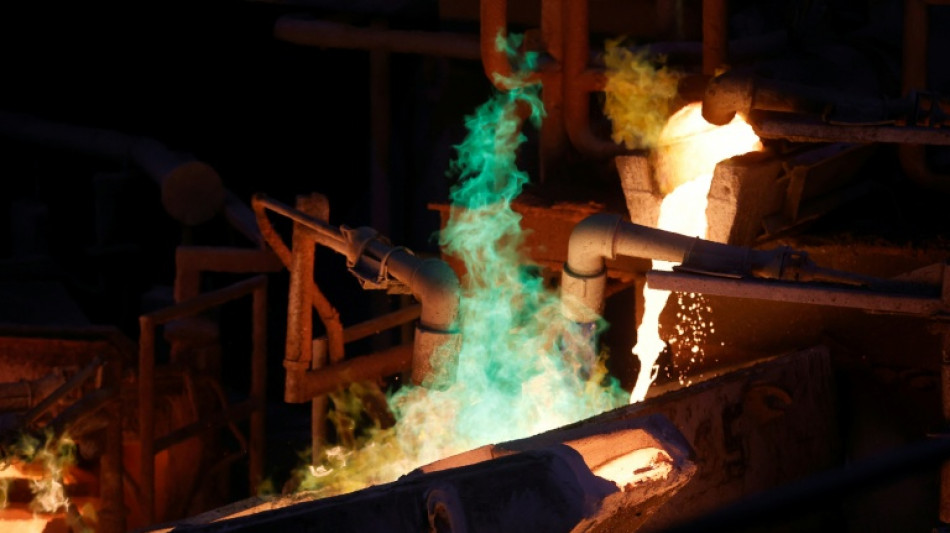
Copper, a coveted metal boosting miners / Photo: © AFP/File

BHP, Glencore and Teck Resources -- three mining giants whose annual results have revealed significantly increased profits thanks in large part to soaring copper prices.

Change text size:

AFP explores the reasons behind the gains.

- Profits boost -

Australian resources group BHP saw net profit surge almost 28 percent to US$5.64 billion in the final six months of last year, the group's fiscal first half.

Alongside the recent earnings, BHP stated that it was the world's largest copper producer after raising output by about 30 percent in the past four years, including from its vast Escondida mine in Chile.

In the same week, Swiss miner Glencore announced a return to profit last year and plans to double its copper production within a decade.

Canadian miner Teck Resources, in talks over a multi-billion-dollar merger with Anglo American to forge a copper giant, noted that its profits have been driven by "significantly higher copper prices".

Resources groups that have not fared so well in 2025 -- iron ore behemoth Rio Tinto and Anglo American -- are ramping up production of copper to help offset sagging demand for steel and diamonds.

- Why copper? -

Copper demand has exploded in recent years, with the metal needed for solar panels, wind turbines and also military hardware.

The coveted metal is also used in electric vehicle batteries and data centres for artificial intelligence.

Surging demand caused the price of copper to soar 40 percent on the London Metal Exchange (LME) last year, and in January this year it reached a record high.

This was fuelled by supply disruptions at major copper mines in Chile, Indonesia and the Democratic Republic of Congo.

Demand has been boosted additionally "by Donald Trump's decisions", said Benjamin Louvet, head of commodities management at Ofi Invest AM.

Elaborating further to AFP, he pointed to the US president's tariff threats, which saw companies build copper stocks, and heightened tensions between the United States and China, the world's dominant player in metals markets.

- Copper supply risks -

Many copper experts agree that the industrial metal could reach a supply deficit this year.

"A structural deficit appears almost inevitable," Philippe Chalmin, a commodities professor at Paris-Dauphine University, told AFP.

The poor anticipation of current needs is partly explained by the fact that "the energy transition happened quite quickly", he added.

Developing a new mine takes time.

According to a study by the International Energy Agency, an average of 16 years is required -- although the duration varies depending on the ore and location.

This timeframe and the enormous associated costs are deterring financiers, "who are turning to investments with much faster returns", said Louvet.

Against this backdrop, the sector is seeking to consolidate, although a bid by BHP to buy Anglo American, disrupting the latter's planned tie-up with Teck, recently collapsed.

- Commodities versus stocks -

Unlike shares in companies, which rise in anticipation of increased revenue, commodity prices are determined by the current supply versus demand.

The price of copper "does not factor in future scarcity", said Louvet.

This means new mining projects are launched only once there is a need for increased production.

Louvet explained that copper would have to reach $15,000 per tonne for miners to begin new projects as, despite soaring profits, the financial risk is too high.

Copper is trading at below $13,000 per tonne on the LME, compared with its all-time high of $14,527.50 last month.

Even the creation or expansion of strategic stockpiles by the United States and other countries will not "fundamentally change the situation", Louvet added.

burs-pml/bcp/rmb/rh/abs

S.Ross--TNT

Featured

Carney touts Canada 'pivot' away from US as tariffs rise

Canadian Prime Minister Mark Carney on Tuesday said reducing economic ties with the United States would come at a cost but the long-term benefits were clear, as retaliatory tariffs on US products took effect.

The "Everlasting Battery" Inside Your Joints:UConn Professor's Self-Powered Healing Material just Got Acquired

A material that turns your own movement into medicine has just landed a corporate home. PetVivo Holdings (OTCQX: PETV), a veterinary biotech and biomedical device company focused on treating osteoarthritis in dogs and horses, has acquired PiezoBioMembrane (PBM) — a startup built around a biodegradable implant that generates electricity from the everyday force of a joint in motion, and uses that charge to help regrow cartilage from the inside out. The material is the invention of Thanh Nguyen, a professor of mechanical engineering in UConn's College of Engineering, who founded PBM in 2021 to advance new implementation methods for his work with piezoelectric materials — substances that convert mechanical force into electrical energy. These materials are typically ceramics: hard, brittle, and poorly suited for medical use. But Nguyen's lab developed new forms that are so , flexible, and biodegradable, breaking down naturally within the body over time. wound healing, The materials have already shown strong potential across a range of medical applications, including tissue regeneration, implanted force sensors, and targeted drug delivery in tumor treatment. How It Works biodegradable ultrasound for In the case of arthritis, Nguyen explains, the piezoelectric materials function as an off-the-shelf product that can be implanted or injected directly into the ailing joint — with no drugs, chemicals, or cells required. The everyday force exerted on the joint generates a small electrical charge, which helps regrow healthy cartilage, mimicking the body's natural use of electricity to regenerate tissue. "The body can be electrically stimulated to regrow," Nguyen says. PBM's materials "act like a battery — an everlasting battery that works whenever there is a force applied, and vanishes safely inside the body over time." PetVivo's Vision for the Acquisition PetVivo Holdings CEO John Lai expressed enthusiasm for the merger's potential to improve the lives of companion animals globally. "PBM has developed a compelling functional biomaterials platform with the potential to support the development of multiple medical device and therapeutic product lines across both human and animal health markets," Lai said in a press release. "By combining PBM's scientific innovation with PetVivo's product development capabilities, commercialization experience, regulatory expertise, and public company infrastructure, we believe we can accelerate theadvancement of technologies that may serve as the foundation for numerous future products and strategic opportunities." For Nguyen, the deal is a chance to scale technology that could eventually benefit both animals and people. "PetVivo is an animal health company, but they do have a big passion: pushing the technology towards clinical trials for human use," Nguyen says. "That aligned perfectly with my passion for developing technology that has an impact on human life. That is why I am excited about this merger, which facilitates my passion." A Track Record of Innovation Nguyen's research sits at the intersection of medicine, micro/nanotechnology, and biomaterials. His inventions have earned him publications in prominent scientific journals and media coverage from outlets including NPR. Nguyen founded PBM during the COVID-19 pandemic, a er realizing the material he had developed could be used to create an especially effective, biodegradable face mask — one where the mechanical force of breathing generated an electrical charge that provided an extra layer of protection against viruses. PBM is not Nguyen's only venture in the acquisition pipeline. His other startup, Single-Time Microneedles (STM), is also currently undergoing an acquisition process. STM has pioneered stable, efficient vaccine delivery technology in the form of an adhesive patch. shelfNguyen's focus on biodegradable materials has translated into a remarkably diverse range of medical applications. He has received five R01 grants from the National Institutes of Health (NIH) supporting research in cartilage regeneration, bone regeneration, HIV antibody delivery systems, and biodegradable ultrasound technology to boost the effectiveness of chemotherapy for brain cancer. "Whatever we are working on, we want to show that it works very well in vitro and in vivo," Nguyen says. "Then, when we are at the point of commercialization, we set up a startup or license the technology — or maybe team up with an industry partner." Thanh Nguyen is a professor of mechanical engineering in UConn's College of Engineering. (Courtesy of Thanh Nguyen

Octrado introduces its proprietary trading offering: "Your Skill. Our Capital"

Infrastructure, transparent rules and clear legal boundaries positioned as the core of the funded-account model

Could gas prices return to 2022 highs on US-Iran war?

European gas prices have more than doubled owing to the US-Iran war, just as Europe needs to replenish its reserves ahead of winter.

Change text size: