The National Times - Doctors, tourism, tobacco: Cuba buckling under US pressure

Doctors, tourism, tobacco: Cuba buckling under US pressure


Doctors, tourism, tobacco: Cuba buckling under US pressure
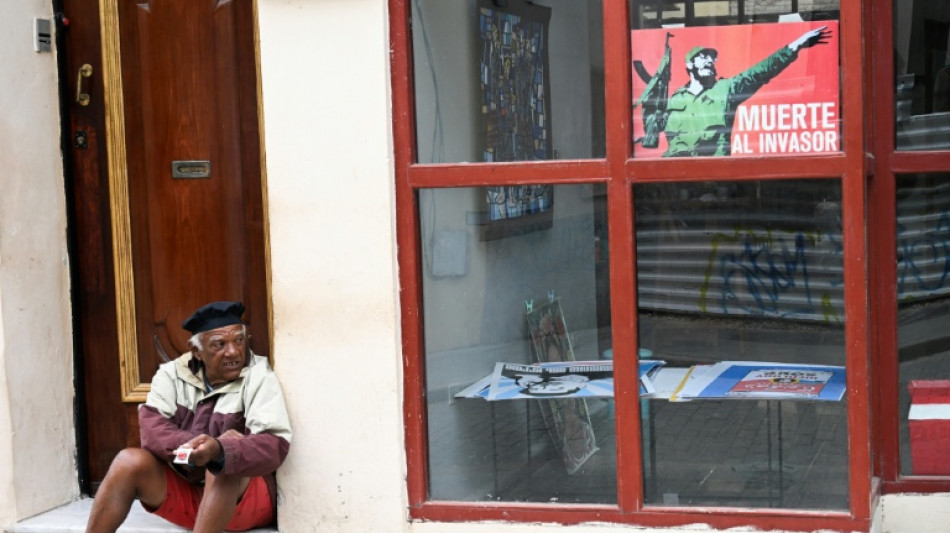
Doctors, tourism, tobacco: Cuba buckling under US pressure / Photo: © AFP

Cuba's already shattered economy is being assailed on various fronts as US President Donald Trump has vowed to bring the communist island to its knees.

Change text size:

A blockade of oil deliveries to Cuba has forced emergency rationing, kneecapping the country's critical tourism and tobacco sectors even as remittances are under threat and income earned from sending doctors abroad has been all but cut off.

Here's where things stand:

- Medical services -

Sending medical missions abroad has long been a key source of foreign currency for Cuba, totaling around $7 billion last year, according to official figures.

In 2025, 24,000 health professionals were deployed in 56 countries, more than half of them (13,000) in Venezuela.

Foreign governments pay Havana directly for the doctors' services, but Washington has taken aim at the program it claims amounts to forced labor.

And countries wishing to stay in the good books of US President Donald Trump have started to yield.

Guatemala recently ended a 27-year agreement that had allowed thousands of Cuban doctors to work in remote areas of the Central American nation, and Antigua and Barbuda broke a similar deal in December.

Guyana, which has had agreements with Havana for decades, said it will in future pay doctors directly.

"Those agreements (with Cuba) are going to change over time," Guyanese Health Minister Frank Anthony told AFP.

- Tourism -

The US-imposed oil blockade since it ousted Venezuela's leader Nicolas Maduro in early January has badly hit Cuba's electricity grid, threatening to plunge the entire island into darkness.

The oil dearth also threatens to deal a fatal blow to tourism, the island's second source of foreign income after doctors.

The tourism sector, which employs more than 300,000 people, had already been weakened by US sanctions and the Covid-19 pandemic -- with revenues dropping by 70 percent in six years.

Earlier this month, Havana announced it was suspending jet fuel supplies over the energy crisis, prompting Canadian and Russian airlines and Latin American carrier LATAM to repatriate stranded passengers before suspending flights.

Countries including Canada, Russia, Spain and Germany have advised their citizens to avoid traveling to the island, long associated with picturesque beaches and cities, cocktails, live music and dancing.

- Remittances -

Despite a brief resumption, the last official channel for people abroad to send money home to family in Cuba all but disappeared in 2020 when Western Union suspended transfers.

Since then, Cubans have been receiving dollars mainly thanks to people who travel by plane from Miami, also bringing medicines and other essentials.

Early this month, Florida Republican Congressman Carlos Gimenez said he had asked American airlines serving Cuba to cancel all flights due to the "brutal" nature of the regime there.

This has not come to pass to date.

- Tobacco -

Cuba is known as a producer of high-quality tobacco and cigars.

In 2024, sales of Cuban cigars totaled $827 million.

"Agriculture is not spared by the current oil situation, which is very serious," Hector Luis Prieto, a producer from the western Vuelta Abajo region, told AFP.

With practically no fuel left, he is finding it ever harder to harvest and irrigate his crops, relying for power mainly on a solar panel provided by the state.

Cigar export figures for 2025 were due to be announced at an annual festival scheduled for late February but canceled due to the energy crisis.

Each year, the festival earns the government several million dollars thanks to a prestigious auction -- nearly $19 million in 2025.

bur-lis-rd-jb/mlr/aha

F.Jackson--TNT

Featured

Carney touts Canada 'pivot' away from US as tariffs rise

Canadian Prime Minister Mark Carney on Tuesday said reducing economic ties with the United States would come at a cost but the long-term benefits were clear, as retaliatory tariffs on US products took effect.

The "Everlasting Battery" Inside Your Joints:UConn Professor's Self-Powered Healing Material just Got Acquired

A material that turns your own movement into medicine has just landed a corporate home. PetVivo Holdings (OTCQX: PETV), a veterinary biotech and biomedical device company focused on treating osteoarthritis in dogs and horses, has acquired PiezoBioMembrane (PBM) — a startup built around a biodegradable implant that generates electricity from the everyday force of a joint in motion, and uses that charge to help regrow cartilage from the inside out. The material is the invention of Thanh Nguyen, a professor of mechanical engineering in UConn's College of Engineering, who founded PBM in 2021 to advance new implementation methods for his work with piezoelectric materials — substances that convert mechanical force into electrical energy. These materials are typically ceramics: hard, brittle, and poorly suited for medical use. But Nguyen's lab developed new forms that are so , flexible, and biodegradable, breaking down naturally within the body over time. wound healing, The materials have already shown strong potential across a range of medical applications, including tissue regeneration, implanted force sensors, and targeted drug delivery in tumor treatment. How It Works biodegradable ultrasound for In the case of arthritis, Nguyen explains, the piezoelectric materials function as an off-the-shelf product that can be implanted or injected directly into the ailing joint — with no drugs, chemicals, or cells required. The everyday force exerted on the joint generates a small electrical charge, which helps regrow healthy cartilage, mimicking the body's natural use of electricity to regenerate tissue. "The body can be electrically stimulated to regrow," Nguyen says. PBM's materials "act like a battery — an everlasting battery that works whenever there is a force applied, and vanishes safely inside the body over time." PetVivo's Vision for the Acquisition PetVivo Holdings CEO John Lai expressed enthusiasm for the merger's potential to improve the lives of companion animals globally. "PBM has developed a compelling functional biomaterials platform with the potential to support the development of multiple medical device and therapeutic product lines across both human and animal health markets," Lai said in a press release. "By combining PBM's scientific innovation with PetVivo's product development capabilities, commercialization experience, regulatory expertise, and public company infrastructure, we believe we can accelerate theadvancement of technologies that may serve as the foundation for numerous future products and strategic opportunities." For Nguyen, the deal is a chance to scale technology that could eventually benefit both animals and people. "PetVivo is an animal health company, but they do have a big passion: pushing the technology towards clinical trials for human use," Nguyen says. "That aligned perfectly with my passion for developing technology that has an impact on human life. That is why I am excited about this merger, which facilitates my passion." A Track Record of Innovation Nguyen's research sits at the intersection of medicine, micro/nanotechnology, and biomaterials. His inventions have earned him publications in prominent scientific journals and media coverage from outlets including NPR. Nguyen founded PBM during the COVID-19 pandemic, a er realizing the material he had developed could be used to create an especially effective, biodegradable face mask — one where the mechanical force of breathing generated an electrical charge that provided an extra layer of protection against viruses. PBM is not Nguyen's only venture in the acquisition pipeline. His other startup, Single-Time Microneedles (STM), is also currently undergoing an acquisition process. STM has pioneered stable, efficient vaccine delivery technology in the form of an adhesive patch. shelfNguyen's focus on biodegradable materials has translated into a remarkably diverse range of medical applications. He has received five R01 grants from the National Institutes of Health (NIH) supporting research in cartilage regeneration, bone regeneration, HIV antibody delivery systems, and biodegradable ultrasound technology to boost the effectiveness of chemotherapy for brain cancer. "Whatever we are working on, we want to show that it works very well in vitro and in vivo," Nguyen says. "Then, when we are at the point of commercialization, we set up a startup or license the technology — or maybe team up with an industry partner." Thanh Nguyen is a professor of mechanical engineering in UConn's College of Engineering. (Courtesy of Thanh Nguyen

Octrado introduces its proprietary trading offering: "Your Skill. Our Capital"

Infrastructure, transparent rules and clear legal boundaries positioned as the core of the funded-account model

Could gas prices return to 2022 highs on US-Iran war?

European gas prices have more than doubled owing to the US-Iran war, just as Europe needs to replenish its reserves ahead of winter.

Change text size: